How Long Does Canned Prune Paste Last?
Shelf Life and Storage Tips
Canned prune paste is a convenient and versatile product often used in baking and cooking for its rich flavor and health benefits. When it comes to shelf life, commercially canned prune paste, if stored properly, remains safe to consume for an extended period. The ideal storage conditions involve keeping the cans in a cool, dry place, away from direct sunlight, which helps in maintaining the quality of the paste over time.
The peak quality of canned prune paste typically lasts up to 12-18 months after production, during which time it retains its best flavor and nutritional value. Beyond this period, while the safety of the product is not necessarily compromised, there may be a noticeable decline in its taste and some loss of vitamins. It's worth noting that protein, carbohydrate, and mineral content generally remain consistent regardless of the passage of time.
Consumers should always check for signs of spoilage and adhere to any expiration dates provided by the manufacturer. It is also advisable, for quality assurance, to consume the prune paste before the best-before date, which is usually stamped on the can.
Overview of Canned Prune Paste
Canned prune paste, a shelf-stable product, serves as a versatile ingredient in culinary applications and bears significant nutritional value.
Definition and Usage
Prune paste derives from dried plums that have been processed and cooked into a smooth consistency. It's often utilized as a sweetener in baked goods, a flavor enhancer in sauces, and a texture-adding agent in various recipes. Commercially canned prune paste provides a convenient and long-lasting option for both home cooks and professional chefs.
Nutritional Value
Prune paste is valued not only for its rich taste but also for its nutritional content. It is a source of vitamins and minerals, including potassium, which supports cardiovascular health. The nutrient makeup also typically includes dietary fiber, which aids in digestion, and it offers a modest quantity of calories and protein per serving.
Common Varieties
While there might be variations in texture and concentration, canned prune paste commonly appears in two forms:
Pure Prune Paste: A smooth product with consistent quality, often used for its natural sweetness.
Prune Paste with Added Ingredients: This might include blends with other fruit pastes for a more complex flavor profile or the addition of preservatives to extend shelf-life.
Canned prune paste is designed to be shelf-stable and will maintain its quality and safety for consumption over an extended period when stored properly.
Storage Guidelines
Canned prune paste's longevity and quality are directly influenced by how it is stored. These guidelines provide clarity on the conditions and practices that best preserve this product.
Optimal Storage Conditions
Prune paste should be kept in a cool, dry place away from heat sources and sunlight. The ideal temperature for storing canned goods, including prune paste, ranges from 50 to 70 degrees Fahrenheit (10 to 21 degrees Celsius). Consistent temperatures help maintain quality and extend shelf life.
Refrigeration Vs. Pantry
Once opened, refrigeration is essential for preserving the quality of prune paste. An opened can will have a shelf life of up to 1 year when stored in the refrigerator. In contrast, if unopened, the pantry is sufficient, and the paste can remain at peak quality for up to 18 months. After opening, transferring the paste to an airtight container is recommended to maintain its quality.
Signs of Proper Vacuum Seal
A proper vacuum seal is imperative for the longevity of canned goods. Consumers should check for a concave lid, which indicates a proper seal, before use. Any bulging, leaking, or rusting cans should be discarded, as these are signs of compromised integrity.
Maximizing Shelf Life
To ensure the longest possible shelf life for canned prune paste, attention should be paid both to how the product is stored before opening and how it is handled once opened. Following specific storage guidelines can prevent spoilage and maintain quality.
Handling Unopened Containers
Location: Store unopened prune paste containers in a cool, dry place. Avoid areas where they may be exposed to extreme temperatures.
Integrity: Check the integrity of the containers regularly. Any signs of damage, such as dents, rust, or bloating, can indicate potential spoilage.
Expiration: Heed the expiry date. While canned foods can last beyond this date, they are at their peak quality if used prior to it.
Best Practices After Opening
Refrigeration: Once opened, transfer the prune paste into an airtight container and keep it refrigerated.
Preservatives: The absence or presence of natural or added preservatives will affect the longevity of the prune paste after opening.
Usage: It is advised to use the opened prune paste within a week for the best quality, even though it may last longer when refrigerated.
Packaging: If the original packaging is resealable and provides an airtight environment, one can store the prune paste in it; otherwise, opt for a clean, airtight container.
Safety and Quality Concerns
When considering the longevity of canned prune paste, it is critical to differentiate between safety and quality. Safety pertains to the food being free from pathogens and toxins that could cause illness, while quality encompasses the taste, color, and texture of the prune paste after extended storage.
Identifying Spoilage
Texture Changes: If the prune paste exhibits a change in texture, such as unusual lumpiness or liquid separation, this may indicate spoilage.
Discoloration: Brown to black discolorations, particularly at the edge of the container, may be signs that the prune paste is no longer safe to consume.
Odor: A sour or otherwise unpleasant smell is a clear indicator that the prune paste should not be eaten.
Mold Presence: Any visible mold growth is a definite sign that the prune paste has spoiled and should not be consumed.
Can Integrity: Rust, dents, or swelling of the can are signs of potential contamination and the contents should be discarded.
Risks of Consumed Spoiled Prune Paste
Botulism: Canned foods with compromised seals can become breeding grounds for Clostridium botulinum. Consuming foods contaminated with this toxin can lead to botulism, a serious illness that requires immediate medical attention.
Food Poisoning: Spoiled prune paste, regardless of the toxin involved, can cause food poisoning. Symptoms may include nausea, vomiting, and diarrhea.
Quality Deterioration: Beyond safety concerns, consuming prune paste that has lost its quality due to factors like extended exposure to heat or sunlight may result in an unsatisfactory taste experience.
It is important that consumers follow USDA guidelines for the safe handling and storage of canned goods to minimize risks and ensure that products like canned prune paste maintain their safety and quality.
Usage Tips and Recipes
Prune paste offers a unique flavor and texture that can enhance various recipes, from sweets to savory dishes. It’s a versatile ingredient that not only contributes to the taste profile but can also serve as a natural sweetener.
Incorporating Prune Paste in Cooking
Prune Paste in Sweet Dishes:
Flavor Profile: Its rich and naturally sweet flavor complements desserts and baked goods.
Recipes: Stir it into oatmeal, use as a filling for pastries, or as a sweetener in cookies and cakes.
Prune Paste in Savory Dishes:
Texture and Flavor: Prune paste adds a subtle sweetness and depth to sauces and stews.
Recipes: Blend it into tomato or pasta sauces, whisk into salad dressings, or mix into soups to enrich the dish.
Preservation Techniques
Freezing Prune Paste:
Longevity: Freezing can extend the shelf life of prune paste, preserving its quality.
Method: Spoon the paste into an ice cube tray, freeze, and then store in airtight bags or containers.
Canning Prune Paste:
Storing: Canning allows for long-term storage at room temperature.
Method: Follow proper canning guidelines to ensure food safety. Preserve the Harvest Extension recommends using modern, tested recipes to ensure food safety.
In summary, prune paste can be effortlessly woven into both sweet and savory recipes, enhancing the dish's flavor and texture, while proper preservation methods like freezing and canning can extend its usability.
Understanding Dates on Canned Goods
When purchasing canned goods like prune paste, consumers often encounter terms such as "expiration date" and "best by date" on the packaging. These terms are critical in determining the shelf life and optimal quality period of the product.
Expiration Date vs. Best By Date
Expiration Date: Often interpreted as the last day a product is safe to consume, an expiration date is more about quality than safety. Canned prune paste, like other canned foods, may not necessarily be prone to food poisoning immediately after this date, but the quality, such as flavor or texture, might diminish.
Best By Date: Meanwhile, a "best by" date indicates the period when the canned prune paste will be at its peak quality, as determined by the manufacturer. It is important to understand that this date is not a safety marker but a guideline for optimal taste and freshness. Food items consumed past this date might have altered taste or texture, yet they are generally safe to eat if there are no signs of spoilage and storage conditions have been ideal.
It's important for consumers to not solely rely on these dates to determine the safety of their canned foods. Proper storage, such as keeping cans in a cool, dry place, can extend the shelf life of canned prune paste beyond these dates. However, once opened, it is advisable to consume the paste within a week or transfer it to a freezer-safe container and freeze for extended use.
Prevention of Foodborne Illness
When it comes to canned prune paste, as with any other preserved food, safeguarding against foodborne illnesses is crucial. The longevity and safety of canned foods depend on proper handling and storage.
Importance of Observing Food Safety Guidelines
One must follow food safety guidelines diligently to prevent the growth of bacteria that can cause foodborne illnesses. It is important to inspect canned goods before consumption. Cautions to observe include avoiding cans that are bulging or badly dented, which can be indicators of food spoilage or bacterial presence. Cans should be stored in a cool, dry place to maintain their integrity and safety. Once opened, if not used immediately, prune paste should be transferred to a clean, airtight container and refrigerated to reduce the risk of contamination.
Proper cleanliness is also essential. Individuals should always wash their hands and ensure that utensils and surfaces are clean before handling any food products to minimize bacterial transfer. Moreover, one should always adhere strictly to the product's expiration dates and storage instructions to mitigate the risk of consuming compromised food.
Advanced Storage Techniques
When preserving the quality of canned prune paste, effective storage is crucial. The longevity and taste of the product can benefit greatly from proper freezing techniques.
Extending Shelf Life Through Freezing
Freezing canned prune paste can extend its shelf life significantly beyond its standard pantry term. However, once the paste is removed from the can, it is important to store it correctly:
Storage Temperature: For optimal preservation, the freezer temperature should be set to 0°F (-18°C) to ensure the product's integrity.
Preparation for Freezing: After opening, the paste should be transferred to a freezer-safe container or a heavy-duty freezer bag to prevent freezer burn and absorption of other odors.
Moisture Control: Minimizing the paste's exposure to air and moisture is key. Highlighting the use of an airtight container or tightly sealing the freezer bag can achieve this.
Labeling: Clearly label the container or bag with the date of freezing to track how long the prune paste has been stored.
It is also essential to highlight the fact that while freezing can preserve the quality of prune paste, the texture may be altered slightly upon thawing. Nonetheless, for users who do not consume prune paste regularly, freezing provides a practical solution for extending its shelf life without a significant impact on flavor or nutritional value.
Troubleshooting Common Issues
Canned prune paste, like any preserved food, may sometimes encounter problems such as rust and leakage or discoloration and off odors. Understanding how to address these issues ensures the paste retains its quality and longevity.
Addressing Rust and Leakage
Rust on cans is typically a result of improper storage conditions, particularly in humid environments. If a can shows signs of rust, it is essential to check for any compromise of the can's integrity. When rust penetrates the can, leakage may occur, potentially leading to spoilage. The consumer should:
Inspect: Check the entire can for punctures or deep rust that may have breached the metal.
Discard: If leakage is evident or rust has perforated the can, disposal is recommended to prevent the risk of consuming contaminated food.
Dealing with Discoloration and Off Odors
Discoloration of prune paste can arise from prolonged storage, even if the can is sealed correctly. Although it doesn’t necessarily suggest spoilage, any significant change in color can indicate a decline in quality.
Off odors are a strong indication that the prune paste may have gone bad. They are often the result of bacterial activity or chemical reactions within the can. If a can emits an unusual smell upon opening, it should be considered unsafe for consumption. Steps to assess include:
Examine: Look at the paste for any signs of discoloration or mold.
Smell: Trust your senses. If the paste has an off odor, it is advised to err on the side of caution and not consume the product.
Post-Purchase Care
Ensuring the longevity of canned prune paste begins immediately after purchase. Proper handling and storage are vital to maintain quality and safety from the grocery store to the home pantry.
Maintaining Quality from Store to Home
Transport: After purchasing canned prune paste from the grocery store, it's important to bring it home promptly. Extreme temperatures can affect the paste's quality, so they should avoid leaving it in a hot car for prolonged periods.
Storing: Once home, the canned prune paste should be stored in a cool, dry place. A pantry or cupboard away from any heat sources helps maintain the quality of the product. Refrigeration is not necessary for unopened cans, but if the product is transferred to an airtight container after opening, refrigerating can help preserve quality.
Temperature for storing: Keep at a consistent room temperature, ideally between 50°F and 70°F (10°C and 21°C).
Avoid moisture and light: Store in a dark place to prevent light from degrading the quality and an environment with low moisture to prevent corrosion of the can.
Airtight Container: If not consumed immediately after opening, transferring the leftover prune paste to an airtight container can extend its freshness. Refrigerate after sealing to prolong its shelf life.
External Factors Affecting Quality
The quality and shelf life of canned prune paste are influenced by various external environmental factors. Understanding these factors helps in maintaining the paste's best quality for as long as possible.
How External Environment Influences Shelf Life
Storage Conditions: Canned prune paste should be stored in cool, dry conditions. Optimal storage conditions can significantly extend the shelf life and preserve the quality of the paste.
Sunlight: Canned goods should be kept away from direct sunlight. Exposure to sunlight can lead to temperature spikes which may degrade the paste more rapidly.
Heat: Consistent, moderate temperatures are fundamental for prolonging shelf life. Any source of heat is a potential risk that can lead to spoilage or a compromised flavor profile.
Room Temperature: Ideally, canned prune paste should be stored at a consistent room temperature, between 60°F (15°C) and 70°F (21°C). Temperatures outside this range can trigger deterioration.
Direct and indirect factors work together to either maintain or compromise the quality of canned prune paste. Appropriate storage is key to ensuring that the product remains at its best for consumption.
Technical Aspects of Canning
Canning is a method of preserving food by processing and sealing it in an airtight container. This section delves into the technical aspects of canning, exploring different methods and their effects on food properties.
Canning Methods
Canning can be divided into two primary methods: water bath canning and pressure canning.
Water Bath Canning is suitable for high-acid foods, such as fruits, tomatoes, and pickles. The food items are placed into glass jars and then covered with a liquid, such as syrup or brine. Jars are then sealed and submerged in a pot of boiling water for a specific amount of time, which varies based on the type of food and jar size. The high temperature kills off harmful bacteria and enzymes, and the seal prevents new microorganisms from entering and spoiling the food.
Pressure Canning is used for low-acid foods like meats and vegetables. In this method, the food is placed in a glass jar, covered by a liquid, and then sealed. The jars are placed inside a specialized pressure canner that raises the temperature beyond boiling point, effectively eliminating the risk of botulism poisoning. Pressure canning is essential for low-acid foods because these foods are not acidic enough to prevent microbial growth on their own.
Effects of Canning on Food Properties
The canning process affects food in several ways:
Preservation: By removing oxygen and sealing the food in an airtight environment, canning extends the shelf life of the product by preventing microbial growth and mold.
Texture: Canning can lead to softer food textures due to the prolonged exposure to high temperatures.
Color and Flavor: There may be some loss of color and flavor, particularly with longer storage times due to the natural process of oxidation. For instance, canned tomato paste may see a reduction in its vibrant red hue over time.
Nutritional Value: Most vitamins remain intact during the canning process, although there can be a reduction in certain heat-sensitive nutrients. For example, vitamin C levels can decrease, but minerals and protein typically remain stable.
In summary, canning is an effective method for preserving a variety of foods including tomato paste. The canning method chosen should be appropriate to the acidity level of the food to ensure safety and quality.
Compliance with Food Authority Guidelines
In the context of canned prune paste, it is essential for manufacturers and consumers to closely follow food safety regulations established by the United States Department of Agriculture (USDA) to ensure the product's quality and safety up to and beyond the expiration date.
Adherence to USDA Recommendations
The USDA provides comprehensive guidelines concerning the shelf life and safety of canned foods. According to USDA standards, canned prune paste, similar to other canned goods, generally has a long shelf life. While the specific expiration dates are not provided in the search results for canned prune paste, by referencing the broader category of canned goods, one can suggest that high acid foods should retain their best quality for up to 18 months and low acid foods for 2 to 5 years. Since prune paste is derived from fruit, it might be categorized as a high acid food product and may be expected to have a best before date roughly corresponding to the 18-month guideline.
Guidelines also emphasize the importance of visual inspections for maintaining food safety:
Never consume canned food from containers showing signs of botulism such as leaking, bulging, or damage.
Check for any indicators of spoilage, particularly if the product is past its expiration date.
Store cans in cool, dry places and avoid temperature extremes, as recommended temperatures below 85 °F (29.4 °C) help prevent deterioration and spoilage.
USDA compliance includes understanding the potential risks associated with consuming expired canned goods. However, these risks can be mitigated if the canned prune paste is stored under ideal conditions and is undamaged. The absence of rust, dents, and swelling are critical parameters to determine whether the food product within remains safe for consumption. Consumers should practice caution and follow USDA guidelines to maintain food safety up to and beyond the indicated expiry date on the product.
FAQs About Canned Prune Paste
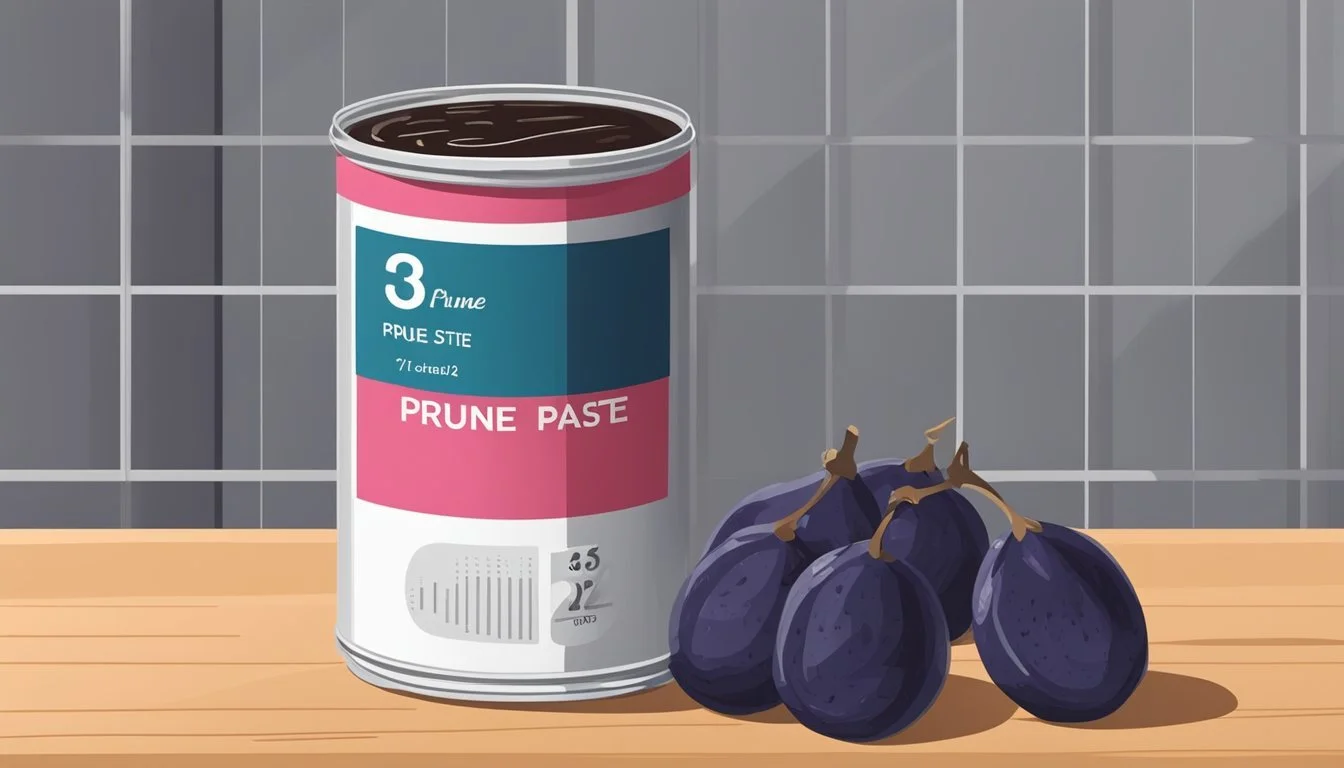
When it comes to preserving the quality and taste of canned prune paste, consumers often have concerns regarding storage conditions and expiration dates. Shelf-stability and proper handling are key to ensuring the longevity of this product.
Common Questions from Consumers
How long does canned prune paste last unopened?
Unopened canned prune paste generally remains at its best quality for 12 to 18 months when stored in a cool, dry place. Beyond this period, there may be a decrease in its flavor profile and vitamin content, although its carbohydrate, protein, and mineral contents remain stable.
Is it safe to use canned prune paste after the expiration date?
The USDA advises caution when consuming any canned food past its expiration date as it may not only lose flavor but could also compromise food safety. Consumers should inspect the can for signs of damage or spoilage before use.
How should I store canned prune paste once opened?
After opening, prune paste should be refrigerated to preserve its quality. When stored in the fridge, it can maintain its taste and safety for up to 1 year. To prevent contamination, always use a clean utensil when handling the paste.
Does the taste of canned prune paste change over time?
Yes, the taste of canned prune paste can change over time, usually deteriorating after the best by date. Although the paste could still be safe to consume, it’s best to use it within the recommended timeframe for optimal flavor.
Can canned prune paste be frozen?
While freezing can extend the shelf life of many foods, canned prune paste may experience a change in texture and flavor after freezing. For best results, it is advisable to consume it within its intended shelf life without freezing.
What is the best way to ensure the safety and quality of canned prune paste?
Consumers should store the paste in a cool, dry environment away from direct sunlight and heat sources. Once opened, transferring the contents to an airtight container and refrigerating is recommended to maintain quality and safety. Regularly checking the integrity of the packaging is also important.
Environmental and Economic Considerations
When discussing the longevity and use of commercially canned prune paste, one cannot ignore its environmental and economic impact. These considerations are integral to understanding the broader implications of choosing canned food, especially considering sustainability and cost-effectiveness.
Sustainability of Canned Food
Commercially canned foods, including prune paste, often come in metal cans or glass jars, both of which have considerable effects on the environment. On the sustainability front, metal cans are notable for their recyclability. They can be recycled indefinitely without loss of quality, though the energy needed for initial production and recycling processes is significant. Glass jars also offer several uses, reducing the frequency of new glass production, which can be energy-intensive. However, the weight of glass impacts transportation emission costs. The choice of packaging materials can, therefore, play a substantial role in the product’s overall environmental footprint.
From the perspective of food sustainability, it's noteworthy that the canning process extends the shelf life of low-acid foods, which include prune paste. By doing so, canning reduces food waste, allowing products to be stored for longer periods and still remain safe for consumption.
Cost-Effectiveness of Using Prune Paste
Economically, the benefits of using commercially canned prune paste are twofold. Initially, the fact that canned foods can be less expensive than fresh or frozen counterparts appeals to budget-conscious consumers. This is because canned foods:
Have a longer shelf life, reducing waste and frequent replacement costs.
Often require less preparation time, saving on labor both in food service and at home.
Moreover, canned prune paste is available year-round, not being subject to the fluctuations of fresh produce seasons. This availability ensures that prices are more stable and less likely to spike due to off-season scarcity or transportation of fresh goods over long distances. Thus, the economics of using canned prune paste firmly place it as a cost-effective option in the pantry.
Innovations in Canning Technology
In the realm of food preservation, canning technology has undergone substantial evolution, enhancing both the safety and the shelf-life of various canned products, including prune paste.
Emerging Trends in Canned Food Production
Automated Canning Lines: Modern canning factories are now utilizing fully automated canning lines. These systems drastically increase efficiency and consistency in canning processes such as filling, seaming, and sterilization.
Preservation Technology: Advances in food technology have led to improved methods of sterilization that can extend the shelf life of canned goods. High-pressure processing and aseptic processing are two examples that ensure the longevity of products like canned prune paste without compromising nutritional value.
Smart Packaging: Packaging innovations, such as the incorporation of smart labels and indicators, have been applied to canned goods to monitor and communicate the quality and safety of the contents over time.
Eco-friendly Materials: The canning industry has made strides in sustainability. Manufacturers now use more recyclable and biodegradable materials for packaging, reducing environmental impact.
Quality Control: Enhanced quality control technologies, including more sophisticated sealing techniques and vacuum detection, provide another layer of safety and preserve the integrity of canned foods like tomato paste and prune paste.
These innovations not only ensure that canned products are preserved safely but also support the notion that a properly canned food item, like prune paste, can maintain its quality and edibility well beyond its traditional shelf-life expectancy.
Myths and Misconceptions
In the realm of canned food longevity, misconceptions often blur the lines between fact and fiction. This section aims to clarify common misunderstandings specifically about the shelf life of canned prune paste.
Debunking Canned Food Myths
Myth: Canned foods deteriorate immediately after the expiration date.
Fact: Canned prune paste remains safe to consume and retains its quality beyond the date printed on the can as long as it remains unopened and has been stored properly.
Myth: Presence of fat or salt significantly reduces canned food shelf life.
Fact: Added fat and salt in canned prune paste act as preservatives, often prolonging the product's shelf life rather than shortening it.
Myth: If a can appears rusted or bulging, it indicates spoiling of the contents.
Fact: While rust does not directly spoil the content, a rusted can may compromise the integrity of the container. A bulging can, on the other hand, often signals dangerous bacterial activity and such products should be discarded.
Myth: Canned foods need added preservatives to stay safe to eat.
Fact: The canning process itself, which involves high heat, is designed to kill bacteria and seal the food in an airtight environment, making the need for additional preservatives unnecessary for safety.
Misconceptions about canned food and food safety can lead to unnecessary waste and anxiety. Prune paste, like other canned products, is designed for prolonged shelf life through careful processing and should be enjoyed without unwarranted concern when properly stored and handled.