
How Microorganisms Shorten Shelf Life and Impact Food Quality
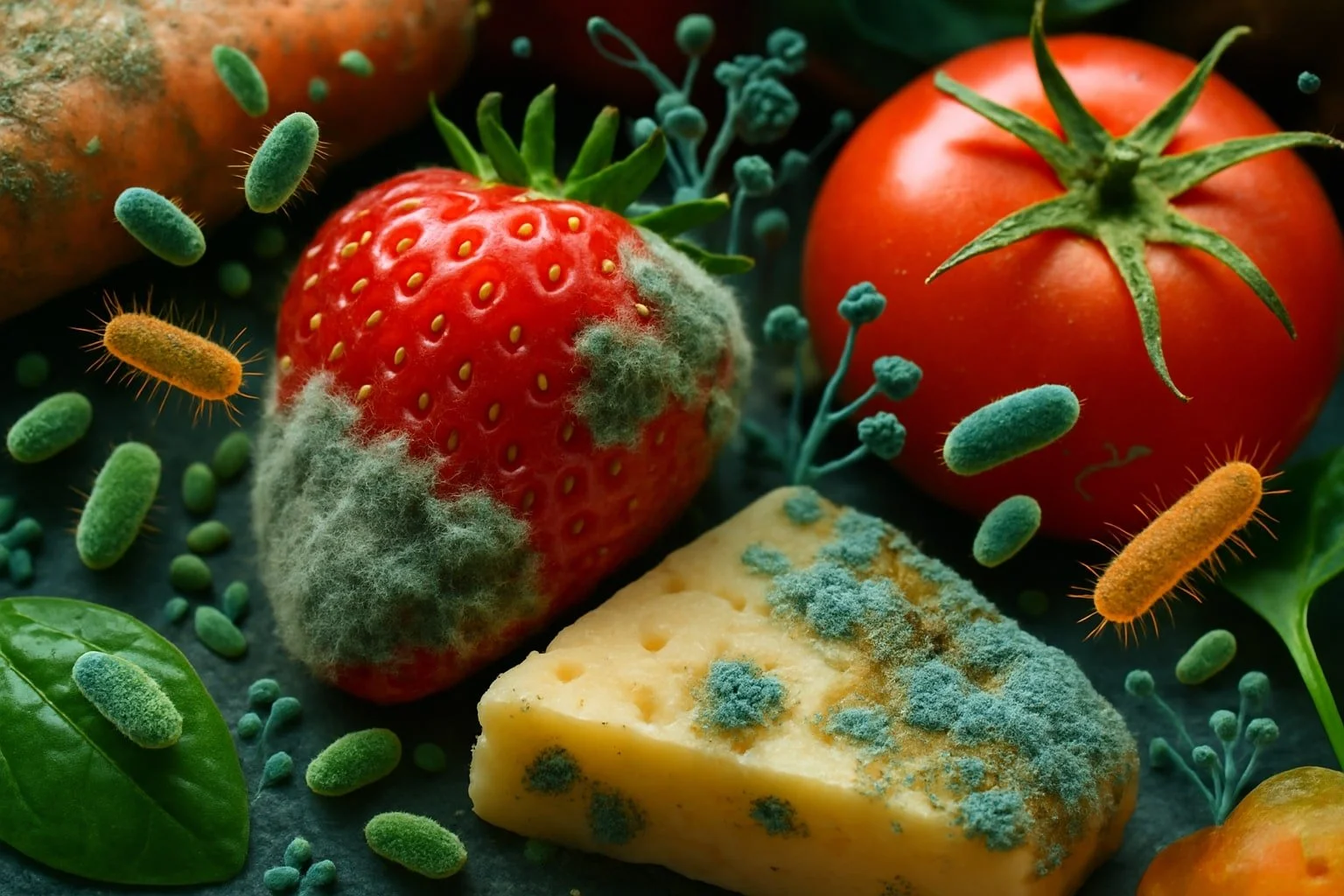
Microorganisms such as bacteria, molds, and yeasts are the primary factors that shorten the shelf life of food by causing spoilage through their growth and metabolic activities. These microbes break down food components, leading to changes in texture, flavor, and odor that make products unappealing or unsafe to consume. Even with packaging and refrigeration, certain microorganisms can still thrive if conditions are right.
Understanding how specific types of microbes affect different foods helps producers and consumers better manage shelf life. Measures such as modifying storage conditions, altering product composition, or using targeted preservation methods can slow microbial growth and extend freshness. Readers exploring food safety or trying to reduce waste will gain insights by learning how microorganisms operate and what can be done to limit their impact.
Understanding Microorganisms and Food Spoilage
Microorganisms are central to the process of food spoilage, with specific types directly degrading food quality, texture, and safety. Their growth in different food environments and the conditions favoring their proliferation determine how quickly and severely a product's shelf life is reduced.
Types of Food-Spoiling Microorganisms
There are three main groups of spoilage organisms: bacteria, molds, and yeasts. Common spoilage bacteria include Bacillus subtilis, Listeria monocytogenes, and lactic acid bacteria such as Lactobacillus species. These bacteria cause souring, slime production, and off-odors.
Molds, like Aspergillus niger and Penicillium expansum, are significant in spoilage of fruits, bread, and certain cheeses. Yeasts also spoil high-sugar foods and beverages, resulting in gas and alcohol production.
Spoilage organisms differ by the type of food. Table:
Microorganism Typical Foods Affected Spoilage Effect Lactic acid bacteria Dairy, meats, vegetables Souring, off-flavors Listeria monocytogenes Ready-to-eat foods Safety concern, growth at low temp Bacillus subtilis Breads, rice Rope spoilage Aspergillus niger Fruits, nuts Visible mold, mycotoxins Penicillium expansum Apples, pears Blue mold, soft rot
Microbiology of Foods
Natural microflora found on raw foods can include both harmless and harmful microorganisms. The initial microbial load and diversity often depend on how food is produced, handled, and stored.
Aerobic microorganisms thrive in oxygen-rich environments, affecting products like fresh produce and baked goods. Facultative anaerobes, such as some lactic acid bacteria, can grow with or without oxygen, leading to spoilage in both exposed and sealed foods.
Psychrotrophic bacteria represent a group capable of growing at refrigeration temperatures. They include species that can spoil chilled dairy, meat, and ready-to-eat products. Assessing the type of microflora present helps estimate potential spoilage and food safety risks.
Microbial Growth Patterns
Microbial proliferation follows a predictable sequence: lag, log, stationary, and death phases. Temperature, pH, water activity, and oxygen availability significantly affect each phase.
High water activity foods, such as fresh meats, are prone to rapid microbial growth. Lower water activity slows down spoilage, but certain molds and yeast can grow under these conditions. Environmental parameters shift the dominant spoilage organisms.
Microbial populations also interact, with one group sometimes inhibiting or outcompeting another. Lactic acid bacteria, for example, may lower the pH and limit the growth of other spoilage organisms. Monitoring changes in microbial populations is key in managing product shelf life.
How Microorganisms Reduce Shelf Life
Microbial activity is a leading cause of food deterioration, directly influencing the safety and quality of products. These changes are driven by specific mechanisms that lead to noticeable effects in taste, texture, appearance, and potential health risks.
Mechanisms of Microbial Spoilage
Microorganisms, including bacteria, yeasts, and molds, initiate spoilage by metabolizing available nutrients in food. Enzymatic actions by these microbes break down carbohydrates, proteins, and lipids, producing a range of byproducts.
Examples of spoilage mechanisms:
Protein breakdown: Leads to the production of ammonia and sulfur compounds.
Sugar fermentation: Creates alcohols, acids, and gases.
Lipid degradation: Results in rancid flavors and odors.
Spoilage flora differ depending on the food matrix and storage conditions. Aerobic bacteria thrive in oxygen-rich environments, while anaerobic bacteria target vacuum-packed or canned foods.
The presence of water and suitable temperatures accelerates microbial growth. Poor hygiene and inadequate processing can also introduce or increase microbial contamination.
Physical and Chemical Changes in Food
As microorganisms proliferate, they cause visible and measurable changes in foods. Physical alterations often include discoloration, slime formation, and textural softening due to microbial enzymes degrading structural components.
Common chemical changes involve:
pH shifts from acid or alkaline byproducts.
Release of gases that cause package swelling.
Accumulation of volatile compounds such as aldehydes or ketones.
These changes compromise food integrity and make it less appealing or even unsafe. The rate and intensity of these alterations depend on factors such as water activity, nutritional content, and storage environments.
Impact on Sensory Properties
Microbial spoilage leads to significant changes in sensory qualities. Off-flavours develop as a result of fermentation or breakdown products, such as lactic acid in dairy spoilage or hydrogen sulfide in spoiled meats.
Spoiled foods exhibit:
Unpleasant odors
Unusual taste (sour, bitter, or rancid notes)
Changes in color (greening, browning)
Altered texture (slimy, mushy, or grainy)
These sensory defects act as early warning signs of microbial spoilage and usually signal that food is no longer suitable for consumption. Freshness is quickly lost, reducing consumer acceptance and overall shelf life.
Food Safety and Consumer Risks
Microbial contamination is not only a cause for quality loss but also a serious food safety concern. Some spoilage microorganisms create toxins or allow pathogenic bacteria to multiply, increasing the risk of foodborne illness.
Potential hazards include:
Growth of pathogenic bacteria such as Listeria or Salmonella
Toxin formation (e.g., staphylococcal enterotoxins, mycotoxins)
Increased risk to vulnerable groups (elderly, immunocompromised, children)
Regular monitoring, precise storage conditions, and strict hygiene practices are essential to minimize these risks. Understanding the link between microbial activity and food safety helps ensure products remain safe through their entire shelf life.
Intrinsic and Extrinsic Factors Affecting Microbial Growth
Microbial growth in food is controlled by both the natural properties of the food and the external environment in which it is stored. Changes in these factors can quickly influence how fast microorganisms increase and how rapidly shelf life shortens.
Intrinsic Factors: pH, Water Activity, and Nutrients
Intrinsic factors are the characteristics within the food itself. pH determines acidity; foods with high acidity (low pH), like citrus, tend to inhibit most bacterial growth and favor yeasts or some molds.
Water activity (aw) refers to the free water available for microbial use. Most bacteria need a water activity above 0.91, while molds and yeasts can grow at lower levels. Dried or high-sugar foods last longer partly due to reduced water activity.
Nutrient composition provides the essential elements microorganisms need. Foods rich in proteins, carbohydrates, and vitamins—like meats or dairy—often spoil faster because they offer suitable substrates for bacterial and fungal metabolism.
Intrinsic Factor Main Effect on Microbial Growth pH Influences which organisms can grow Water Activity Provides moisture needed for populations Nutrients Fuels multiplication and metabolism
Extrinsic Factors: Temperature and Relative Humidity
Extrinsic factors include the conditions surrounding the food. Temperature is critical; most spoilage bacteria and molds grow best between 20°C and 40°C. Refrigeration (below 5°C) slows down their replication and delays spoilage significantly.
Relative humidity (RH) affects surface moisture. High humidity promotes condensation, creating microenvironments that allow mold spores or bacteria to germinate and spread, particularly on bread or cheese.
Lower temperatures combined with low RH can help extend shelf life. Controlling storage environments is therefore a primary method for limiting microbial activity and preserving food quality.
Role of Packaging and Modified Atmosphere
Packaging materials act as a physical barrier to protect food from contaminants. Properly sealed packaging can slow oxygen infiltration and moisture exchange, limiting microbial growth on the surface.
Modified atmosphere packaging (MAP) uses different gas mixtures—such as reduced oxygen or increased carbon dioxide—to directly inhibit spoilage organisms. For example, high CO₂ concentrations can hinder fungal and bacterial growth on fresh produce.
Selecting the right packaging type and gas composition depends on the food's properties and expected shelf life. Advances in packaging technology continue to play a vital role in maintaining safe, high-quality food during distribution and storage.
Common Spoilage Microorganisms in Foods
Spoilage of foods is primarily driven by specific groups of bacteria, yeasts, and molds. These microorganisms degrade food quality, alter taste and texture, and significantly limit shelf life across many product categories.
Fresh Produce and Fresh-Cut Produce
Fresh produce is highly perishable due to its high moisture content and nutrient levels. The most common spoilage organisms affecting fruits and vegetables include bacteria like Pseudomonas, Erwinia, and Lactobacillus species.
Yeasts and molds, such as Penicillium, Botrytis, and Alternaria, thrive on the surfaces and wounds of produce. Fresh-cut fruits (e.g., pineapple) are particularly susceptible, as processing exposes plant tissue and increases surface area for contamination.
These spoilage agents cause visible symptoms like surface mold, soft rot, and off-odors. Storage at low temperatures slows, but does not prevent, microbial growth.
Processed Foods and Shelf-Stable Products
Processed and shelf-stable products are generally less prone to spoilage due to reduced water activity and preservation steps. However, certain microorganisms—particularly spore-forming bacteria—can still survive.
Clostridium botulinum and Bacillus cereus are notable for their ability to persist through processing. Spoilage yeasts, such as Zygosaccharomyces in high-sugar foods, can cause gas production, swelling of packaging, and separation of ingredients.
Molds (e.g., Aspergillus or Penicillium) can appear in products with faulty packaging or after prolonged storage. Detecting and removing contaminated items is essential to prevent quality problems across food product shipments.
Spoilage of Specific Food Types
Different foods attract different spoilage organisms. Meat and poultry are spoiled by bacteria like Pseudomonas, Brochothrix thermosphacta, and Lactic acid bacteria. Dairy products are affected by Lactococcus, Leuconostoc, and spoilage yeasts causing off-flavors and gas formation.
Ready-to-eat fruit products, such as packed pineapple, often experience rapid decay from Candida and Hanseniaspora species. Mold growth, primarily Penicillium and Botrytis, ruins bread, cake, and baked goods when humidity is high.
The following table summarizes common spoilage agents by food type:
Food Type Key Spoilage Microorganisms Fresh produce Pseudomonas, Botrytis, Penicillium Processed foods Bacillus, Clostridium, Zygosaccharomyces Dairy Lactococcus, Leuconostoc, yeasts Meat/Poultry Pseudomonas, Brochothrix Baked goods Penicillium, Aspergillus
Detection and Prediction of Microbial Shelf Life

Detection and prediction of microbial shelf life rely on a range of scientific methods and models. Effective assessment requires a blend of laboratory studies, mathematical modeling, and careful data analysis to support accurate shelf-life estimation.
Shelf-Life Studies and Estimation Methods
Shelf-life studies are performed to track how microbial populations change in food or other perishable products over time. Common methods include shelf-life trials, where products are stored under controlled conditions and tested at intervals for microbial growth.
Challenge tests introduce specific microorganisms to the product to observe their survival and growth rates. This simulates possible contamination scenarios and provides valuable insight for shelf-life estimation.
In addition to direct microbial counts, other indicators like pH, moisture content, and sensory changes may be monitored. The combination of these data points helps determine when spoilage becomes evident. Proper study design, including realistic packaging and storage, improves the reliability of shelf-life estimates.
Predictive Microbiology and Mathematical Models
Predictive microbiology uses mathematical models to forecast microbial behavior under different conditions. These models can estimate the growth of bacteria, yeasts, or molds, considering factors such as temperature, humidity, and product composition.
Primary models describe the basic growth curve of microorganisms (e.g., lag, exponential, and stationary phases). Secondary models relate growth parameters to environmental factors using equations like the Arrhenius equation for temperature dependence.
Tertiary models are software tools that integrate primary and secondary models to simulate various scenarios. The Baranyi model is widely used for predicting bacterial growth and shelf-life. Newer developments use machine learning approaches to improve the accuracy and adaptability of shelf-life prediction.
Model Validation and Data Collection
Model validation ensures that mathematical models offer reliable predictions. This process compares model outputs to results from laboratory data or real-world shelf-life studies. A validated model helps businesses make safer and more cost-effective decisions.
Data collection is vital at each stage, from initial experiments to routine process monitoring. Accurate measurements support better parameter estimation for both one-step and two-step modeling approaches, which structure data analysis differently.
A table summarizing model types:
Model Type Description Example Primary Microbial growth curves Gompertz, Baranyi Secondary Effect of environment on growth parameters Arrhenius equation Tertiary Integrated, scenario-based simulation ComBase, machine learning
Prevention and Control of Microbial Spoilage
Controlling microbial spoilage relies on a combination of interventions. Approaches include chemical preservatives, food additives, processing steps to inactivate microbes, strict storage conditions, and technologies like packaging that act as physical barriers.
Preservatives and Food Additives
Chemical preservatives, such as sorbates, benzoates, and nitrates, are commonly used to inhibit microbial growth in foods. These compounds interfere with microbial metabolism, slowing or stopping the reproduction of spoilage organisms.
Food additives can also enhance preservation. Antioxidants, for instance, prevent rancidity and some also provide minor antimicrobial effects. Natural preservatives, like vinegar or plant extracts, are increasingly used in response to consumer demand for cleaner labels.
The type and dose of preservative must be matched to the specific product and target microorganisms. Regulations set maximum permissible levels to ensure food safety while maintaining effectiveness against spoilage agents.
Common Preservatives Typical Use Target Organisms Sodium benzoate Soft drinks, sauces Yeasts, molds, bacteria Potassium sorbate Baked goods, cheeses Molds, yeasts Sodium nitrite Cured meats Clostridia, some bacteria
Processing Steps and Pasteurisation
Food preservation involves processes that destroy or reduce microbial loads, minimizing the risk of spoilage. Pasteurisation is widely used for milk, juices, and some processed foods. By heating products to a specific temperature for a defined time, pasteurisation kills non-spore-forming pathogens and spoilage microbes without significant loss of flavor or nutrients.
Other processing methods include blanching vegetables, high-pressure processing, and the use of cold plasma. Blanching inactivates surface microbes and enzymes, while high-pressure methods can extend shelf life by inactivating microorganisms at lower temperatures.
Selection of processing steps depends on the product type, desired shelf life, and sensitivity to heat. Effective time and temperature controls are crucial to maximize spoilage reduction while maintaining food quality.
Storage Conditions and Shelf-Life Extension
Storage conditions play a major role in controlling the rate of microbial growth. Lowering the temperature slows metabolic activity of spoilage organisms. Refrigeration is standard for perishable foods, while freezing almost completely halts microbial proliferation.
Humidity control can prevent moisture accumulation that promotes mold growth. Some foods benefit from modified or controlled atmospheres, which reduce oxygen and increase carbon dioxide, inhibiting aerobic bacteria and fungi.
Key storage parameters for shelf-life extension:
Temperature (cold slows microbes)
Humidity (excess promotes mold)
Oxygen levels (limiting reduces aerobic spoilage)
Proper storage extends shelf life and is a frontline defense, especially when combined with other preservation techniques.
Role of Packaging in Spoilage Prevention
Packaging acts as a physical barrier to microbes, moisture, and airborne contaminants. Technologies such as vacuum packaging and modified atmosphere packaging limit oxygen exposure and slow microbial growth.
Packaging materials are chosen for their ability to seal out contaminants and maintain product integrity. Active packaging can include antimicrobial coatings or oxygen scavengers that further protect against spoilage.
Tamper-evident seals and portion packaging reduce the risk of post-processing contamination. Effective food packaging, combined with sound processing and storage, forms a multi-layered approach to spoilage prevention and preservation.
Impact of Microbial Spoilage on Food Systems
Microbial spoilage remains a leading cause of food shelf-life reduction, triggering losses in food quality and posing safety risks. Its ramifications are felt at every stage, from manufacturing to the consumer, influencing product design, economic outcomes, and waste management.
Economic Sustainability and Food Waste
Microorganisms accelerate the spoilage of perishable goods, increasing the volume of discarded products before they reach consumers. This leads to substantial economic losses for producers, retailers, and supply chains.
Food waste linked to microbial spoilage drains resources invested in raw materials, processing, packaging, and logistics. Companies may face additional disposal costs, while unsold or spoiled goods lead to revenue loss and reduced market competitiveness.
Spoilage shortens shelf life, forcing retailers to discount or discard inventory. Efforts to minimize these losses often require investment in storage, advanced packaging, and quality control measures. Recovery strategies, like early detection and intervention, can help but seldom eliminate all economic impact.
Food Quality and Shelf-Life Losses
Spoilage microorganisms degrade sensory attributes such as taste, aroma, texture, and color, making food unappealing or unacceptable for sale. Loss of food quality reduces the useful shelf-life and increases customer dissatisfaction.
These changes can result from microbial enzymes breaking down fats, proteins, or carbohydrates, causing off-flavors, sliminess, or discoloration. A table details common impacts:
Spoilage Effect Sensory Change Example Foods Off-odors/flavors Bad smell/taste Meat, dairy, juice Texture breakdown Slimy, mushy Vegetables, meat Discoloration Faded/brown color Fruits, cheese
Product design focuses on delaying these effects, using ingredients, preservatives, or modified-atmosphere packaging to slow microbial growth and extend shelf life.
Consumer Safety and Corrective Action
Microbial spoilage does not always equate to foodborne illness, but some spoilage organisms can produce toxins or foster unsafe conditions. Safety risks emerge when consumers unknowingly eat contaminated food.
Prompt identification of unsafe products is crucial. Producers often initiate recalls, public alerts, or corrective actions such as batch testing, destruction, or improved sanitation to protect consumers and limit liability.
Manufacturers use quality assurance and rapid detection methods to monitor spoilage. Early interventions may reduce risk but can still result in lost consumer trust and additional safety expenditures.
Effects on the Food Supply Chain and Manufacturers
Microbial spoilage introduces unpredictability into supply chains, affecting logistics, storage, and inventory control. Manufacturers must design systems to minimize spoilage at all stages, using refrigeration, hygienic handling, and effective packaging.
Production lines may be interrupted by contamination events, requiring cleaning and revalidation. This creates downtime and additional costs. Manufacturers often train staff and adopt strict protocols to limit cross-contamination and prolong shelf-life.
Persistent spoilage issues can damage brand reputation and result in stricter regulatory scrutiny. In response, companies continually reassess product design, shelf-life testing, and supply chain controls to maintain food safety and quality standards.

