
How Modified Atmosphere Packaging Extends Shelf Life and Reduces Food Waste
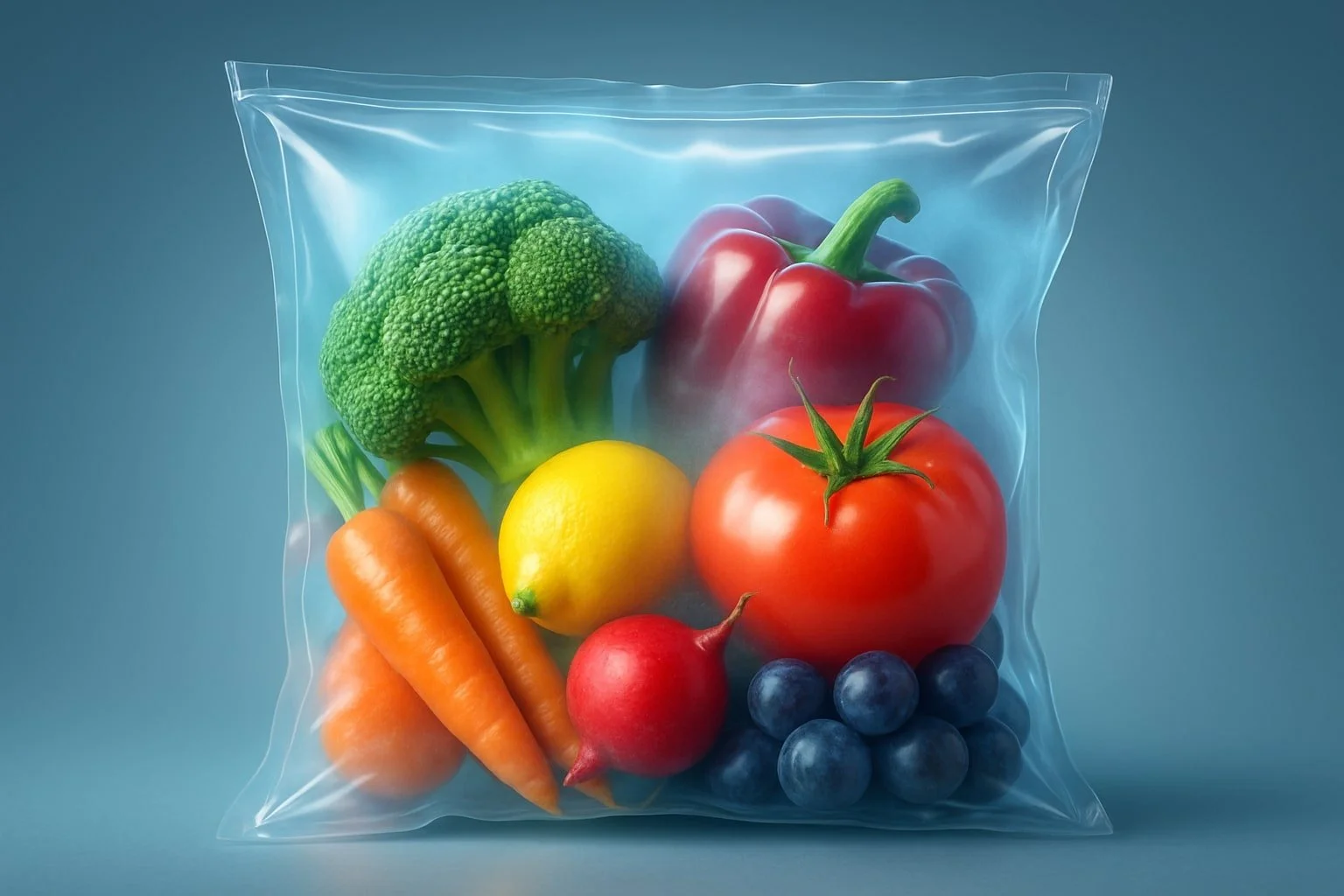
Modified Atmosphere Packaging (MAP) extends the shelf life of perishable foods by carefully controlling the levels of gases such as oxygen, carbon dioxide, and nitrogen inside the packaging. This process slows spoilage by reducing the activity of bacteria, molds, and yeasts that typically cause food to degrade. The result is fresher products that last longer on shelves and in consumers’ homes.
MAP also helps maintain moisture and texture, which means less food is wasted due to premature spoilage or drying out. For food producers, retailers, and consumers alike, understanding how MAP works opens up new possibilities for reducing waste and improving food quality.
Understanding Modified Atmosphere Packaging (MAP)
Modified atmosphere packaging (MAP) uses specific gas mixtures to preserve food quality and extend shelf life. This section details what MAP is, how it operates, and the scientific reasoning supporting its effectiveness in food packaging.
What Is Modified Atmosphere Packaging
Modified atmosphere packaging (MAP) is a technology designed to alter the composition of gases inside a food package. Standard air contains about 21% oxygen, 78% nitrogen, and a small amount of carbon dioxide. In MAP, the levels of these gases are precisely adjusted to fit the needs of specific products.
MAP is widely used for fresh produce, meats, bakery products, and dairy items. By customizing the atmosphere, MAP helps keep food fresh longer and protects it from spoilage. The method does not involve adding preservatives, making it suitable for consumers seeking fresher, less processed foods.
MAP packaging usually includes a combination of film barriers and sealing processes to maintain the intended atmosphere. This packaging can be flexible pouches, rigid trays, or vacuum-sealed bags, tailored to the product type.
How MAP Works
MAP technology works by replacing or reducing the oxygen level inside a sealed package and increasing levels of other gases, such as nitrogen and carbon dioxide. Lowering oxygen slows down oxidation reactions and the growth of aerobic microorganisms. These changes help prevent spoilage, discoloration, and loss of texture.
The choice of gases and their specific concentrations depend on the food being packaged. For example, high carbon dioxide levels inhibit mold and bacteria on bakery goods, while low oxygen helps prevent browning in fresh produce. Nitrogen is often used as a filler to prevent package collapse.
Below is a basic gas composition table for common MAP applications:
Food Type O2 (%) CO2 (%) N2 (%) Fresh Meat 70 20 10 Bakery Products 0-1 60 39-40 Leafy Greens 2-5 8 87-90
Managing the internal atmosphere requires specialized equipment to flush, fill, and seal the packages reliably.
Key Principles Behind MAP
The main principles behind modified atmosphere packaging revolve around gas balance and barrier integrity. Selection of gases is based on the food’s respiration rate, sensitivity to oxygen, and tendency to spoil. Maintaining the barrier properties of the packaging material is critical, as gas exchange with the surrounding air can undermine the benefits of MAP.
Proper use of MAP technology relies on understanding the interaction between gas composition, food metabolism, and microbial growth. For example, too much carbon dioxide can cause undesirable flavors, while too little can allow spoilage to progress. Packaging films must match the needs of the product, offering the right permeability for target shelf life.
MAP extends shelf life naturally, without the use of synthetic additives, and helps reduce food waste during storage and transport. Accurate application of these principles ensures the quality, safety, and sensory properties are maintained throughout the product’s intended shelf life.
Shelf Life Extension with MAP
Modified Atmosphere Packaging (MAP) slows down spoilage by creating a controlled environment inside the package. This technique manages oxygen, carbon dioxide, and nitrogen levels to help keep foods fresh, retain quality, and reduce waste.
Preservation of Perishable Products
MAP is especially effective for perishable goods like fresh produce, meats, and ready-to-eat meals. By reducing the oxygen content and increasing levels of carbon dioxide or nitrogen, MAP limits the growth of aerobic bacteria and molds. This directly slows down the natural processes leading to spoilage.
Food items most commonly benefiting from MAP include leafy greens, tomatoes, poultry, and seafood. These products typically have short shelf lives under standard packaging but see significant extensions—often by several days or even weeks—when packaged using MAP.
Combining MAP with consistent refrigeration further enhances preservation. Through coordinated control of temperature and atmosphere, MAP keeps food visually appealing, safe, and consumable for longer periods.
Impact on Product Quality
Maintaining high product quality is crucial for both consumers and producers. MAP helps retain the texture, color, and nutritional value of foods. For instance, fruits and vegetables packed under modified atmospheres exhibit slower ripening and reduced discoloration compared to those in traditional air packaging.
Fresh meat retains its color and does not develop off-odors as quickly. Flavor profiles are also better preserved, since slowed oxidation reduces the formation of rancid tastes in fatty foods. Common quality indicators, such as firmness in produce or freshness in baked goods, remain at acceptable levels for longer due to MAP.
Manufacturers often choose gas mixtures based on the specific needs of each product. This targeted approach supports both taste and appearance, providing consumers with products that meet expectations for freshness.
Reduction of Food Spoilage
Spoilage occurs mainly due to microbial activity and oxidation. MAP significantly slows these processes by minimizing available oxygen and controlling humidity within the package, making the environment unfavorable for spoilage organisms.
A key benefit is a reduction in visible signs of spoilage such as softening, wilting, or mold growth. This helps decrease food waste not only at the retail level but also throughout the supply chain and in consumer households.
Data from the food industry indicate that MAP can reduce spoilage rates by up to 50% for certain items. This leads to longer shelf life, increased saleable inventory, and improved food safety across multiple categories.
Controlling Gas Composition
Modified atmosphere packaging (MAP) relies on adjusting specific gases within packaging to slow spoilage and maintain food quality. Gas composition—mainly oxygen, nitrogen, and carbon dioxide—directly affects microbial growth and oxidation.
Optimizing Oxygen Levels
Reducing oxygen levels is a central strategy in MAP, as oxygen supports both aerobic microbial growth and oxidation of food components. Most fresh foods packaged with MAP have oxygen levels reduced to below 2%. This slows enzymatic browning and limits the growth of spoilage bacteria, especially in meats, bread, and produce.
Certain foods, like fruits and vegetables, may require some oxygen to prevent anaerobic respiration, which can cause undesirable flavors or textures. In these cases, maintaining controlled low oxygen rather than complete elimination is crucial. Packaging materials must have the correct barrier properties to maintain these exact oxygen concentrations throughout the shelf life.
The table below illustrates typical oxygen levels used in MAP for different food types:
Food Type Typical Oxygen (%) Fresh Meat 0.2 – 2 Bakery Products <1 Cut Fruit/Salads 2 – 5
Role of Nitrogen and Carbon Dioxide
Carbon dioxide (CO₂): CO₂ inhibits the growth of aerobic bacteria and molds. In MAP, CO₂ concentrations often range from 20% to 60%, depending on the food. Higher CO₂ is particularly effective for extending the shelf life of meat, fish, and dairy products by slowing microbial spoilage.
Nitrogen (N₂): Nitrogen acts primarily as a filler or balance gas. As an inert gas, it displaces oxygen, preventing both oxidation and package collapse, especially in products like coffee or snacks. Since nitrogen does not react with food or microorganisms, it supports maintaining package integrity and preventing moisture loss.
Balancing CO₂ and N₂ to match product needs ensures protective effects without damaging texture or flavor. MAP systems are tailored to create optimal ratios to suit different foods, considering their sensitivity to gases and shelf-life requirements.
Inhibiting Spoilage Mechanisms
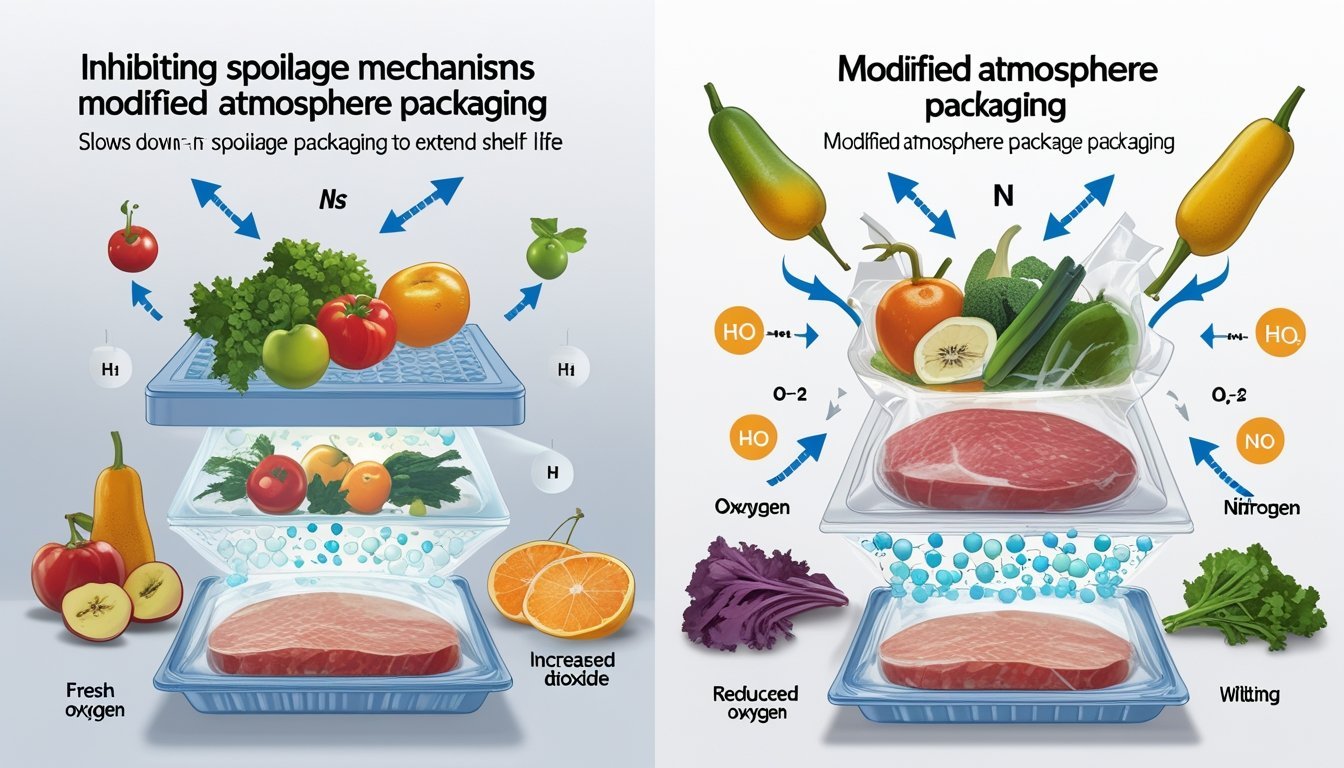
Modified atmosphere packaging extends food shelf life by directly targeting spoilage processes. It delays product degradation by adjusting the atmosphere inside the package to control specific chemical and biological reactions.
Suppressing Microbial Growth
Microbial activity is the primary cause of spoilage in perishable foods such as meat, dairy, and produce. Modified atmosphere packaging decreases oxygen levels and increases carbon dioxide concentrations to slow or stop the growth of spoilage bacteria, yeasts, and molds.
Bacteria such as Pseudomonas, which thrive in oxygen-rich environments, are especially sensitive to reduced oxygen. Elevated CO₂ inhibits their metabolic activity and further restricts growth.
The selective use of gases can extend shelf life by significantly reducing the total viable count of spoilage organisms. This delay often makes refrigeration more effective, as both methods work together to control microbial proliferation.
Reducing Oxidation
Oxidation is a major factor in food quality loss, contributing to off-flavors, color changes, and nutrient degradation. MAP replaces oxygen in the package with inert gases like nitrogen.
Lowering oxygen prevents oxidation of lipids, which protects against rancidity in foods like nuts, cheese, and processed meats. It also helps preserve pigments, so fresh produce maintains its natural appearance longer.
A typical MAP gas mixture might include less than 1% oxygen, which effectively slows oxidative reactions. This benefits not only shelf stability but also the sensory quality of the packaged products.
Limiting Enzymatic Activity
Many fruits and vegetables deteriorate due to enzymatic reactions that proceed after harvest. Enzymes involved in browning and softening require oxygen to function effectively.
By reducing oxygen levels, MAP slows down the activity of enzymes such as polyphenol oxidase and lipoxygenase. This delay helps maintain firmness, color, and nutritional content in fresh-cut produce.
MAP can also use elevated CO₂ to create mild acidity, which further reduces specific enzymatic reactions. This combination supports freshness throughout storage and distribution.
MAP for Specific Food Types
Modified atmosphere packaging (MAP) is tailored to the unique needs of different foods. The effectiveness of MAP depends on the biological and chemical properties of each food item, as well as factors like ethylene production and respiration rates.
Fresh Fruits and Vegetables
Fresh fruits and vegetables remain highly perishable even under refrigeration due to their active metabolism. MAP addresses this by adjusting oxygen and carbon dioxide levels to slow respiration and reduce the effects of ethylene, which accelerates ripening and spoilage.
A typical MAP mixture for produce often contains low oxygen (2-5%) and elevated carbon dioxide (3-10%). This slows down both respiration and microbial growth. For example, leafy greens and salads benefit from higher CO₂ that helps maintain crispness and color.
Key advantages for fresh produce:
Slowed enzyme activity and delayed senescence
Less moisture loss, preserving texture
Reduced browning and fungal growth
Packaging films are selected based on their gas permeability, allowing for a dynamic balance as the respiration rate of the product changes. Careful control of MAP can almost double the shelf life of certain fruits and vegetables compared to air packaging, though exact extension varies by type and maturity.
Dairy Products
Dairy products, especially cheese, yogurt, and fresh milk products, benefit from MAP through targeted reduction of oxygen and controlled carbon dioxide levels. Lower oxygen inhibits the growth of spoilage organisms and molds.
Cheese, for instance, is often packed with high-CO₂ atmospheres (20-60%) to suppress microbial activity without impairing flavor. Soft cheeses are particularly sensitive to oxygen, making MAP essential to minimize spoilage.
Key points in MAP for dairy:
Retards mold and yeast growth
Preserves texture and flavor
Extends shelf life for both soft and hard cheeses
Packaging materials must provide effective barriers to both oxygen and moisture. Products like sliced cheese and milk powders are further protected from light and humidity, ensuring product safety and sensory quality during storage and distribution.
Packaging Technology in MAP
Packaging technology for Modified Atmosphere Packaging (MAP) relies on precise control of environmental factors inside food packages. Maintaining low oxygen, controlling moisture, and preventing external contamination are essential for maximizing shelf life and ensuring product safety.
Barrier Packaging Materials
Barrier packaging materials are critical in MAP as they limit the transfer of gases and moisture. High-barrier films such as polyethylene, polyamide, polyester, and EVOH are selected for their ability to minimize oxygen and water vapor ingress.
The choice of packaging material depends on the type of food and the desired shelf life. For example, fresh meats require films with high oxygen barriers, while bakery items may need moisture protection instead.
A table summarizing common barrier materials:
Material Barrier Type Common Uses Polyethylene (PE) Moisture Produce, snacks Polyamide (PA) Oxygen Meats, cheese Polyester (PET) Oxygen & moisture Ready meals EVOH High oxygen & aroma Coffee, deli meats
Selecting the correct barrier film ensures the internal atmosphere remains stable, which directly impacts product freshness and safety.
One-Way Valves and Desiccant Packs
One-way valves are integrated into MAP to allow certain gases, like CO₂, to escape while blocking oxygen entry. This is particularly important in coffee and some fresh produce, where gas release can otherwise cause packaging to bloat or rupture.
These valves help maintain the optimal modified atmosphere, preventing spoilage and extending product shelf life without compromising packaging integrity. Their placement and quality directly affect gas exchange rates.
Desiccant packs are often used to manage moisture levels within MAP packages. By absorbing excess humidity, these packs reduce the risk of mold growth and preserve the texture of products such as dried snacks or jerky.
Proper use of one-way valves and desiccant packs supports the overall aim of MAP—maintaining a stable environment that maximizes shelf life and upholds food quality.
MAP Techniques and Methods
Modified Atmosphere Packaging (MAP) uses specific methods to replace or remove gases inside food packaging. These techniques help slow spoilage and maintain product freshness by controlling the internal atmosphere of the package.
Gas Flushing
Gas flushing (also known as gas flush) involves introducing a specific combination of gases—commonly carbon dioxide (CO₂), nitrogen (N₂), and sometimes a small amount of oxygen (O₂)—into the packaging immediately before it is sealed.
This process replaces the ambient air, which normally contains about 21% oxygen, to a controlled mix that slows down microbial growth and oxidation. In most MAP packaging for perishable foods, oxygen is reduced to less than 2%. Increased levels of carbon dioxide can inhibit the growth of spoilage bacteria, while nitrogen serves as an inert filler gas that prevents package collapse.
Gas flushing is especially beneficial for products like fresh produce, meats, and bakery items. By controlling the composition of gases inside the package, shelf life is significantly extended compared to standard packaging.
Key parameters managed:
Oxygen concentration
Carbon dioxide levels
Nitrogen as an inert filler
Vacuum Packaging
Vacuum packaging removes air from inside the package before sealing, creating a low-oxygen environment around the food. This reduction in oxygen helps slow the growth of aerobic bacteria and reduces oxidation reactions that cause spoilage.
The process involves placing the product in a plastic package, extracting the air with a vacuum, and sealing the package tightly. Vacuum packaging is widely used for products like cured meats, cheeses, and dried foods. It is less suitable for products sensitive to pressure changes, such as soft fruits.
By minimizing oxygen, vacuum packaging increases shelf life and helps preserve flavor, texture, and nutritional quality. It also reduces freezer burn for products stored at low temperatures. The absence of gas flush means the packaging process is simpler but may not be ideal for all food types.
MAP in Relation to Food Safety and Refrigeration
Modified Atmosphere Packaging (MAP) helps slow the spoilage of perishable foods, but its effectiveness often relies on combining with other storage methods. The way MAP is used alongside refrigeration plays a crucial role in both protecting food safety and preventing quality loss.
Synergy with Refrigeration
MAP works best when used together with refrigeration. Lowering the temperature slows down microbial activity and enzyme reactions, while the altered atmosphere inside the package reduces oxygen levels and increases gases like carbon dioxide or nitrogen.
This dual approach targets two main causes of food spoilage: microbial growth and oxidation. For example, refrigerated MAP meat products can stay fresh several days longer than those stored in air alone. Refrigeration also helps prevent anaerobic bacteria, which require low oxygen but thrive at higher temperatures, from becoming a food safety problem in MAP conditions.
A practical combination is seen with ready-to-eat meals, where maintaining temperatures below 5°C and using MAP leads to extended freshness. The table below illustrates typical shelf life improvements:
Product Air (Refrigerated) MAP (Refrigerated) Fresh Poultry 4–7 days 10–21 days Cut Salad Mixes 3–4 days 7–10 days
Enhancing Food Safety
MAP directly supports food safety by suppressing the growth of spoilage organisms and certain pathogens. Lower oxygen levels limit aerobic microbes, such as Pseudomonas species, which are common causes of spoilage in meats and dairy.
Safe gas mixtures are selected based on product type. For example, high carbon dioxide levels in MAP inhibit molds and some bacteria. However, since MAP can suppress obvious signs of spoilage without eliminating all pathogens, rigorous hygiene and precise gas control are required during packaging.
MAP does not replace the need for refrigeration or proper food handling. It serves as a complementary technology, lowering risks but not eliminating them. Integrated systems, combining MAP with clean processing and cold storage, are essential for ensuring both safety and shelf life.

