
Reversible vs Irreversible Spoilage
Key Differences and Impacts on Food Safety
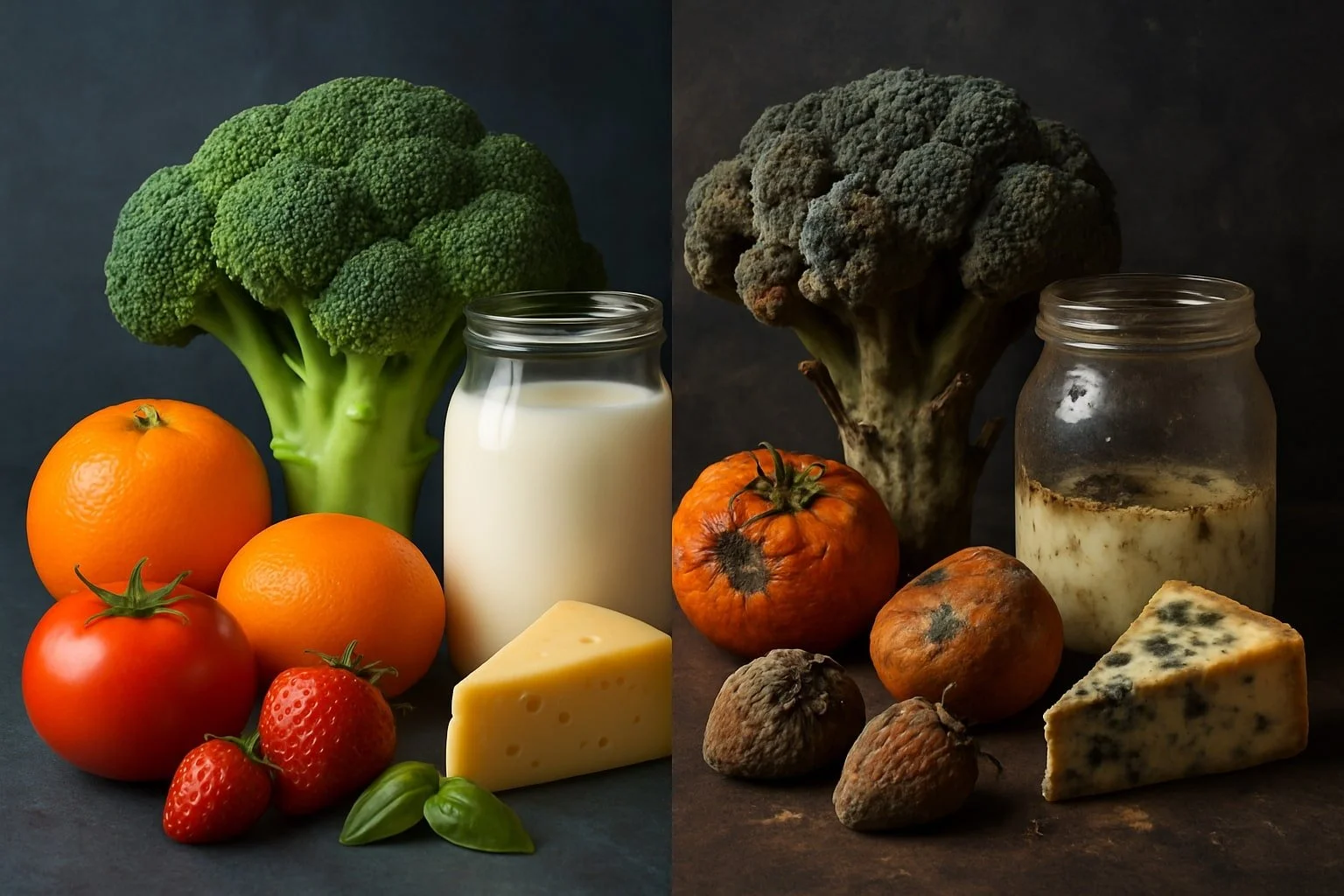
Food spoilage isn’t always a one-way street—sometimes, the damage can be undone, while other times, it’s permanent. Reversible spoilage refers to changes in food that can be corrected and returned to their original state, but irreversible spoilage happens when quality or safety is lost for good. Understanding the difference is essential for assessing whether a product is still usable or must be discarded.
Many people encounter both types in daily life, from bread that becomes stale but can be revived, to milk that sours and cannot be fixed. Knowing the causes and symptoms of each helps consumers make informed decisions and reduce unnecessary food waste.
Understanding Spoilage: Reversible vs Irreversible
Some changes in spoiled food can be undone, while others are final and make the food unsafe or unusable. Knowing the difference affects how food is handled, stored, and recovered in daily life.
Defining Reversible Spoilage
Reversible spoilage refers to changes in food that can be undone or remedied, meaning the food’s quality or safety may be restored. These changes are often caused by conditions such as moisture gain or loss, slight temperature shifts, or mild drying. For example, bread that has become stale from moisture loss may regain softness if reheated or steamed.
In many cases, reversible spoilage involves reversible reactions or physical processes rather than chemical or microbial activity. For instance, chocolate that has developed a whitish coat due to fat bloom can often be melted and retempered without affecting safety or quality.
Key Points:
Caused by physical changes (moisture, temperature).
Involves reversible processes or reactions.
Food often remains safe to eat after correction.
Common examples include dehydration, loss of crispness, or hardening of products, many of which can be corrected with proper storage or preparation.
What Is Irreversible Spoilage?
Irreversible spoilage happens when changes in food cannot be undone and the original quality or safety is lost permanently. This is often due to irreversible reactions like microbial growth, enzymatic action, or chemical degradation. Once these processes reach a certain point, the food’s appearance, texture, odor, or safety cannot be restored.
Microbial spoilage, mold growth, off odors, and toxic compound formation are examples of irreversible spoilage. For instance, meat that smells sour or milk that becomes curdled due to bacteria has undergone changes that cannot be reversed.
Important Features:
Involves microbial, chemical, or enzymatic activity.
Results from irreversible processes or reactions.
Frequently produces toxins or harmful byproducts.
Food with irreversible spoilage must be discarded, as eating it may present a health risk.
Key Principles: Thermodynamics and Spoilage
Understanding spoilage through the lens of thermodynamics highlights why some changes in food can be reversed and others cannot. Core principles like energy conservation, heat flow, and molecular disorder directly influence the spoilage process.
First Law of Thermodynamics
The first law of thermodynamics, also known as the law of energy conservation, states that energy cannot be created or destroyed, only transformed from one form to another. In the context of spoilage, this means that any chemical or physical change in food—such as microbial activity or oxidation— involves energy being transferred or converted.
For example, when bacteria metabolize nutrients in food, chemical potential energy is transformed into heat and metabolic byproducts. Cooking, cooling, and reheating food are also governed by this principle. However, even if the energy balance remains the same, the original state of food (such as freshness or texture) may not be restored after a process.
Second Law of Thermodynamics
The second law introduces the concept that all natural processes tend to move towards greater disorder or entropy. In food spoilage, this is seen in how biological, physical, and chemical reactions proceed spontaneously in one direction: from a state of order and freshness to disorder and decay.
Heat always flows from warmer to cooler bodies, and spoiling materials like proteins and fats degrade over time, releasing energy to the surroundings. Irreversible spoilage occurs because it is linked to changes that cannot be undone by simply reversing the energy flow or process conditions, such as the breakdown of cell structure or the loss of volatile aromas.
Entropy and Irreversibility
Entropy is a measure of randomness or disorder in a system. As food undergoes spoilage, entropy increases because molecular structures break down and complex substances are degraded into simpler products. This rise in entropy is what makes spoilage—especially irreversible spoilage—impossible to fully correct.
In reversible spoilage, changes like crystallization in honey or the separation of water in yogurt can sometimes be returned to the original state with simple physical actions. In contrast, once irreversible changes have raised the system’s entropy significantly—through microbial growth, enzymatic breakdown, or rancidity—restoring freshness or safety becomes impossible without fundamentally altering or destroying the food.
By analyzing thermodynamic processes, one can distinguish between spoilage that can be reversed with minimal intervention and spoilage that marks the end of the food’s usable life.
Reversible Spoilage Processes
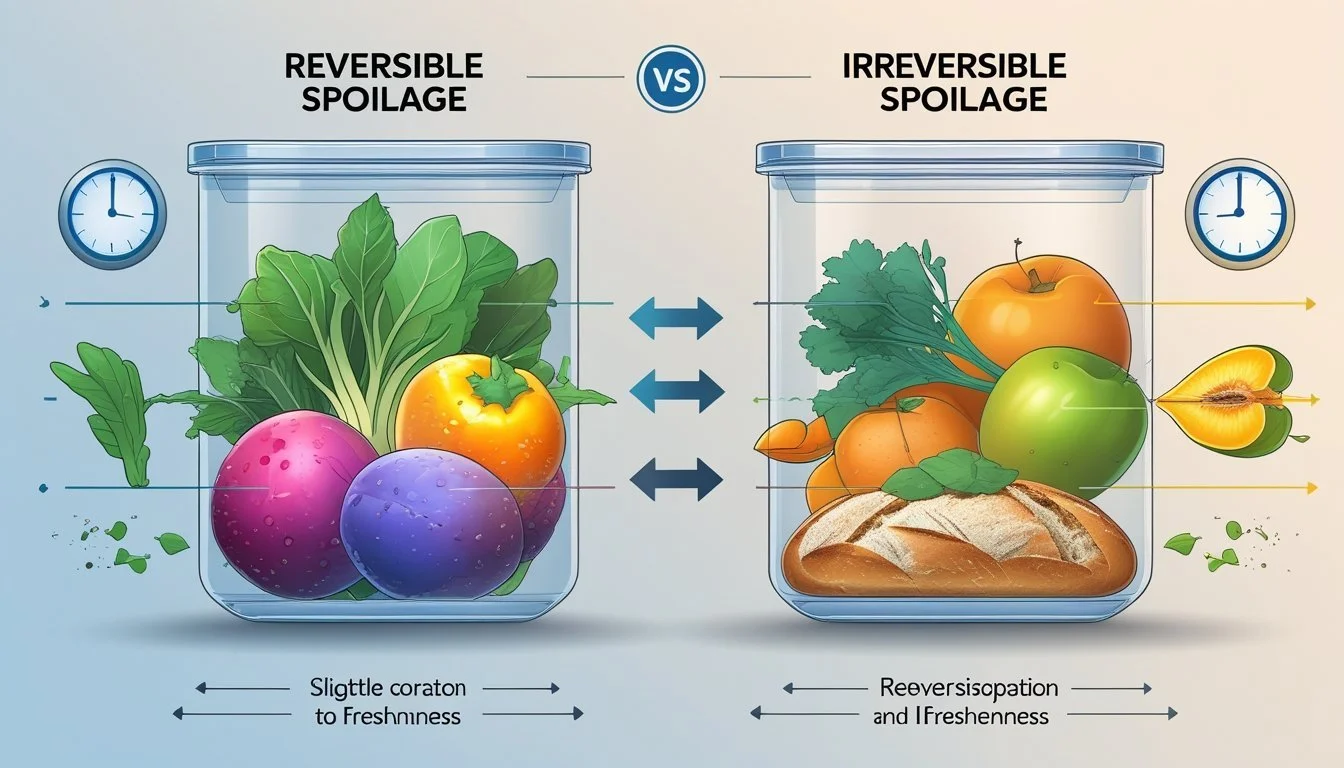
Some spoilage processes do not permanently alter the material and can be reversed under certain conditions. Changes in physical state or chemical composition can sometimes return to their original form without significant loss of quality or function.
Examples of Reversible Changes
A common example of reversible spoilage is the staling of bread due to moisture loss. When bread is left exposed, it becomes dry and hard, but reheating can help redistribute moisture, restoring its softness.
Another case includes the crystallization of honey. At lower temperatures, glucose in honey forms crystals leading to a gritty texture. Gentle warming liquefies the honey, returning it to its original state.
Temporary discoloration from oxidation, such as browned cut apples, can sometimes be reversed by adding acid like lemon juice to reduce browning. These examples involve physical changes or mild chemical shifts, not permanent structural alterations.
Dynamic Equilibrium in Spoilage
Dynamic equilibrium can occur during food spoilage when reversible changes balance forward and reverse processes. For instance, water loss and absorption in dried foods can reach an equilibrium with the surrounding humidity, halting further texture changes.
Dairy products like cheese may undergo reversible moisture fluctuations depending on storage conditions. If removed from a humid environment and later returned, some of the lost moisture may be restored, stabilizing the product temporarily.
This balance between loss and recovery of certain qualities often depends on external factors, such as temperature and humidity. As long as there’s no significant chemical breakdown, the spoilage process can be partially reversed through environmental adjustments.
Reversible Chemical Reactions
Some reversible spoilage processes are driven by chemical reactions that can proceed in both directions. For example, carbon dioxide dissolution in soda is a reversible reaction: opening the bottle releases the gas, but resealing and cooling may allow some gas to redissolve.
Proteins in food can undergo reversible denaturation. When milk is mildly heated, some proteins unfold, but cooling may allow partial refolding, restoring the original properties to an extent.
Reversible changes depend on thermodynamic conditions. As long as reactants and products can convert back and forth, the spoilage is not permanent, highlighting the role of equilibrium and reversible reactions in these processes.
Irreversible Spoilage Processes
Irreversible spoilage occurs when a substance or material undergoes permanent change that cannot be undone by simple, physical means. These processes often involve significant chemical or structural alterations that mean the original state cannot be restored.
Irreversible Changes in Substances
Irreversible changes result in materials or products that cannot return to their original form.
For example, when milk turns sour or bread becomes moldy, those changes go beyond simple reversal. Physical changes such as burning, charring, or extreme denaturation of proteins also fall under irreversible spoilage, as they alter the fundamental structure of the original material.
In food systems, irreversible spoilage can include:
Rancidity in fats and oils
Fermentation leading to off-flavors
Drying out or dehydration where rehydration does not restore the original texture
Once these changes occur, neither temperature adjustment nor mixing can reverse the outcome.
Irreversible Chemical Reactions
Irreversible reactions are chemical changes in which the reactants form products that cannot revert to their original form under the same conditions.
Spoilage often involves irreversible chemical reactions such as oxidation, hydrolysis, or enzymatic breakdown. For instance, when fruit browns due to oxidation or when meat goes rancid, the process is driven by reactions that fundamentally change the molecules involved.
A common example is the Maillard reaction, which is responsible for browning and off-flavors in stale foods. This process forms new, stable compounds that will not convert back with ordinary methods.
These reactions are mostly spontaneous, progressing toward increased disorder and making reversal impossible.
Factors Contributing to Irreversibility
Several factors promote or accelerate irreversible spoilage:
Temperature: High heat can denature proteins and change chemical structures permanently.
Microbial activity: Bacteria, molds, and yeasts drive spoilage through irreversible fermentation or putrefaction.
Oxygen exposure: Leads to oxidative spoilage, causing color and flavor changes that cannot be undone.
pH changes: Acidic or alkaline environments promote reactions that remove the possibility of reversal.
Time: Prolonged exposure to unfavorable conditions increases the extent of irreversible changes.
These factors act together to ensure that, once initiated, spoilage processes proceed beyond the point of recovery.
Physical and Chemical Changes in Spoilage
Physical and chemical changes play a central role in how foods break down and become unsuitable for consumption. These transformations can involve changes in temperature, composition, and reactions with substances like oxygen, each with specific impacts on spoilage.
Melting, Freezing, and Evaporation
Changes of state, such as melting and freezing, directly influence food preservation and spoilage. Freezing food slows microbial activity and chemical reactions, helping to extend shelf life. However, improper freezing can cause ice crystals to rupture cell walls, leading to mushy textures upon thawing.
Melting reverses the structure formed during freezing and may allow microbes to proliferate if food stays at warm temperatures. Evaporation, often seen in dried foods, can help reduce spoilage by limiting water available to microorganisms. But if evaporation is uncontrolled, it can concentrate salts or other substances, affecting texture and flavor.
Key Points:
Freezing inhibits spoilage but may damage food structure
Melting allows for microbial reactivation
Evaporation decreases water, slowing microbial growth
Mixing and Separation
Mixing different substances can affect spoilage by exposing sensitive components to oxygen or by blending ingredients with different spoilage rates. For example, mixing salad greens with dressings introduces moisture, increasing the risk of spoilage.
Separation, on the other hand, can preserve freshness by keeping ingredients isolated until use. Improper separation or incomplete mixing might lead to uneven distribution of preservatives or exposure to contaminants. The exposure of lipids and carbohydrates to oxygen through mixing can accelerate chemical spoilage, such as rancidity or staling.
Examples:
Salad components kept separate stay fresh longer
Oils mixed with air can oxidize and turn rancid
Burning and Combustion
Burning and combustion represent irreversible chemical changes that fully degrade food quality. When food is burned, it reacts with oxygen to produce new substances like carbon dioxide and water. The process destroys original flavors and nutrients while forming potentially harmful byproducts.
Unlike reheating, which is a physical change, burning alters the food’s chemical make-up permanently. Charred or blackened surfaces may contain substances not naturally present in the raw food, making them unsuitable or even unsafe for consumption.
In summary:
Burning is an irreversible process
Oxygen combines with food, producing gases like carbon dioxide
Chemical structure is permanently altered, resulting in spoilage
Comparing Products and Reactants in Spoilage
Spoilage changes food at the molecular level, often by transforming original reactants into new products. Whether these changes are reversible or not depends on the type of spoilage and underlying processes.
Product Transformation in Reversible Spoilage
In reversible spoilage, the products can sometimes revert to their original reactants, at least partially. This often involves reactions driven by changes in environmental factors like moisture, temperature, or pH.
Examples of reversible spoilage include processes like bread becoming stale due to moisture loss or the separation of oil and water in salad dressings. Simple interventions, like reheating or stirring, can sometimes restore the product close to its original state.
Key features:
Products: Altered forms of the original reactants that can return to the original state.
Reactants: Basic food components (such as starch in bread) that undergo reversible changes.
Process nature: Driven by physical changes or weak chemical bonds.
Reversible spoilage rarely affects safety but may reduce sensory quality. The products and reactants remain chemically similar, making reversal feasible.
Product Transformation in Irreversible Spoilage
Irreversible spoilage involves permanent changes to food, usually caused by chemical, enzymatic, or microbial actions. The new products formed cannot convert back to the original reactants.
Examples:
Mold Growth: Microbes break down reactants (nutrients in bread), forming new substances like toxic metabolites.
Protein or Fat Degradation: Enzymes transform reactants into different products, resulting in off-odors and flavors that reheating cannot reverse.
Combustion: Burning food produces gases and ash that do not re-form into the original ingredients.
In irreversible spoilage, products are fundamentally different from the reactants. These changes are usually associated with safety risks, inedibility, and significant nutrient loss. The original structure and chemistry of the food are lost, and no practical process can restore the reactants or the initial product.
Factors Affecting Reversibility in Spoilage
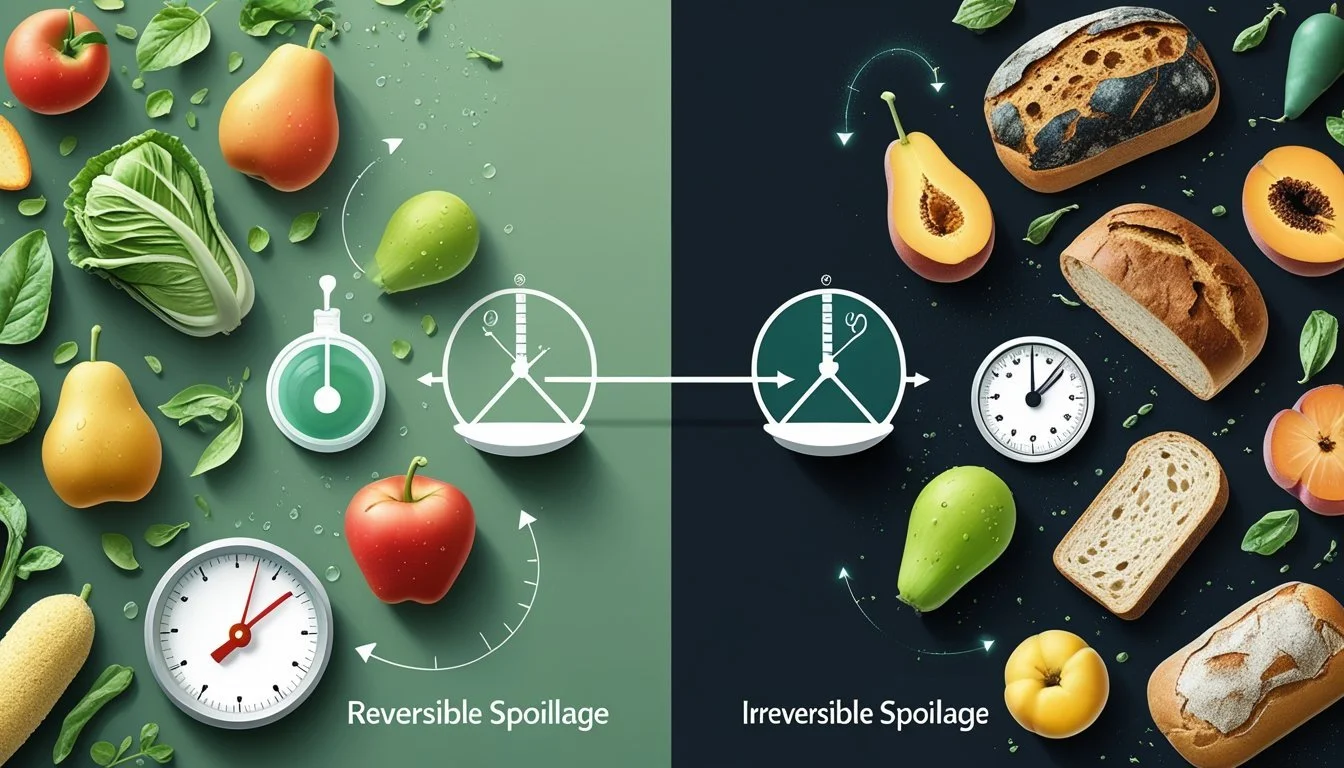
The ability to reverse spoilage in food or materials depends on several physical conditions. Key influences include the temperatures and pressures involved, how close the system is to equilibrium, and the role of friction or natural processes in the change.
Temperature and Pressure
Temperature directly affects the speed and type of chemical and microbial reactions that lead to spoilage. Lowering temperature slows reaction rates, which can sometimes halt or even reverse limited spoilage if harmful changes haven’t become widespread.
Pressure influences the physical state and chemical stability of many materials. For example, vacuum or modified-atmosphere packaging uses pressure changes to limit oxygen, which can inhibit microbial growth and oxidation.
In many cases, once temperature or pressure conditions exceed certain thresholds, spoilage can become irreversible. This is often due to protein denaturation or cell rupture that cannot be undone by simply restoring original conditions.
Maintaining stable, moderate temperature and pressure is essential for any process seeking to reverse or stall spoilage, especially in perishable foods.
Equilibrium State and Temperature Difference
A system close to equilibrium is more likely to allow reversible changes. When temperature differences between a product and its environment are very small (often described as infinitesimal), reactions and state changes can proceed more slowly and be controlled more easily.
Reversible spoilage is most feasible when environmental changes occur gradually. Sudden shifts in temperature drive the system far from equilibrium, often leading to irreversible chemical or physical damage.
Processes like controlled thawing or gentle warming are designed to exploit near-equilibrium conditions. Rapid heating or cooling, by contrast, often disrupts structures irreversibly and accelerates degradation.
Friction and Natural Process
Friction, in a broader physical and molecular sense, represents energy loss within a system. When spoilage involves processes with low internal friction—such as slow diffusion of gases—reversibility is more attainable because energy losses remain minimal.
Natural processes, including microbial activity and enzymatic breakdown, tend to drive spoilage toward irreversibility due to cumulative and often self-accelerating changes. Once these natural processes pass a critical point, reversing the effects is unlikely.
Minimizing factors that contribute to friction—like agitation, exposure to air, or ongoing enzymatic activity—can help slow spoilage and improve the chances of partial reversibility. However, in most cases, completely reversing advanced natural spoilage is not possible.
Practical Implications for Food and Material Science
Distinguishing between reversible and irreversible spoilage is essential for food safety and quality control. The approach to managing each type of spoilage depends on how the underlying changes affect the original substance or mixture.
Identifying Reversible and Irreversible Spoilage
Reversible spoilage involves changes that can be undone, such as moisture loss or crystallization in some food products. These changes do not alter the fundamental chemical nature of the substance, so texture or appearance can often be restored under proper conditions.
Irreversible spoilage, however, results from chemical or biological transformations like fermentation, rancidity, or protein breakdown. These changes form new compounds and are often marked by new odors, flavors, or colors that cannot return the mixture to its original state.
Key indicators of irreversible spoilage include:
Permanent off-colors (e.g., browning, dark spots)
Irreversible textural changes (e.g., mushiness)
Off-odors that persist after processing
Gas emission or visible mold growth
Food scientists use tests—such as pH measurements or sensory evaluation—to distinguish between these spoilage types.
Managing Spoilage in Real-World Applications
Management strategies depend on whether spoilage is reversible or irreversible. In the case of reversible spoilage, adjustments such as rehydration, mild heating, or changes in storage conditions may restore the mixture's original qualities.
For irreversible spoilage, removal or discarding of affected substances is often required, as the altered state cannot be safely reversed. Preventative measures focus on controlling storage temperature, humidity, and packaging to minimize risk.
In material science, detecting spoilage early is crucial. Technologies such as colorimetric sensors help monitor irreversible changes, especially for protein-rich mixtures like meat. Decision-making protocols rely on clear identification methods to prevent unsafe consumption or usage.

