
Frozen vs Freeze-Dried: Shelf Life Compared for Long-Term Food Storage
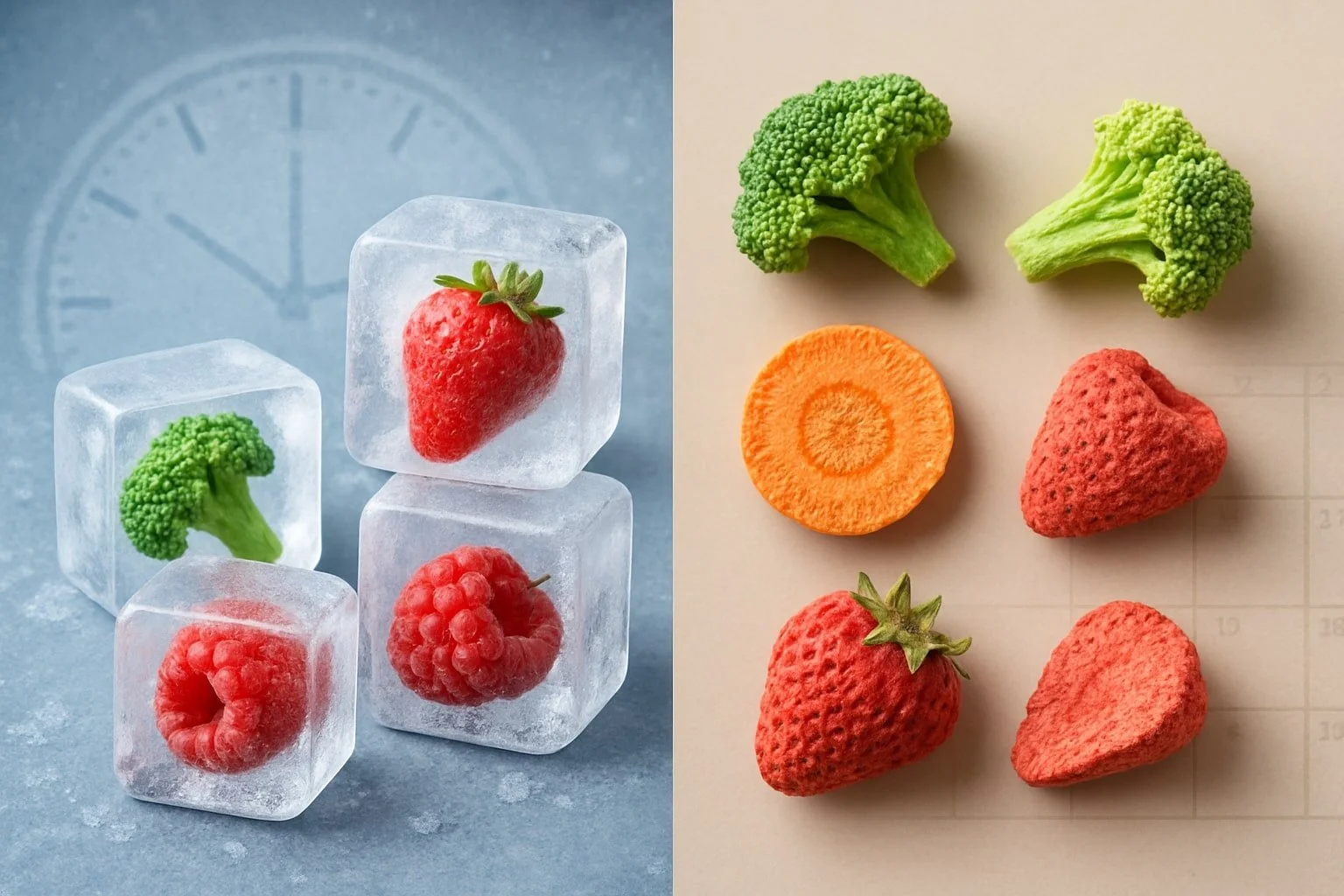
When comparing frozen and freeze-dried foods, one of the most important differences is their shelf life. Freeze-dried foods typically last much longer, often remaining safe and usable for up to 25 years when stored properly, while frozen foods generally last around two years. This significant gap in longevity can influence which method is better for long-term storage, emergency preparedness, and everyday convenience.
People who want to stock up on essentials or reduce food waste often look at how long their food will stay fresh and safe to eat. Understanding the shelf life of frozen and freeze-dried products helps consumers make informed choices for their households or businesses.
Exploring how processing methods impact shelf life and food quality can offer practical insights for anyone interested in food storage, preparedness, or nutrition. This article compares frozen and freeze-dried foods to help readers decide which option best suits their needs.
Understanding Frozen and Freeze-Dried Foods
Freezing and freeze-drying are two widely used food preservation methods. Each technique affects food texture, taste, water content, and storage requirements in distinct ways.
What Is Freezing?
Freezing is a preservation method where food is subjected to temperatures below 0°C (32°F), halting most microbial activity and slow enzyme reactions. The food retains its original water content, but this water turns into ice within the food matrix.
This process maintains the food’s texture, flavor, and nutritional value better than some other preservation techniques. Frozen foods must be kept at constant low temperatures to remain safe and maintain quality.
Freezing is common for meats, vegetables, fruits, and prepared meals. Key reasons for its popularity include convenience, ease of storage, and the ability to lock in freshness for several months to a year. However, freezer burn and texture changes may develop if items are not packed or sealed properly.
What Is Freeze-Drying?
Freeze-drying, also called lyophilization, involves freezing food and then removing nearly all water through sublimation under low pressure. This process typically removes about 98% of the moisture, resulting in lightweight, shelf-stable products.
Unlike traditional drying or freezing, freeze-dried foods do not require refrigeration and can be stored safely at room temperature for years. The low moisture content hinders the growth of bacteria and mold, greatly extending shelf life.
This method retains much of the food’s original taste, appearance, and nutrients. Freeze-dried fruits, vegetables, meats, and even complete meals are popular for emergency supplies, camping, and long-term food storage. The finished product is easy to rehydrate by adding water.
Shelf Life Comparison: Frozen vs Freeze-Dried
Freeze-dried foods and frozen foods differ significantly in shelf life, storage stability, and suitability for long-term storage. The specific method used has a direct impact on how long the food remains safe and maintains quality.
Shelf Life of Frozen Foods
Frozen foods are typically preserved by storing them at temperatures at or below -18°C (0°F). Under optimal conditions, many frozen foods last between 6 months and 2 years before they begin to show signs of quality loss.
The true shelf life depends on the type of food. For example:
Food Type Maximum Shelf Life (Frozen) Vegetables 8-12 months Fruits 8-12 months Meats (uncooked) 4-12 months Cooked dishes 2-6 months
Frozen foods rely on cold temperatures to inhibit microbial growth. However, freezer burn, texture changes, and potential power outages can compromise food safety and quality over time.
Shelf Life of Freeze-Dried Foods
Freeze-dried foods are processed to remove up to 98% of their water content. This low moisture level limits microbial and enzymatic activity, allowing for dramatically longer shelf life.
When properly packaged and kept in a cool, dark location, many freeze-dried products can remain shelf-stable for 15 to 30 years or longer. Common shelf life ranges include:
Food Type Maximum Shelf Life (Freeze-Dried) Fruits and Vegetables 20-25 years Meats 15-25 years Prepared Meals 25-30 years
Freeze-dried foods are popular for emergency food supply kits and long-term storage because of their reliability and minimal need for refrigeration.
Factors Affecting Shelf Life
The actual shelf life for both frozen and freeze-dried foods is influenced by several key factors:
Temperature stability: Sudden changes or prolonged high temperatures can shorten shelf life.
Packaging quality: Oxygen exposure accelerates spoilage; airtight containers and oxygen absorbers improve longevity.
Moisture levels: Even small amounts of moisture can cause clumping or microbial growth in freeze-dried goods.
Light exposure: Light can degrade certain nutrients and cause off-flavors, especially in freeze-dried foods.
Adhering to recommended storage conditions maximizes both safety and nutrient retention.
Long-Term Storage Considerations
For long-term storage, freeze-dried foods offer significant advantages. Their low moisture and airtight packaging keep them shelf-stable at room temperature, making them ideal for situations without reliable refrigeration.
Frozen foods require constant energy input to remain at a safe temperature. They are better suited for short- to medium-term storage where electricity is guaranteed.
Freeze-dried options are especially valued by those planning for emergency food supply and disaster preparedness. Their compact packaging and extended shelf life make them a practical choice for extended storage needs.
Nutritional Value and Retention Differences

Frozen and freeze-dried foods are both designed to maximize shelf life, but they differ in how well they preserve key nutrients and flavors. The processing method affects the nutritional content, with some vitamins and minerals more resistant to loss than others.
Nutrient Loss During Freezing
Freezing locks in many nutrients immediately after harvest, especially when done quickly. Most of the original vitamins and minerals, such as vitamin C and potassium, remain well-preserved during initial freezing. However, the texture and structure of some foods can be affected.
Over time, certain sensitive nutrients may break down gradually in frozen storage. Water-soluble vitamins, like B vitamins and vitamin C, are more likely to degrade—particularly if the food is exposed to temperature fluctuations or stored for extended periods. Nutrient retention in frozen foods can also depend on blanching before freezing, which may cause some loss but helps prevent further deterioration.
Key factors affecting nutrient loss in frozen foods:
Blanching before freezing
Duration and temperature of storage
Packaging and sealing quality
Nutrient Retention in Freeze-Dried Foods
Freeze-dried foods retain most of their nutritional value due to the gentle removal of water at low temperatures. This process does not require high heat, which helps protect heat-sensitive nutrients that might otherwise be destroyed.
Compared to traditional dehydration, freeze-drying preserves a greater proportion of vitamins, minerals, and phytonutrients. Studies have shown that up to 90–95% of the original nutritional content can be maintained. The minimal handling and absence of heat ensure higher retention of flavor and aroma compounds as well.
Freeze-dried foods are lightweight, have a long shelf life, and are easy to rehydrate. Their superior nutrient retention makes them a strong choice for situations where long-term storage and minimal nutrient loss are priorities.
Comparison Table: Nutritional Retention
Method Vitamin Loss (%) Mineral Loss (%) Flavor/Aroma Retention Freeze-Dried 5–10 0–5 High Frozen 10–30 0–10 Moderate
Nutritional Integrity Over Time
The nutritional integrity of both frozen and freeze-dried foods changes over extended storage. Freeze-dried foods generally maintain their nutrient content for many years—sometimes 10–25 years—if kept in airtight, moisture-free packaging.
Frozen foods are usually best consumed within 1–2 years, as nutrients can slowly degrade even at low temperatures. Freezer burn or compromised packaging may further affect quality. Freeze-dried products, protected from both air and water, are less susceptible to this type of gradual nutrient loss.
Summary of Shelf Life and Nutritional Stability
Freeze-dried foods: Consistent nutrient levels and flavor for long-term storage.
Frozen foods: Moderate nutrient decline with longer storage, especially sensitive vitamins.
Proper packaging strongly impacts how well nutritional value is preserved in both methods.
Taste, Texture, and Appearance
Freeze-dried and frozen foods differ noticeably in their taste, texture, and appearance, especially after storage and preparation. Understanding these differences helps consumers choose the best preservation method for their needs.
Texture and Taste Differences
Freeze-dried foods often preserve much of the original flavor of the fresh item because the process removes water at low temperatures, minimizing taste loss. Many find the flavor to be more concentrated, especially when compared to frozen foods that can lose some flavor depth after thawing.
The texture of freeze-dried foods tends to be light, crisp, or airy when dry. For example—fruits and vegetables become crunchy and brittle, making them popular as snacks. In contrast, frozen foods aim to maintain a texture close to the original, but freezing water inside the cell walls can make fruits and vegetables softer or mushy after thawing.
Frozen foods are typically closer to fresh in initial taste and texture, but after thawing, some foods may become watery or bland due to moisture loss or ice crystal damage. This is most noticeable in delicate foods like berries or leafy greens.
Rehydration and Preparation
Preparing freeze-dried foods usually involves rehydration, which is done by soaking in water or adding directly to dishes with enough liquid. The time it takes to rehydrate depends on the food—fruits might take only a few minutes, while meats or denser vegetables might need 10–20 minutes.
When rehydrated, freeze-dried foods can come close to the taste and texture of cooked or fresh foods, but some softness or minor toughness may remain compared to freshly made items. Many consumers like the convenience of eating freeze-dried fruits or vegetables straight out of the package, as their crunchy texture doesn’t require preparation.
Frozen foods require thawing, which can be done in the refrigerator, at room temperature, or more quickly in a microwave. Unlike freeze-dried options, most frozen foods do not require soaking, but the thawing process can sometimes cause additional texture changes, as moisture redistributes unevenly.
Appearance Changes in Storage
Freeze-dried foods maintain the original shape and color of the fresh product due to the gentle dehydration process. The lack of water means little to no cell damage, so fruits and vegetables look almost identical to their fresh form when dry. Colors remain vivid and the appearance is often attractive, even after months or years of storage.
Frozen foods generally retain most of their initial appearance while kept at the correct temperature. However, prolonged storage may lead to color changes, freezer burn, or ice crystal formation on the surface. After thawing, some vegetables and fruits can look duller, with color fading or a mushier appearance.
The following table summarizes key appearance changes:
Method Dry/Stored Appearance After Prep/Thaw Appearance Freeze-Dried Crisp, intact, vivid color Similar to fresh, sometimes softer Frozen Like fresh, may have ice Potential loss of color, mushiness
Types of Foods Best for Each Method

Freeze-dried and frozen preservation work better for certain foods. Texture, shelf life, and intended use often determine which approach is most suitable.
Fruits and Vegetables
Most fruits and vegetables retain color, flavor, and nutritional value when freeze-dried. Fragile items like berries, peas, and sliced apples maintain their original shape and can be eaten directly as snacks or rehydrated for recipes. Lightweight and shelf-stable, freeze-dried fruits and vegetables are common in trail mixes, cereal blends, and emergency food kits.
Frozen fruits and vegetables work well for short- to medium-term storage, but require constant freezing and can become mushy when thawed. This is especially noticeable with high-water produce such as tomatoes and zucchinis. Frozen vegetables are suited for cooked dishes, while most freeze-dried produce can be used in both cooked and uncooked applications.
Type Freeze-Dried Frozen Strawberries Crunchy, shelf-stable, snack Soft, best for smoothies Peas Eat dry or rehydrate For soups or casseroles Apples Snacking, cereals Baking, sauces
Proteins, Baked Goods, and Meals
Freeze-drying is especially useful for cooked meals, meats, and even egg dishes. Beef, chicken, and fish can be freeze-dried, making them portable and long-lasting for camping or emergency preparedness. Freeze-dried meals only require water to rehydrate.
Baked goods such as bread, muffins, or cookies do not freeze-dry well unless already low in moisture. Most bakery items are better suited to freezing, which helps preserve their texture and flavor for a few months. Frozen proteins—including raw meats—retain more of their original qualities but are limited by freezer space and risk of spoilage during power loss.
Prepared dishes—like lasagna or chili—can be both frozen and freeze-dried. Frozen meals are ready to heat and eat, while freeze-dried ones offer longer shelf life without refrigeration.
Soups, Stews, and Snacks
Soups and stews can be successfully freeze-dried, transforming into lightweight mixes that rehydrate quickly with hot water. This suits scenarios like backpacking, where portability and convenience are priorities. Commercial freeze-dried soup packs are widely used in outdoor activities and emergency storage.
Snacks such as yogurt bites, cheese crisps, and freeze-dried fruit slices are only possible with freeze-drying. These snacks remain crisp and shelf-stable, unlike frozen counterparts that must be consumed soon after defrosting.
Frozen soups and stews are ideal for batch cooking at home but require freezer space and reheating. Freeze-dried versions last much longer and don’t need refrigeration, making them more suitable for long-term storage or situations without consistent power.
Preservation Methods Compared
Different food preservation methods each have unique strengths and ideal uses. Storage life, taste, texture, and ease of storage often depend on the approach used and the quality of storage materials.
Freeze Drying vs Dehydrating
Freeze drying removes nearly all moisture from foods by using very low temperatures and a vacuum. This process allows foods to retain their original shape, nutritional content, and flavor more effectively than traditional dehydration. Freeze-dried products regularly achieve shelf lives of 20–30 years if kept in sealed, dry environments.
Dehydrated foods, created with dehydrators or air drying, typically lose more water-soluble vitamins and can experience greater texture changes. The shelf life usually ranges from 10–20 years for properly stored dehydrated food. While both methods greatly extend food life, freeze drying generally outperforms dehydration for long-term storage and quality retention.
Method Shelf Life Texture Nutrient Retention Storage Needs Freeze Drying 20-30 years Maintains well Higher Dry, airtight Dehydration 10-20 years Chewier Moderate Dry, airtight
Canning and Other Preservation Methods
Canning relies on heat to sterilize and seal food in jars, effectively killing bacteria and spores. Properly canned foods can last 1–5 years, although acid foods (like tomatoes) last less than low-acid foods (like beans).
Other traditional methods include salting, pickling, and fermenting. These use salt, acid, or beneficial bacteria to inhibit spoilage. Shelf life for these methods ranges from several months to a few years, depending on storage conditions. Unlike freeze drying and dehydration, these methods can alter flavor and texture fairly significantly.
Canning requires careful attention to safe procedures to prevent botulism and spoilage. Each method varies in ease of preparation, with freeze drying requiring the most specialized equipment.
Using Mylar Bags and Oxygen Absorbers
Storing foods in Mylar bags with oxygen absorbers is standard practice for maximizing shelf life, particularly for dry goods like grains, beans, and freeze-dried or dehydrated items. Mylar bags create a moisture- and light-proof barrier, while oxygen absorbers eliminate most of the oxygen that would allow spoilage organisms to thrive.
Freeze-dried and dehydrated foods placed in sealed Mylar bags with oxygen absorbers show the longest storage life, sometimes reaching 25–30 years. These methods are not suitable for storing high-moisture or fatty foods, as these are prone to rancidity.
Using high-quality, thick Mylar and the right quantity of oxygen absorbers per bag size is key for lasting results. This combination limits oxidation and insect activity.
Vacuum Sealing Techniques
Vacuum sealing removes most of the air from around the food and then seals it in airtight plastic bags. This reduces oxidation and slows the growth of bacteria and molds, especially for frozen, dehydrated, or dried items.
Vacuum sealing extends the freshness of frozen foods by preventing freezer burn, typically adding 1–3 years to their usable life. It also helps maintain quality in dehydrated products for 1–2 years and can be combined with freezing or refrigeration.
However, vacuum sealing is less suited for foods with sharp edges that can puncture bags or for long-term dry storage unless combined with moisture and oxygen control. Routine inspection for seal integrity is important to guarantee long-term preservation.
Convenience, Storage, and Weight Considerations
Freeze-dried and frozen foods differ in how they must be stored and moved. Key factors such as water content and packaging affect how much space they need and how heavy they are.
Storage Space Requirements
Freeze-dried foods have most of their water removed, reducing both volume and the risk of spoilage. Packages are often compact and stackable, requiring less shelf and freezer space.
In contrast, frozen foods retain their natural water content and must be stored at low temperatures. This means they need access to a freezer, and bulky packaging can limit the amount stored at one time. Power outages or freezer failure may lead to rapid spoilage.
Freeze-dried foods can be kept in a pantry, on shelves, or in emergency kits, needing only a cool, dry place. They are ideal for situations where freezer access is limited or where maximizing shelf space is important. The reduced storage requirements make freeze-dried options especially practical for long-term food storage.
Weight and Portability
The water removal process in freeze-drying results in products that are lightweight and easy to transport. For example, a freeze-dried meal pouch can weigh up to 80–90% less than its frozen counterpart.
This low weight is particularly useful for camping, hiking, or emergency preparedness. Multiple meals fit into a backpack or storage bin without significantly increasing the load, making them convenient for travel and mobility.
Frozen foods are heavier due to their water content and require rigid containers to prevent damage during transport. This added weight and the need for cold storage make them less portable. Moving large quantities is cumbersome, and longer trips away from power sources present problems for maintaining food safety.
Comparison Table:
Aspect Freeze-Dried Frozen Typical Storage Pantry, shelf, container Freezer Space Efficiency High Lower Weight Light (water removed) Heavy (water retained) Portability High Low
Pros and Cons of Frozen and Freeze-Dried Foods
Both frozen and freeze-dried foods offer effective ways to preserve food for longer periods. Each method uses different processes that impact shelf life, texture, storage, and suitability for emergency preparedness.
Advantages of Frozen Foods
Frozen foods retain much of their original taste, texture, and nutritional value after being thawed and cooked. This makes frozen produce and meats favorable for everyday cooking. Freezing is straightforward, requires minimal special equipment, and can be done at home with a standard freezer.
Many frozen foods are widely available at grocery stores and can easily be portioned for meals. Large product variety, from vegetables to full meals, adds to their appeal for families and individuals who plan meals in advance. Freezing helps control food waste, as unused portions can be stored for later use.
Frozen preparation is also cost-effective. The process often needs less initial investment than buying freeze-drying equipment. For those focused on convenience and meal prep, frozen foods fit seamlessly into regular diets.
Advantages of Freeze-Dried Foods
Freeze-dried foods remove nearly all the water, reducing the risk of spoilage and microbial growth. This results in a much longer shelf life than frozen or dehydrated foods—often 20 years or more when sealed and stored correctly. They are essential for emergency preparedness kits due to their light weight and compactness.
These foods are easy to transport and require no refrigeration, making them practical for backpacking, camping, or military use. Variety is broad; almost any food can be freeze-dried, from fruits to complete entrees, which maintains nutrients and flavor.
Freeze-dried foods are easy to rehydrate using water, which restores much of the food’s original taste and appearance. Shelf stability, lightness, and versatility make them ideal for situations where refrigeration is unavailable or impractical.
Potential Drawbacks
Frozen foods require a constant, reliable power source to maintain safe temperatures. In the event of power outages or equipment failure, they are at risk of spoiling quickly. Space requirements for freezers and ongoing energy costs may also be significant concerns.
Freeze-dried foods are more expensive per serving, both as finished products and if purchasing a home freeze-dryer. The texture after rehydration may not match fresh or frozen foods, particularly with certain fruits and meats. Some people find the taste or mouthfeel different.
Both methods face limitations in terms of initial cost or accessibility. While frozen foods are easily found and prepared, freeze-dried options are less common in standard supermarkets and often target specific groups, such as campers or emergency preppers.
Summary of Key Takeaways
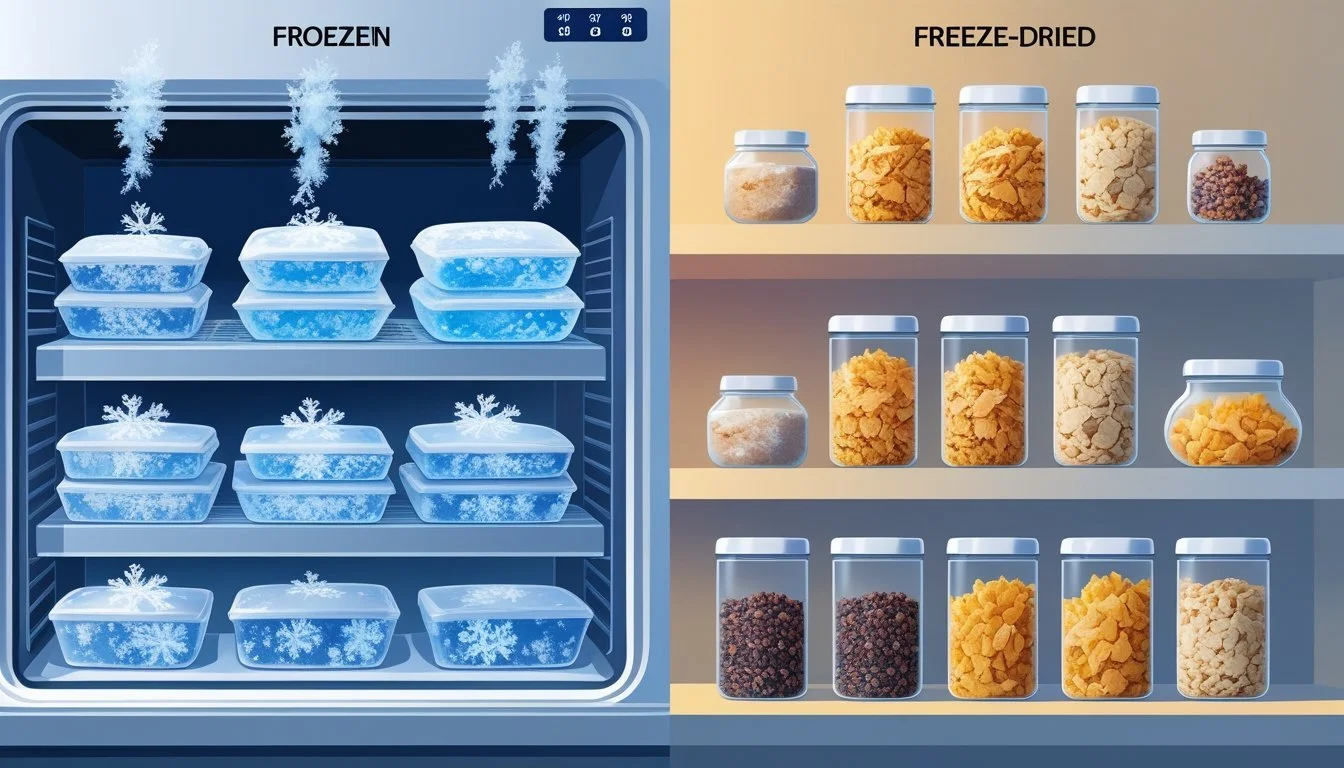
Freeze-dried foods remove up to 98% of water, making them significantly lighter than frozen foods. This results in a dry texture and a product that is easy to transport and store.
Frozen foods keep their natural water content, simply held in a solid state by freezing. This helps maintain their original texture when thawed but makes them heavier and bulkier.
Shelf Life Comparison:
Method Typical Shelf Life Freeze-Dried 20–30 years Frozen 6 months to 2 years
Freeze-dried foods have their moisture almost completely eliminated. This prevents spoilage and inhibits microbial growth, contributing to a much longer shelf life.
Frozen foods require consistent freezing temperatures to prevent spoilage. Any thawing can quickly reduce quality and safety.
The nutrient retention in freeze-dried foods is generally higher, especially for vitamins sensitive to heat and moisture. Frozen foods preserve most nutrients but may lose some during thawing or extended storage.
Key Points:
Freeze-dried is ideal for long-term storage and portability.
Frozen foods may be preferred for shorter-term use and maintaining original texture.
Each method has unique benefits depending on storage needs and intended use.

