
Shelf Life Optimization in Supply Chain AI Enhancing Inventory Efficiency
AI-driven shelf life optimization allows supply chains to minimize waste, reduce costs, and improve inventory management for perishable goods. By analyzing real-time data and simulating various supply chain scenarios, AI can accurately predict product shelf life and adapt operations accordingly. This results in fresher products on shelves and fewer expired items going to waste.
The integration of AI in the supply chain is changing how businesses track, forecast, and react to shelf life variations. Stakeholders benefit from better demand forecasts, more efficient logistics, and sustainable practices that align with both economic and environmental goals. Companies are turning to these technologies to remain competitive and responsive as market demands grow more complex.
Fundamentals of Shelf Life Optimization in Supply Chain AI
Shelf life optimization uses data-driven methods to maximize product life and reduce waste throughout the supply chain. Artificial intelligence (AI) enhances these processes, enabling more efficient inventory and logistics management, but significant challenges remain for accurate and consistent results.
Defining Shelf Life Optimization
Shelf life optimization is the practice of ensuring products remain viable for consumers for as long as possible, minimizing spoilage and waste. In supply chain management, this involves tracking and influencing factors like temperature, humidity, and inventory turnover rates.
Key components include accurate shelf life prediction, rotation practices such as FIFO (First In, First Out), and collaboration between manufacturers, distributors, and retailers. By systematically monitoring product expiration dates, supply chains can improve product availability while reducing revenue loss due to spoilage.
Effective shelf life optimization leads to:
Lowered costs from less waste
Improved product freshness for consumers
Streamlined inventory levels
Role of AI in Modern Supply Chains
Artificial intelligence plays a pivotal role in optimizing shelf life by processing vast amounts of data and identifying patterns that humans may overlook. AI systems can analyze variables like demand forecasts, storage conditions, and real-time product status to optimize stock levels.
Common AI solutions include:
Machine learning for demand and spoilage prediction
Real-time sensors and IoT devices for monitoring storage conditions
Automated alerts for inventory nearing expiration
AI in supply chain optimization allows for proactive decision-making, reducing manual intervention and sharply lowering the risk of product obsolescence. By integrating predictive analytics, companies can better align replenishment and distribution, extending shelf life and boosting efficiency.
Key Challenges in Shelf Life Management
Despite advances in AI, shelf life management faces several persistent challenges. Product variability, such as unpredictable deterioration rates, complicates shelf life predictions. Integrating AI into diverse supply chain IT systems may require significant effort and investment.
Additional obstacles include inconsistent data quality, fluctuating demand, and compliance with strict food safety and regulatory standards. AI solutions may struggle with incomplete datasets or edge cases, leading to errors in expiration forecasting.
To address these challenges, organizations often invest in improved data collection, standardized handling procedures, and continuous refinement of AI algorithms. Careful alignment between business objectives and AI capabilities is critical for effective shelf life optimization in modern supply chain management.
Technologies Powering Shelf Life Optimization
Advanced technologies are changing how businesses optimize shelf life. Data-driven tools like machine learning, computer vision, and generative AI are central to enhancing accuracy, efficiency, and product quality across the supply chain.
Machine Learning and Predictive Analytics
Machine learning models enable accurate predictions of product shelf life using historical and real-time data. By integrating factors such as temperature, humidity, and handling conditions, predictive analytics identify patterns and forecast spoilage risks.
This helps companies proactively plan logistics and inventory, reducing waste and saving costs. Predictive modeling also supports demand forecasting and dynamic routing, allowing for smarter allocation of perishable goods. Automation further streamlines these processes, minimizing manual interventions and errors.
Key benefits:
Fewer stockouts and overstock situations
Enhanced forecasting of inventory turnover
Early detection of shelf life risks
Computer Vision for Quality Control
Computer vision systems inspect and monitor product quality on a large scale. AI-enabled cameras and sensors check for visual signs of spoilage, damage, or nonconformity in real time. This automation allows for immediate removal of compromised goods from the supply chain.
By standardizing inspections, computer vision improves consistency and reliability. Quality control teams can respond faster, and goods shipped meet regulated safety standards. Emerging technologies in edge processing make it possible to run these checks directly at warehouses or loading docks.
Typical applications:
Detecting bruising or mold on produce
Verifying packaging integrity
Monitoring color and texture changes
Generative AI for Innovation
Generative AI models, including advanced analytics platforms, drive innovation by simulating supply chain scenarios and optimizing workflows. These tools can suggest improvements for inventory strategies based on shelf life data.
Companies can also use generative capabilities to create synthetic datasets for testing AI algorithms without real-world disruptions. This approach accelerates experimentation and the deployment of new solutions.
Examples include:
Automated generation of alternative inventory rotation plans
Virtual testing of storage and transportation conditions
Simulation of demand shifts affecting shelf life
Generative AI supports continuous improvement and helps organizations adapt to evolving requirements in the perishable goods market.
Strategies for Effective Supply Chain Planning
Accurate demand forecasting, tight integration between business functions, and robust inventory optimization form the backbone of successful supply chain planning for products with shelf life constraints. Using technology and data-driven processes helps organizations balance inventory levels, reduce waste, and maximize product freshness.
Integrated Business Planning Approaches
Integrated business planning (IBP) aligns supply chain operations with broader business objectives. It requires collaboration between sales, operations, finance, and procurement. By connecting these functions, organizations can make informed decisions based on shared data and unified goals.
IBP tools facilitate scenario analysis and risk assessment for supply chain planners. Real-time data sharing fosters agile responses to changes in demand, supply, or shelf life requirements. This alignment is critical in industries where speed and product integrity are essential, such as food, pharmaceuticals, and FMCG.
Key benefits include improved service levels, cost reduction, and better allocation of shelf life–sensitive products.
Demand Forecasting and Forecast Accuracy
Demand forecasting leverages historical data, market trends, and quantitative models to predict future product demand. In shelf life optimization, achieving high forecast accuracy is crucial as it directly impacts inventory turnover rates and waste levels.
AI and machine learning enable analysis of large datasets, uncovering demand patterns that may not be obvious manually. Regularly monitoring forecast accuracy allows supply chain teams to adjust models and assumptions in response to seasonality or market shifts.
Strong forecasting reduces out-of-stocks and overstocking, supporting operational excellence while ensuring that expiring products are minimized. Retailers and manufacturers use these insights to inform purchasing, production, and distribution schedules.
Inventory Optimization Techniques
Inventory optimization balances product availability with the risk of expiration. Methods such as First Expired, First Out (FEFO) ensure older stock moves through the supply chain first, reducing spoilage.
Multi-echelon inventory optimization considers inventory across all nodes, including warehouses, distribution centers, and retail points. Optimized safety stock levels and automated replenishment can be set using advanced supply chain software. Organizations closely track supplier performance to anticipate variability in lead times or quality, further fine-tuning inventory strategies.
By proactively managing shelf life, companies can cut costs, meet customer requirements, and utilize products before expiration, supporting sustainability and profitability.
Enhancing Visibility, Transparency, and Efficiency
AI-driven shelf life optimization relies on clear and accurate information throughout the supply chain. Improved visibility, transparency, and efficiency directly support better inventory management and informed decision-making.
Real-Time Supply Chain Visibility
Real-time visibility enables companies to monitor products from manufacturing through delivery. AI platforms aggregate data from sources such as IoT sensors, RFID tags, and warehouse management systems.
With up-to-date tracking, organizations can identify issues like temperature deviations or transport delays that impact shelf life. This proactive monitoring helps prioritize shipments and adjust distribution routes.
The result is reduced risk of expired or spoiled goods. Continuous tracking also supports compliance with food safety regulations and customer requirements.
Improving Transparency with AI
Transparency in supply chain operations means stakeholders can access and verify information about product status and handling. AI unlocks transparency by analyzing and presenting data clearly to suppliers, retailers, and regulators.
Digital ledgers and automated reports provide details on inventory levels, storage conditions, and expiration dates. These tools limit the chance of errors or omissions in manual processes.
Transparent reporting builds trust between partners. It also allows management to spot patterns, prevent stockouts, and improve planning for time-sensitive products.
Driving Efficiency and Productivity
AI enhances efficiency by automating routine inventory checks, optimizing warehouse layouts, and streamlining reorder processes. Algorithms predict demand based on historical data, seasonality, and shelf life constraints.
The result is fewer overstocked items and reduced waste due to spoilage or obsolescence. Employees spend less time on repetitive tasks and more on high-value activities.
Decision-making improves because managers access accurate forecasts and actionable insights. Increased productivity leads to cost savings, better resource allocation, and higher customer satisfaction.
Economic and Operational Impact
AI-driven shelf life optimization influences both the economic efficiency and operational effectiveness of supply chains. Companies leveraging these technologies see measurable improvements in cost control, resource allocation, and strategic pricing responses that directly affect profitability and service quality.
Cost Reduction and Economies of Scale
Using AI to optimize shelf life can significantly lower direct and indirect costs. Algorithms predict demand more accurately, minimizing overstock and reducing waste from expired products. This helps companies maintain tighter inventory, cutting storage fees and lowering disposal expenses.
As operations scale, centralized AI platforms help standardize procedures across multiple sites. This fosters economies of scale, enabling bulk purchasing and streamlined logistics. By continually analyzing freshness data, AI models allow for precise replenishment schedules, which helps maintain high service levels while keeping costs down. The net effect is improved operational efficiency without sacrificing product quality or customer satisfaction.
Dynamic Pricing and Value Creation
Dynamic pricing engines powered by AI assess factors like time-to-expiry, inventory status, and market demand to recommend real-time price adjustments. Retailers use this approach to move perishable goods before spoilage, thus extracting the maximum possible value from each item.
This process encourages value creation by aligning prices with remaining shelf life and consumer preferences. Shoppers gain access to fresher products at competitive prices, while supply chain partners see a reduction in unsold inventory. Innovation in pricing models, such as markdown optimization and personalized offers, further drives revenue and improves overall supply chain performance.
Managing Supply Chain Disruptions and Risk

Supply chains face unpredictable disruptions from events like market volatility, inflation, and material shortages. Effective risk management tools, including AI solutions and automation, are becoming key in maintaining resilience and supporting shelf life optimization.
AI-Driven Risk Mitigation
Artificial intelligence enables organizations to proactively identify and assess risks using real-time data. Predictive analytics and machine learning detect patterns linked to potential disruptions, such as supplier delays or transportation bottlenecks.
Automated systems can adjust inventory and replenishment strategies instantly, reducing the negative impact on shelf life. AI-driven dashboards and alerts give supply chain managers timely insights, improving decision-making.
A typical AI-driven framework might include:
Tool Application Predictive analytics Forecasting demand spikes Optimization algorithms Adjusting inventory buffers Anomaly detection Spotting supplier inconsistencies
By integrating these capabilities, companies improve risk visibility and reduce the impact of unexpected events.
Responding to Supply Chain Disruptions
When disruptions occur, rapid response is essential to minimize losses and maintain product availability. AI can automate contingency actions such as re-routing shipments, prioritizing critical inventory, or sourcing alternative suppliers.
Clear protocols, supported by automation, allow companies to act within minutes rather than hours or days. This speed helps maintain shelf life targets for perishable goods and reduces waste.
Visualizations, such as heat maps or disruption timelines, highlight affected nodes in the supply chain. Teams use these insights to coordinate a targeted recovery, maintaining service levels without overreacting.
Adapting to Inflation and Market Shifts
Rising costs and market volatility demand agile adaptation. AI solutions model the financial impact of inflation on material prices, logistics, and overall operational expenses, allowing companies to set dynamic pricing or renegotiate supplier contracts.
Automated forecasting tools update procurement and sourcing strategies as market signals change. AI tracks global trends—like fuel price spikes or shifts in consumer demand—adjusting stock levels to prevent overstocking or shortages.
Supply chain digitization, supported by machine learning, ensures ongoing optimization even as inflation rates and market conditions fluctuate. This responsive approach safeguards margins and supports sustainable supply chain operations.
Sustainability and Environmental Considerations
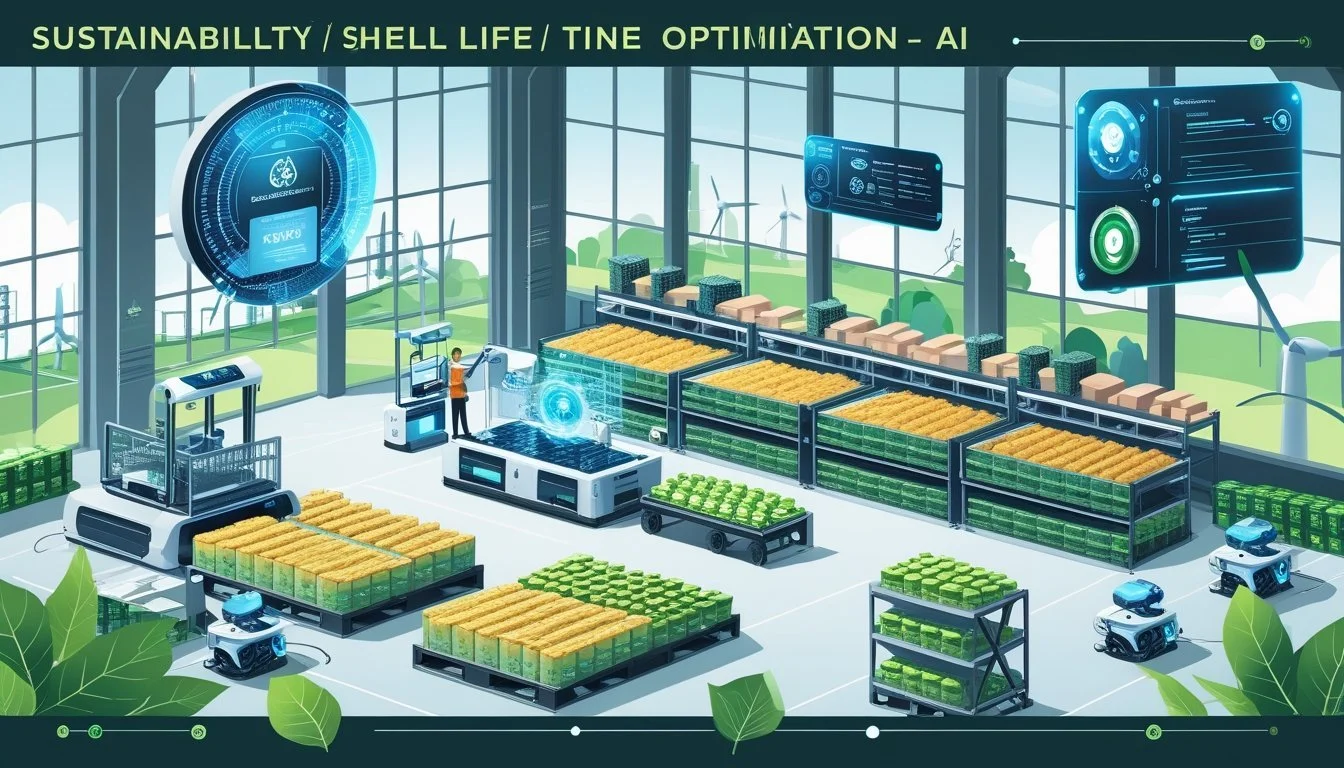
Effective shelf life optimization in supply chain AI addresses both ecological impacts and operational efficiency. By focusing on critical areas like emissions reduction and sustainable logistics, organizations can better integrate environmental priorities into everyday operations.
Reducing Greenhouse Gas Emissions
AI-driven shelf life optimization makes it possible to proactively minimize product spoilage and unnecessary transportation, which results in lower greenhouse gas emissions. For instance, by using predictive analytics to match supply with demand more accurately, companies can avoid overproduction and reduce waste.
A decrease in waste means less organic material ends up in landfills, which is significant because decaying products generate methane, a potent greenhouse gas. Additionally, smarter inventory management can minimize the need for rush shipping, which often relies on less energy-efficient transport methods.
By streamlining production cycles and ensuring products are moved and sold within their optimal lifespan, companies can limit unnecessary emissions across the supply chain. The table below summarizes key benefits:
Outcome Effect on Emissions Reduced spoilage Less methane from waste Fewer rush shipments Lower fossil fuel use Better demand match Lower distribution needs
Enhancing Sustainability in Logistics
Advanced AI models support sustainability in logistics by optimizing routing, scheduling, and inventory turnover. These systems enable trucks to travel shorter distances or more efficient routes, decreasing fuel usage and reducing the carbon footprint of supply operations.
Real-time monitoring powered by AI can identify aging products and prioritize their delivery or promotion, decreasing the likelihood of waste. Automated inventory tracking tools help maintain lower stock levels without depleting shelves, which directly limits overproduction.
Besides cutting emissions, such strategies support eco-friendly supply chains by reducing resource consumption, packaging, and energy use in warehouses. This integrated approach ties together inventory management improvements and sustainable logistics, further driving environmental benefits.
Impact on Customer Experience and Service
AI-driven shelf life optimization affects both customer satisfaction and supply chain performance. Predictive analytics and real-time monitoring offer tangible ways businesses can provide fresher products and more reliable availability, reinforcing trust and efficiency.
Improving Customer Service with AI
AI models forecast product demand and expiration dates, ensuring that customers find fresh items in stock more consistently. This reduces the chances of customers encountering expired or out-of-stock products, which can significantly impact loyalty.
Automated alerts and replenishment systems further enhance responsiveness to changing customer preferences. By optimizing restocking and avoiding overstocking, companies limit spoilage and ensure that frequently requested items are available.
Enhanced visibility into inventory allows customer service teams to give accurate answers about product status or availability. These improvements streamline order fulfillment, promote transparency, and foster higher levels of customer trust and satisfaction.
Boosting Service Levels and Operational Excellence
AI-powered analytics align purchasing, warehousing, and distribution with actual demand patterns. This efficient coordination supports improved service levels by reducing waste, avoiding unnecessary markdowns, and keeping inventory fresher.
Key benefits include:
Faster response to shifts in consumption trends
Proactive management of supply disruptions
Lower handling and storage costs
Insights from AI enable logistics and operations teams to minimize bottlenecks and inefficiencies. Continuous adjustment of supply plans based on real-time data leads to operational excellence, as companies can better meet customer requirements for speed, freshness, and product availability.
Future Trends in Shelf Life Optimization
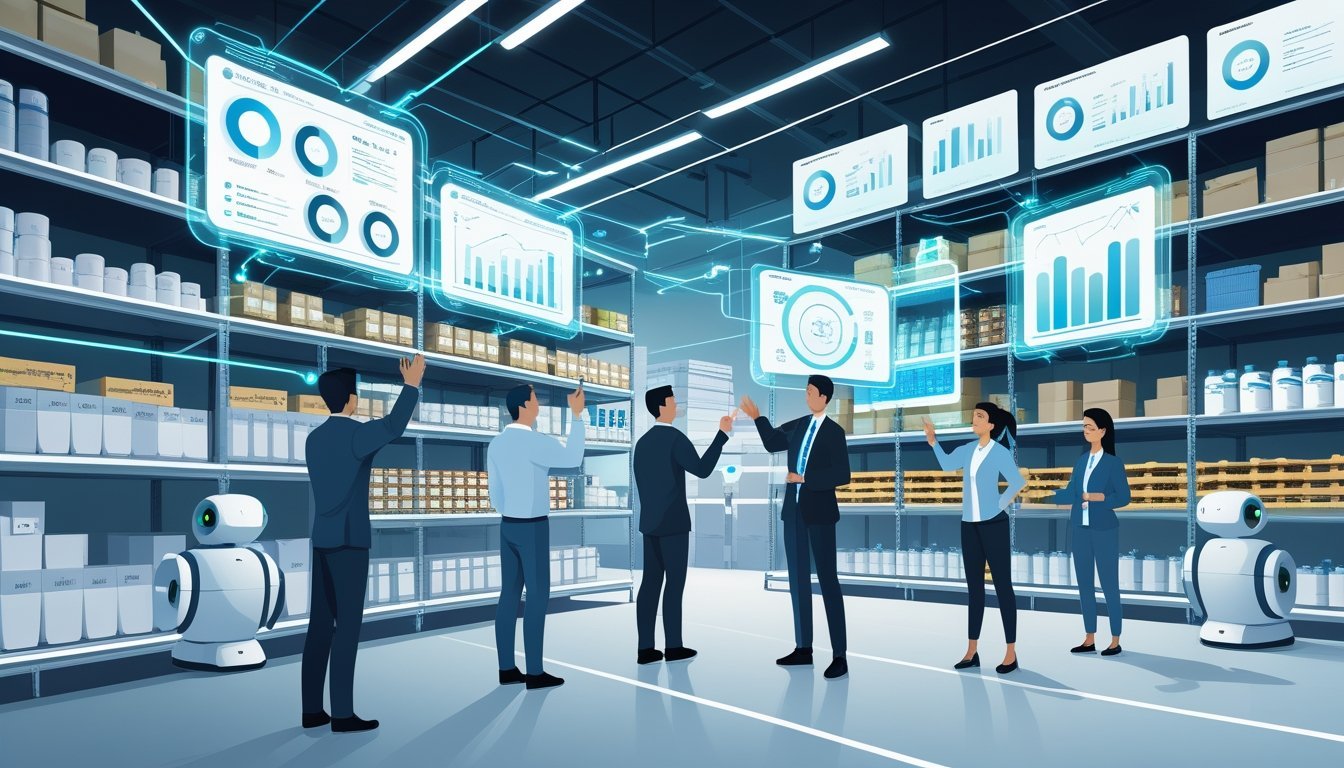
New approaches in artificial intelligence and innovation are set to improve how shelf life is predicted and managed across supply chains. Developments in data-driven diagnostics, advanced modeling, and smart infrastructure are shaping the future of supply chain optimization for perishables.
Next-Generation AI Solutions
Future AI capabilities will use larger, more diverse datasets for superior shelf life predictions. Deep learning models are being trained on real-time data from sensors, environmental monitoring, and historical product information. This allows them to adapt to changes such as seasonality, logistics delays, or temperature fluctuations.
Integrating AI models into smart packaging and inventory systems is becoming standard. These systems can track product conditions throughout transit and storage, sending updates and recommending proactive actions if shelf life is at risk. Machine learning algorithms also enable predictive analytics that help suppliers and retailers adjust stock levels to minimize waste and maximize freshness.
A table illustrating AI-driven enhancements:
Area Traditional Approach AI-Enabled Approach Data Input Manual records Sensor and IoT data Prediction Static estimates Dynamic, real-time models Action Plan Pre-set schedules Adaptive recommendations
Continuous Innovation in Supply Chain Technologies
Emerging technologies like blockchain and IoT are improving the traceability and visibility of perishable goods. Blockchain allows stakeholders to verify the handling and condition of items at every checkpoint, reducing the risk of errors or undisclosed spoilage. IoT sensors provide continuous condition monitoring and link seamlessly with AI software for automated decision support.
Cold chain automation and robotics are advancing, enabling more precise temperature control and faster handling of perishables. These innovations enhance responsiveness—problems are identified early, and interventions can be immediate. Supply chains are adopting integrated platforms that combine AI, robotics, and smart infrastructure for more accurate shelf life management and a reduction in manual oversight.
Key examples of continuous innovation:
Automated quality inspection systems
End-to-end digital traceability
Energy-efficient climate control technologies

