
Why Moisture Control Is More Important Than Cold in Protecting Stored Goods1

Controlling moisture in a home is often more important than simply managing cold temperatures. Moisture can silently weaken structural materials, lead to the growth of mold, and create uncomfortable living conditions. Even a small amount of excess moisture can result in expensive problems over time.
While cold weather is uncomfortable and can freeze pipes, moisture can compromise both energy efficiency and indoor air quality. Mold and mildew grow where moisture is uncontrolled, leading to repair costs and potential health risks for occupants. Moisture damage is often harder to notice until it becomes a major issue.
By focusing on proper moisture control, homeowners can protect their investment, improve comfort, and maintain a healthier living environment. Addressing moisture issues early not only helps avoid expensive repairs but also ensures the durability of building materials over time.
The Fundamentals Of Moisture And Cold
Moisture management in buildings is shaped by the way water vapor and temperature interact, affecting both comfort and structural integrity. Understanding these dynamics is vital to prevent condensation, mold, and long-term damage, especially in cold climates.
How Moisture And Cold Interact
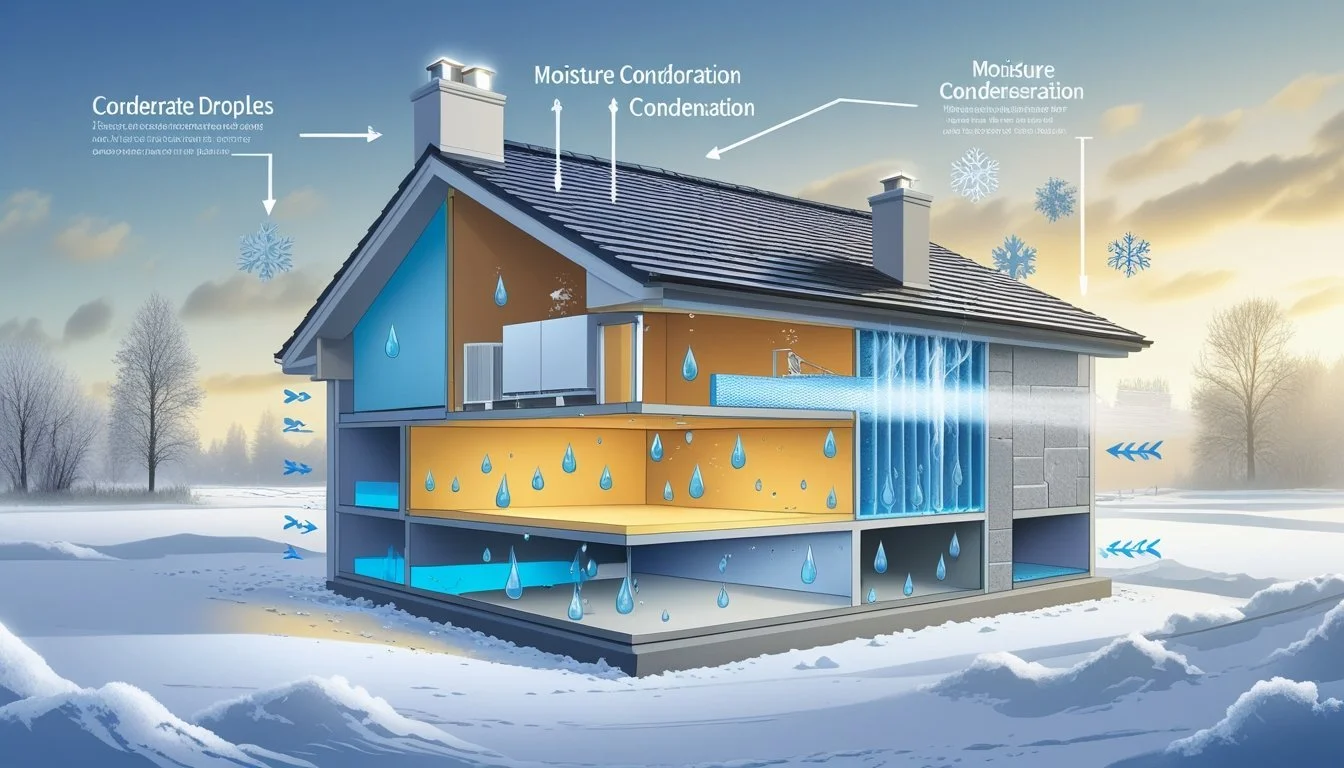
Moisture and cold are closely linked through the way air holds and releases water vapor. Warm air carries more moisture than cold air. When warm, moist air meets a cold surface or is cooled below its dew point, condensation forms as the excess moisture is released.
This process is common in cold climates, especially around windows, walls, or poorly insulated areas. The moisture content increases the risk of surface "sweating," which can encourage mold growth and structural decay. Building materials absorb this liquid water, weakening insulation and creating conditions for further moisture problems.
Table:
Factor Warm Air Cold Air Moisture Holding High Low Condensation Less likely More likely
Understanding Relative Humidity
Relative humidity (RH) is the percentage of water vapor in the air compared to the maximum it could hold at a given temperature. Maintaining RH below 50% is generally recommended to minimize mold and dust mite activity.
As temperature decreases, the same amount of moisture represents a higher RH, making condensation more likely. Buildings must be designed to account for these shifts between day and night or between rooms of different temperatures.
Key effects of high RH:
Increases risk of condensation
Lowers comfort for occupants
Can damage materials inside the structure
Keeping RH balanced protects indoor air quality and reduces the risk of moisture-related problems.
Principles Of Moisture Transfer
Moisture moves in buildings through three primary mechanisms:
Air transport: Moisture carried by moving air, often through leaks or gaps in insulation
Vapor diffusion: Water molecules moving through materials from areas of high to low vapor pressure
Bulk water movement: Direct leakage from rain, plumbing, or groundwater
Controlling air leakage is typically the most effective way to reduce unwanted moisture movement. Materials and building assemblies should be layered to direct water out and prevent it from getting trapped. Understanding dew point and ensuring proper insulation further limit the opportunities for condensation.
Proper moisture management depends on an integrated approach that addresses all these pathways, especially in cold climates.
Why Moisture Control Matters More Than Cold
Moisture levels play a direct role in both indoor air quality and occupant health. Addressing moisture problems prevents structural harm and reduces health risks that cold temperatures alone do not cause.
The Impact Of Moisture On Comfort And Health
High humidity indoors can make rooms feel clammy even when temperatures are moderate. This uncomfortable feeling is due to excess moisture in the air, which also reduces the effectiveness of air conditioning and heating systems.
Moisture control is crucial for preventing the growth of mold, fungi, and bacteria. When humidity rises above 50%, dust mites thrive, and mold spores can become active, worsening respiratory problems and allergies.
Key impacts include:
Increased risk of allergic reactions: Mold, fungi, and dust mites are common triggers.
Worsened air quality: Microbial growth releases spores and particulates.
Physical discomfort: High moisture often makes occupants feel sticky or hot.
Proper moisture management directly improves comfort and helps maintain healthier indoor air quality compared to simply controlling cold.
Risks Of Neglecting Moisture Control
Ignoring moisture issues can lead to both immediate discomfort and long-term damage. Controlling only the temperature without managing humidity allows condensation to form on walls, windows, and insulation.
Chronic moisture problems contribute to:
Mold and fungal growth, which damage building materials and pose health hazards.
Structural deterioration, especially in wood and insulation.
Bacterial proliferation, leading to odors and possible infections.
Over time, buildings with poor moisture control see more repairs, higher maintenance costs, and increased complaints about indoor air quality. The risks from excess moisture are more persistent and harder to reverse than those from cold air alone.
Sources Of Indoor Moisture
Moisture inside homes comes from several specific daily actions and also from how the building is constructed and maintained. Recognizing these sources helps address issues before they lead to mold, mildew, or structural problems.
Everyday Activities Contributing To Moisture
Common household actions release water vapor into the air. Cooking on a stovetop, boiling water, or running a dishwasher all add moisture each day. Showers and baths increase humidity levels in bathrooms, especially if ventilation is poor or exhaust fans are not used consistently.
Drying clothes indoors or using unvented dryers can be major contributors. Even fish tanks, houseplants, and simply breathing or sweating add small amounts of moisture.
To visualize how much different activities contribute, see the table below:
Activity Approximate Water Released (liters/day) Cooking 2–3 Showering/Bathing 1.5–2 Drying Clothes Indoors 2–5 Breathing (per person) 0.3–0.5
Uncontrolled, these everyday sources can raise humidity above healthy levels, increasing the risk of condensation and mold.
Moisture From Building Envelopes
The building envelope includes the roof, walls, windows, doors, and foundation. Moisture enters through air leakage, small cracks, or gaps in insulation and seals. Water can also seep into foundations or basements when the ground slopes toward the house or gutters direct water incorrectly.
Basement water leakage is a persistent problem in many homes, often due to poor drainage outside, blocked downspouts, or foundation cracks. Improper vapor barriers or damaged roofing also allow outside moisture into the structure.
Air-transported moisture moves far more quickly into the home than vapor diffusion alone. Preventing leaks and maintaining good seals are the most effective ways to limit this source and protect the integrity of the building.
The Physics Of Moisture Movement
Moisture moves through building materials and assemblies by several mechanisms, each requiring a specific control strategy. Understanding how vapor diffusion, air movement, and capillary action work is necessary to limit moisture damage and improve performance.
Vapor Diffusion And Barriers
Vapor diffusion is the process by which water vapor moves through porous materials due to differences in vapor pressure. The rate of diffusion depends on the material’s permeability, often measured by perm rating. Lower perm ratings indicate better resistance to vapor diffusion.
Vapor barriers, also known as vapor diffusion retarders, are installed to restrict this movement. Placement and selection of these barriers are critical in managing where and how moisture can enter or escape a structure. Improper use may trap moisture and cause damage.
Key factors:
Perm rating of materials
Climate zone
Proper placement of vapor diffusion barriers
Without proper vapor control, water vapor can condense inside walls, leading to mold and rot.
Air Leakage And Air Movement
Water vapor moves more quickly with air than by diffusion alone. Air leaks, such as gaps around windows, doors, and penetrations, allow humid air to enter and exit the structure. Air movement can account for over 98% of vapor transport in building cavities.
An air barrier is designed to minimize uncontrolled air leakage. Unlike vapor barriers, air barriers stop airflow but may let vapor diffuse. Effective air sealing involves careful detailing at joints, transitions, and penetrations.
Typical sources of air leaks:
Unsealed attic hatches
Electrical outlets
Wall-to-floor connections
Controlling air movement reduces the risk of hidden condensation and energy loss.
Capillary Action And Liquid Water
Liquid water can move through materials by capillary action. This process occurs when small pores or cracks draw water upwards or sideways, even against gravity. Common routes include porous concrete slabs, masonry, and faulty siding.
To prevent this, builders use a capillary break—such as a layer of polyethylene or rigid foam—between soil and the structure. Ensuring an effective capillary break blocks the upward flow of liquid water and protects moisture-sensitive materials.
Key concerns for capillary action include:
Quality and placement of capillary breaks
Drainage detailing at the foundation
Selection of water-resistant building materials
Even small amounts of liquid water, if allowed to enter by capillarity, can cause significant damage over time.
Building Design For Moisture Management
Effective moisture management in buildings reduces structural damage, enhances energy efficiency, and improves occupant comfort. Key considerations include the exterior enclosure’s performance and the materials and barriers chosen during design.
Building Enclosure Strategies
The building enclosure, or envelope, is a primary defense against moisture intrusion. Success relies on managing water in all forms: liquid, vapor, and air-transported moisture.
Site drainage is crucial. Sloping grade away from foundations and using perimeter drainage systems prevent ground moisture entry. Foundation moisture control, such as installing waterproof membranes and capillary breaks, is critical in basements and crawl spaces.
Air sealing improves airtightness and limits moist air movement through gaps. Joints, penetrations, and sill plates are frequent weak points—these should be sealed with caulk or foam. Insulation should work in tandem with vapor control layers to prevent condensation inside wall cavities. Balanced ventilation systems, like HRVs, help regulate indoor humidity.
Table: Key Moisture Control Elements
Component Function Drainage plane Directs liquid water away Air barrier Prevents humid air infiltration Vapor retarder Limits moisture diffusion Insulation Reduces risk of condensation
Selection Of Materials And Barriers
Selecting the right materials and barriers in each part of the enclosure is essential for robust moisture control. Placement depends on local climate and building use.
Vapor barriers and vapor retarders reduce moisture movement by diffusion. In cold climates, vapor barriers typically go on the warm side of insulation; in mixed or humid climates, their placement may differ. Walls, roofs, and floors need tailored barrier solutions.
Building materials should resist mold, swelling, and decay when exposed to moisture. Exterior sheathing, like rigid foam or fiberglass-faced gypsum, improves drainage and drying capability. Materials for insulation must retain performance even when damp—closed-cell spray foam and extruded polystyrene are good examples.
Continuous layers, correct lapping, and minimal penetrations boost moisture protection. Proper design also distinguishes between vapor-open and vapor-closed materials to encourage drying when unexpected moisture gets in.
Ventilation And Indoor Humidity Control
Managing indoor humidity is crucial for maintaining a comfortable and healthy living environment. Effective ventilation and targeted humidity control measures can prevent mold growth, dust mite proliferation, and structural damage caused by excess moisture.
Mechanical And Natural Ventilation
Ventilation can be mechanical or natural, each affecting indoor humidity levels differently. Mechanical ventilation uses exhaust fans, extract fans, or whole-house systems to replace stale indoor air with fresh outdoor air.
In kitchens and bathrooms, exhaust fans help remove moisture produced by cooking and bathing. In well-sealed, energy-efficient homes, mechanical ventilation becomes essential since less air leaks through walls and windows.
Natural ventilation relies on opening windows or vents. However, this approach is only effective if outdoor humidity is lower than indoors, and it depends on weather conditions and building layout. Regular use of natural or mechanical systems helps maintain balanced humidity and better indoor air quality.
Dehumidifiers And Air Conditioning
Dehumidifiers play a critical role in removing excess moisture from indoor air, making them valuable in areas with high humidity. They work by drawing air over cold coils to condense water vapor, which is then collected and removed.
Air conditioning units also provide incidental humidity control by cooling and dehumidifying indoor air. Modern systems may include built-in humidity controls or separate dehumidification modes.
Choosing the appropriate size and capacity of dehumidifier or air conditioner ensures efficient operation. Oversized equipment may cycle on and off too rapidly, leaving humidity levels unchecked, while units too small may be inadequate for the space.
Maintaining Healthy Humidity Levels
Maintaining indoor relative humidity between 30% and 50% helps limit mold growth and dust mites. Both extremely high and low humidity can cause health problems and impact comfort.
Use a hygrometer to monitor humidity levels throughout the year. In winter, indoor humidity often rises due to reduced ventilation and tightly sealed homes, making periodic exhaust fan use or window airing important.
Routine inspection and maintenance of ventilation systems, dehumidifiers, and air conditioning units are necessary for reliable humidity control. Simple actions, such as using exhaust fans during activities generating moisture, help keep levels within the recommended range.
Drainage And Exterior Moisture Protection

Effective moisture management on building exteriors requires both robust drainage systems and targeted prevention strategies. Without these measures, moisture can seep into foundations and walls, causing lasting structural damage.
Exterior Drainage Systems
Proper exterior drainage safeguards buildings by directing water away from the structure’s base. Components such as guttering, downspouts, and drainage swales channel rainwater efficiently, preventing pooling near walls and foundations. These systems reduce the risk of saturated soil and water intrusion.
A drainage plane is installed behind exterior cladding to help move water that penetrates the outer layer safely downward and out. Drainage mats can enhance air circulation and drainage between the cladding and wall sheathing, decreasing the likelihood of trapped moisture. Foundation drains, which are placed at or below footing level, capture and redirect groundwater away from the foundation to reduce hydrostatic pressure.
Routine inspection and maintenance of exterior drainage elements are essential. Clearing gutters and checking for obstructions in downspouts help maintain proper flow and protect vulnerable areas from excess moisture exposure.
Rain And Water Penetration Prevention
Preventing rain and water penetration starts with integrated moisture barriers and surface treatments during construction. Damp-proofing coatings applied to foundation walls restrict the movement of water through porous concrete or masonry. These barriers should be continuous and checked for lapses or damage periodically.
Careful detailing around openings—including doors, windows, and wall penetrations—is important to block rainwater from entering. Flashings, sealants, and overhangs serve as physical barriers, diverting water away from sensitive areas.
Strategic landscaping, such as sloping the grade away from the building, creates a natural drainage path, further minimizing the risk of water gathering near foundations. Consistent use of approved materials and installation methods is key in ensuring long-lasting protection against moisture ingress.
Mitigating Moisture Problems In Cold Climates
Moisture issues become more prevalent as temperatures drop, since cold air holds less water vapor and condensation often forms on cold surfaces. Proactively addressing dampness and leaks protects indoor air quality, reduces the risk of mould, and helps maintain energy-efficient conditions.
Common Issues And Indicators
Common moisture problems in cold climates include basement water leakage, condensation on windows, and persistent damp spots on walls or ceilings.
Visible signs of trouble are:
Water stains on drywall
Bubbling or peeling paint
Musty odors, indicating hidden mould or fungi growth
Condensation along cold surfaces, such as metal window frames or uninsulated pipes, signals excess indoor humidity or poor air circulation. Mould growth behind wallpaper or under carpets often appears after prolonged dampness.
Crawl spaces and basements are especially vulnerable. Water seepage in these areas can go unnoticed until significant damage occurs or fungi start to develop. Early detection relies on checking for wet patches, discolored surfaces, or a noticeable earthy smell.
Retrofit And Prevention Strategies
Reducing moisture problems requires both structural improvements and everyday good practices. Start by sealing basement cracks, improving exterior drainage, and using sump pumps if water infiltration is frequent.
Insulate pipes and cold surfaces to limit condensation. Ventilate kitchens, bathrooms, and laundry rooms with exhaust fans to move moist air outside. Regularly check and clean gutters and downspouts so water flows away from the structure.
Retrofit strategies for older, less energy-efficient homes include installing vapor barriers, upgrading window glazing, and using dehumidifiers to keep indoor humidity below 40%. Routine inspections, prompt repairs of leaks, and maintaining consistent indoor temperatures are effective at preventing the conditions that favor mould and fungi growth.
Energy Efficiency And Moisture Control
Managing moisture not only protects buildings from structural problems but also has measurable impacts on energy use. Proper control of humidity and air movement improves how well heating and cooling systems function and helps limit unnecessary energy consumption.
Reducing Energy Consumption With Effective Moisture Management
When indoor air contains excess moisture, heating and cooling systems must work harder. Air conditioners, for instance, consume more energy removing humidity alongside heat, which raises electricity bills.
Maintaining relative humidity below 50% supports energy efficiency by allowing temperature settings that are comfortable without overworking systems. Lower moisture levels also limit the risk of mold growth, reducing health risks and future remediation costs.
Below is a summary of how moisture impacts energy use:
Factor Effect on Energy Use High Humidity Increases AC workload Dry Conditions Easier heating/cooling Mold Prevention Reduces future expenses
Ensuring an airtight building envelope, combined with proper ventilation, creates a controlled environment. This balance helps HVAC systems run efficiently, as less moisture leaking inside means less strain on heating and cooling.
Minimizing Heat Loss And Air Infiltration
Air infiltration introduces draughts and allows warm, moisture-laden air to escape or enter unpredictably. These uncontrolled movements raise heat transfer rates, causing more frequent cycles of heating or cooling systems.
Sealing gaps and ensuring insulation not only prevents cold air from entering but also limits where moisture can collect and condense. This stops surfaces from "sweating" and prevents structural damage caused by condensation.
Paying attention to outdoor relative humidity and weatherproofing strategies enables more precise control of internal conditions. The outcome is lower heating bills in winter and reduced cooling costs in summer, as energy isn’t wasted compensating for unwanted air and moisture paths.
Monitoring And Maintaining Proper Moisture Levels

Controlling moisture requires precise monitoring and consistent maintenance. These practices help prevent both under- and over-moistening, which can negatively impact plant health and indoor environments.
Using Measurement Tools And Sensors
Measuring soil and air moisture is crucial for effective management. Devices like hygrometers provide real-time humidity readings in indoor spaces, helping to ensure optimal conditions for both plants and building materials.
Soil moisture sensors—including capacitive types—measure water content at various depths. They offer accuracy within ±2%, allowing users to adjust irrigation and avoid both drought stress and root rot. Some advanced systems can automatically trigger watering when moisture drops below a set threshold, streamlining the whole process and saving labor.
Regularly checking data from these tools helps identify trends, such as persistent dry spots or areas of excess moisture. For multi-zone monitoring, integrated platforms can transmit sensor data to smartphones or computers, making it easier to track and respond quickly. Accurate measurements support consistent moisture management across diverse environments.
Regular Inspections And Maintenance
Visual inspection is important for detecting changes that instruments may not immediately reveal. Signs of improper moisture include wilting leaves, water stains, or unusual odors, which can all indicate imbalances.
Inspecting equipment—such as irrigation systems or dehumidifiers—ensures they continue to function as expected. Maintenance might include cleaning sensor probes, calibrating devices, or checking for leaks and blockages in pipes or hoses.
Routine schedules help address issues before they escalate. Many facilities log inspection dates and findings to spot recurring problems, allowing for timely adjustments. Proper maintenance improves the longevity and reliability of moisture control systems, reducing unexpected failures and safeguarding both plant health and indoor air quality.
Conclusion

Moisture control is vital in maintaining healthy and energy-efficient indoor environments. While cold temperatures can cause discomfort, excess moisture leads to a range of issues including mold, dust mites, and structural damage.
A few key reasons why moisture control deserves priority:
Health: Lower humidity reduces the growth of allergens and harmful microorganisms.
Building Longevity: Limiting moisture helps prevent rot, corrosion, and decay of materials.
Energy Efficiency: Managing humidity enables HVAC systems to operate more efficiently.
Relative humidity plays a central role. Warm air holds more moisture than cold air, so controlling indoor RH below 50% is often recommended for comfort and dust mite control.
Issue Caused By Moisture Caused By Cold Only Mold Growth Yes No Increased Allergens Yes No Structural Rot Yes Rarely Discomfort Sometimes Yes
It is not just about keeping spaces warm or cool. Proactive moisture control leads to a healthier, more durable, and efficient living environment. Approaching home environment challenges with moisture in mind offers broader, longer-lasting benefits than focusing on temperature alone.

