
The Economics of Shelf Life Extension
Maximizing Profitability and Reducing Waste

Extending a product's shelf life directly impacts profitability by reducing spoilage, minimizing waste, and lowering storage costs. Techniques for shelf life extension, such as improved packaging and better storage practices, support manufacturers, retailers, and consumers by preserving product quality and safety over longer periods.
Businesses implementing shelf life extension strategies can see significant economic benefits. Reduced losses from expired goods and improved inventory management help companies operate more efficiently while meeting regulatory and consumer demands for less food waste.
With global food waste reaching over a billion tonnes annually, effective shelf life solutions are becoming increasingly important. As companies look for ways to optimize resources, understanding the economics of shelf life extension is vital for long-term success.
Understanding Shelf Life and Shelf Life Extension
Shelf life determines how long products maintain safety and quality. Extending shelf life involves specific strategies to reduce spoilage, preserve freshness, and protect food quality.
Defining Shelf Life and Shelf Life Extension
Shelf life is the period during which a food product remains safe to eat and keeps its desired sensory, chemical, and physical qualities. Most foods have either a use-by or best-before date, set by manufacturers based on laboratory testing and legal requirements.
Shelf-life extension refers to methods or interventions that prolong this period. These methods may include packaging innovations, ingredient adjustments, refrigeration, and preservatives. The goal is to slow down processes that cause spoilage, so products can stay fresh for longer without compromising safety or quality.
Understanding both shelf life and methods for extending it is essential for reducing waste and improving economic returns in the food industry.
Causes of Spoilage and Loss of Freshness
Spoilage results from physical, chemical, and biological changes. Key causes include:
Microbial growth: Bacteria, molds, and yeasts lead to decay, off-odors, and unsafe food.
Chemical reactions: Oxidation can cause rancidity in fats and faded colors.
Physical factors: Temperature fluctuations and moisture loss can change food texture and appearance.
External conditions such as heat, light, air, and humidity worsen these effects. For example, improper sealing and exposure to air speed up spoilage in many packaged goods. Identifying and managing these factors is central to prolonging shelf life.
Importance of Shelf Life in Food Quality
Maintaining shelf life ensures food products retain their intended quality, taste, and safety. If food deteriorates before reaching the consumer, it results in losses not only for consumers, but also for producers and retailers.
A longer shelf life reduces the frequency of product recalls and minimizes the volume of discarded food. Companies with effective shelf-life extension strategies can deliver fresher products, enhance brand reputation, and optimize supply chain logistics.
By managing shelf life, the food industry can meet consumer expectations for freshness and consistency, while decreasing food waste and supporting sustainable practices.
Economic Impact of Extending Shelf Life
Extending the shelf life of perishable products has direct economic effects at various points in the food supply chain. Shelf life extension measures can lead to cost savings, streamlined logistics, and increased market flexibility.
Cost Savings for Producers and Retailers
Producers benefit from shelf life extension through reduced product losses and lower inventory wastage. Longer shelf life enables better alignment between production schedules and market demand, cutting down on costs linked to excess stock or emergency shipments.
Retailers experience fewer expired products on shelves, which minimizes waste disposal expenses and improves profit margins. According to recent studies, carrying costs decrease as inventory is more likely to sell before spoiling, leading to a more efficient rotation of goods. This directly supports food waste reduction at the retail level and helps maintain consistent product availability for consumers.
Optimizing the Food Supply Chain
Shelf life extension interventions simplify logistics for suppliers and distributors. Longer-lasting products reduce the need for frequent transportation, allowing for consolidated shipments and more flexible routing. This operational efficiency can lower transportation costs and energy use.
In complex supply chains, extended shelf life decreases bottlenecks caused by short expiration dates. Supply chain managers can better balance supply and demand by holding inventory for longer periods. This reduces out-of-stock incidents while curbing overproduction, both of which contribute to reducing food waste throughout the distribution process.
Table: Effects of Shelf Life Extension on Supply Chain
Aspect Benefit Transportation Fewer, larger shipments Inventory Management Lower spoilage, better planning Food Waste Reduction Less waste along the chain
Market Competitiveness and Product Value
Firms offering products with enhanced shelf life gain a competitive edge by widening their distribution networks and targeting new markets, including distant or export locations. Longer shelf life also allows buyers to plan purchases further in advance and respond to market trends without risking significant losses due to spoilage.
Products with extended longevity attract both retailers and consumers by providing higher perceived value and reliability. Enhanced shelf life reduces the likelihood of shortages, as businesses are better equipped to maintain stock levels during supply disruptions or sudden demand spikes, supporting greater resilience within the market.
Methods of Shelf Life Extension
Shelf life extension relies on both established and emerging preservation techniques. These methods focus on slowing spoilage by managing factors like temperature, humidity, microbial growth, and chemical reactions.
Traditional Preservation Methods
Traditional methods use physical and chemical changes to maintain food safety and quality. Refrigeration and freezing reduce temperature, significantly slowing microbial activity and enzymatic reactions that cause spoilage. However, these methods typically add only days or months to product shelf life, depending on the item.
Drying and dehydration remove moisture, creating conditions unsuitable for most bacteria, yeasts, and molds. Salting and fermentation introduce chemical or biological agents that either draw out water or lower pH, both of which inhibit spoilage organisms. Techniques like canning apply heat to destroy microbes, then seal food in airtight containers to prevent contamination.
Such methods remain popular due to their affordability, simplicity, and proven effectiveness. Each technique presents trade-offs between cost, product taste, nutrient retention, and shelf life extension.
Modern Preservation Techniques
Modern techniques integrate advancements from bioscience and materials science. Modified atmosphere packaging (MAP) replaces air in packaging with specific gases (such as CO₂ or N₂), inhibiting microbial and oxidative spoilage and extending the shelf life of products like meats and fresh produce.
High-pressure processing (HPP) uses extreme pressure to destroy pathogens and enzymes without significant heating, preserving more nutrients and sensory qualities compared to traditional thermal methods. Edible coatings—sometimes containing bioactive compounds like chitosan—can act as moisture barriers and provide antimicrobial protection, especially for fruits and vegetables.
Some modern approaches avoid chemical preservatives in response to consumer demand, leveraging technologies that target specific spoilage mechanisms. These innovations aim for longer shelf life, improved product safety, and minimal impact on taste and nutrition.
Innovative Packaging Solutions
New packaging technologies have become central to extending food shelf life and reducing waste. These approaches use advancements such as improved materials, controlled atmospheres, and targeted reactions to better preserve food quality and safety.
Active and Intelligent Packaging
Active packaging uses substances in the packaging material that interact with the food or its environment. Examples include oxygen scavengers, moisture absorbers, and antimicrobial coatings. These components help slow down spoilage by reducing the factors that contribute to degradation.
Intelligent packaging involves sensors or indicators that provide information about the product’s condition. Time-temperature indicators, for instance, show if the product has been exposed to temperature abuse. Smart labels can signal when food is reaching the end of its recommended shelf life, supporting better inventory management.
Both active and intelligent packaging offer real-time monitoring and intervention. This reduces spoilage, limits unnecessary disposal, and protects product quality during distribution and retail storage.
Modified Atmosphere Packaging
Modified atmosphere packaging (MAP) preserves freshness by altering the composition of gases inside the package. Typical methods replace the air with a blend of carbon dioxide, nitrogen, and sometimes argon, which helps in suppressing microbial growth.
MAP is widely used for perishable items like meats, cheeses, fruits, and baked goods. By tailoring gas mixtures, producers can slow down oxidation, discoloration, and textural changes. For example, high CO₂ and low oxygen mixtures extend the shelf life of poultry and fish significantly.
MAP requires precise control over gas ratios and packaging integrity. When done correctly, MAP extends shelf life without the use of chemical preservatives and helps maintain product safety and appearance.
Nanotechnology and Barrier Properties
Nanotechnology innovations have led to the development of packaging materials with enhanced barrier properties. By incorporating nano-sized additives such as nanoclays or silver nanoparticles, these materials become more effective at blocking oxygen, moisture, and even UV light.
Improved barrier properties slow down the transfer of gases and water vapor. This limits spoilage reactions and microbial contamination, keeping foods fresher for longer periods. Some nano-packaging also offers active features, such as antimicrobial activity, which further extends shelf life.
Edible films incorporating nanomaterials are being applied especially to fresh-cut fruits and vegetables. These films can serve as additional protection, preserving textures and flavors without adding non-biodegradable waste.
Role of Microbiology in Shelf Life Extension
Microbiology fundamentally shapes shelf life by influencing spoilage and food safety through the activity of specific microorganisms. Understanding microbial growth and control methods allows producers to make targeted decisions for extending the viable selling period of their products.
Bacterial, Yeast, and Mold Activity
Bacteria, yeasts, and molds are the main microorganisms responsible for food spoilage and reduced shelf life. Their presence and growth depend on factors such as moisture, temperature, pH, and nutrient availability.
High water activity (aw) encourages the rapid growth of bacteria and molds, leading to quicker food spoilage. Lowering the aw with drying or salting reduces microbial growth, thus extending shelf life.
Spoilage bacteria cause visible changes such as slime, odors, and color shifts. Yeasts are often involved in fermentation and may produce gas or alcohol, while molds can generate toxins or discolorations. Table 1 shows common spoilage organisms and their effects:
Microorganism Common Effects Sensitive to Bacteria Odor, texture changes Low aw, heat Yeasts Gas, alcohol, off-flavors Low pH, cooling Molds Toxins, fuzz, discoloration Drying, salting
Use of Antimicrobials and Protective Cultures
Antimicrobials are added to foods to reduce or inhibit the growth of spoilage and pathogenic microorganisms. Common examples include nitrate in cured meats and sorbic acid in baked goods.
Protective cultures, which are beneficial microorganisms, compete against harmful bacteria and molds. They produce antimicrobial substances—such as organic acids or bacteriocins—that suppress unwanted microbes.
Modern producers may combine chemical and biological methods to optimize both safety and shelf life. Biotechnological advances, such as selecting strains with specific antimicrobial properties, can also target resistant organisms and further reduce spoilage.
The use of these strategies is based on predictive microbiology, helping manufacturers make evidence-based decisions about product formulation and storage. This ensures that the economic benefits of shelf life extension are achieved without compromising safety or quality.
Food Safety Considerations
Food safety plays a critical role in shelf life extension, influencing both preservation methods and business outcomes. Manufacturers must balance efforts to control pathogens with strict regulatory requirements.
Controlling Pathogens and Extending Shelf Life
Controlling spoilage organisms and human pathogens is a core challenge in shelf life extension. Microbiological threats can emerge at any stage—from production to distribution—which means rigorous control measures are required.
Effective preservation techniques such as refrigeration, pasteurization, and modified atmosphere packaging help slow down microbial activity. These methods can prevent rapid spoilage and enhance safety, provided hygienic practices are followed throughout the supply chain.
A focus on minimizing contamination is essential. This involves employee hygiene, equipment sanitation, and monitoring environmental factors like humidity and temperature. Lapses in any point of the process can increase risks to both safety and product quality.
Regulatory Compliance in Food Preservation
Regulatory compliance impacts which methods companies can use to extend shelf life. The U.S. Food and Drug Administration (FDA) oversees food safety regulations but generally does not set specific shelf life dates for most foods. Instead, businesses are expected to adopt science-based preservation processes that ensure food safety.
Adhering to legal standards means documentation of safety procedures, validation of preservation methods, and regular reviews. Non-compliance or inadequate processes can result in recalls and legal penalties, making vigilance critical.
Key requirements often include hazard analysis, critical control points (HACCP), and labelling practices that enable traceability. This structured approach ensures that shelf life extension techniques do not compromise consumer safety.
Environmental and Sustainability Implications
Shelf life extension has a measurable impact on resource use and waste management. It plays a significant role in reducing the negative environmental footprint associated with food production and packaging systems.
Reducing Food Waste and Greenhouse Gas Emissions
Extending the shelf life of food products leads to a substantial reduction in food waste at retail and consumer stages. For instance, studies highlight reductions in discarded bakery and dairy products when shelf life is increased, especially in perishable goods like mozzarella and whole-wheat bread.
Food waste that ends up in landfills contributes to methane emissions, a potent greenhouse gas. By extending shelf life, the volume of food sent to landfills drops, helping to lower sector-based greenhouse gas emissions.
The chain reaction also benefits other resources—less water, energy, and land are used producing food that would otherwise be wasted. As a result, shelf life extension aligns well with sustainability goals in supply chains.
Environmental Benefits of Improved Packaging
Packaging plays a central role in shelf life extension through techniques like modified atmosphere packaging or the use of specific barrier materials. These solutions help maintain freshness and inhibit spoilage.
When assessed through life cycle assessment (LCA), packaging that prolongs shelf life often provides greater environmental benefit despite potentially higher material use. For example, extending meat’s shelf life from 6 to 15 days cut food waste at the distribution level from 47% down to 15%.
Table:
Packaging Type Shelf Life (days) Food Waste Reduction (%) Traditional 6 47 Modified Atmosphere 15 15
Selecting packaging strategies that balance material inputs with major food waste reductions is critical for improving both sustainability and environmental impact.
Market Trends and Global Perspectives

Shelf life extension technologies respond to changing global demand in food quality, safety, and convenience. Economic shifts and regional policy drive specific approaches to maximizing product freshness and reducing waste.
Consumer Preferences and Fresh Products
Consumers increasingly seek fresher, minimally processed foods with fewer preservatives. The rise of health-conscious buying patterns has shifted retail strategies, favoring products that retain natural flavor and nutritional content.
Extended shelf life is critical to meeting these preferences in supermarkets and for online grocery delivery. Technologies such as intelligent packaging, modified atmosphere packaging (MAP), and natural preservatives are being used to maintain freshness and meet consumer expectations.
A growing market for convenience foods is fueling innovation in this area. Manufacturers focus on solutions that enable smoother supply chains and less frequent restocking, directly linked to economic efficiency and customer satisfaction.
Regional Case Study: Shelf Life Extension in Europe
In Europe, shelf life extension is influenced by stringent food safety regulations and sustainability goals. The European Union emphasizes reducing food waste, which shapes industry investments in preservation technologies.
Many European producers use controlled intelligent packaging and advanced barriers to slow spoilage of fresh products such as fruits, vegetables, and bakery items.
Retailers in countries like Germany, France, and the Netherlands collaborate with suppliers to adopt shelf-life extenders tailored to local supply chain complexities. Policy incentives further promote research into biodegradable packaging and antimicrobial coatings, aligning both economic and environmental objectives.
Future Directions in Shelf Life Economics
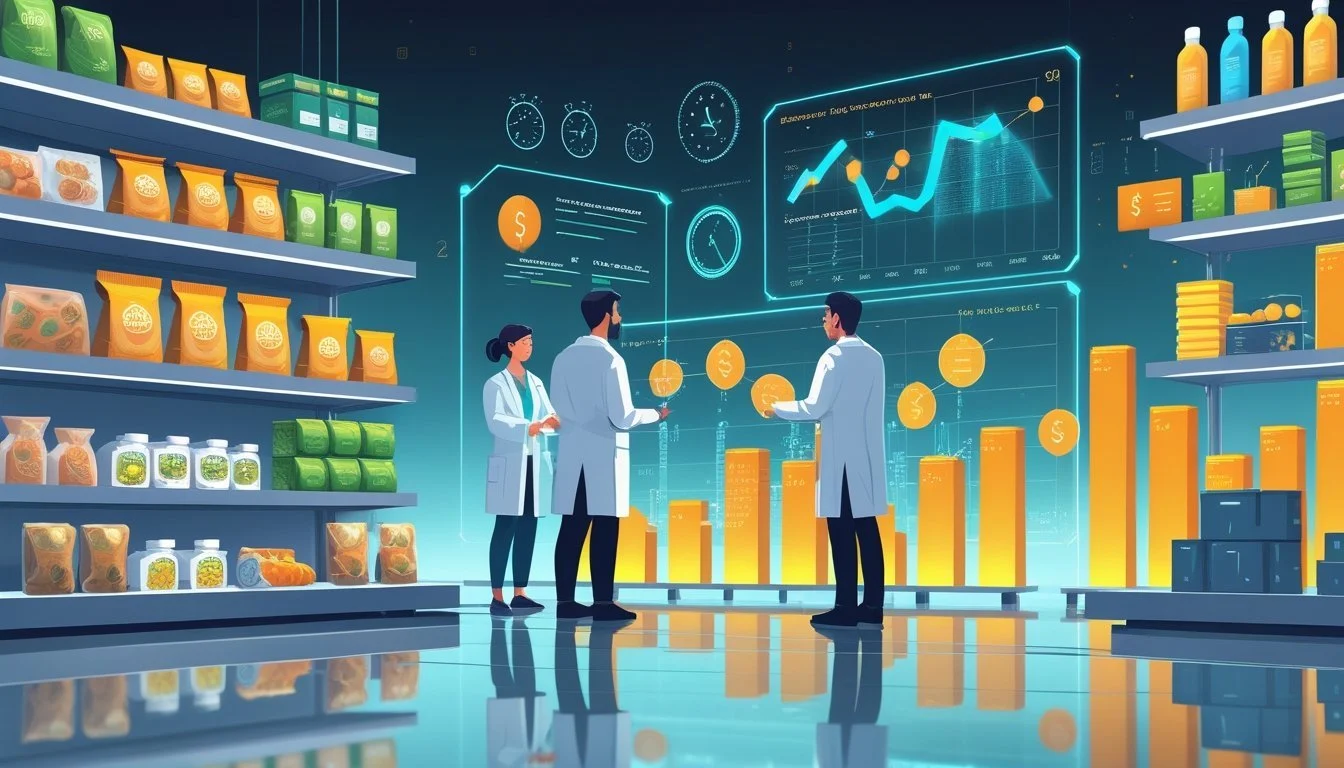
Innovations in food science and technological interventions are shaping how businesses balance cost, waste, and efficiency. The use of bioscience and improved storage methods is directly impacting both product quality and the economics of the food industry.
Advancements in Food Science and Technology
Recent years have seen significant progress in understanding food deterioration mechanisms, such as oxidation and rancidity. Technological advances like smarter packaging and sensor systems now allow producers to monitor freshness in real time. Freezing continues to be refined, reducing nutrient loss and extending the shelf life of perishable products.
Bioscience tools, including improved fermentation techniques and bio-preservatives, are also helping to slow spoilage. These innovations do not just influence biological stability, but directly affect profit margins by reducing unsellable inventory and cutting disposal costs.
The table below illustrates several emerging technologies and their primary economic impacts:
Technology Impact Smart Packaging Lower waste, better pricing Bioscience Preservatives Reduced spoilage loss Advanced Freezing Quality retention, savings
Challenges and Opportunities Ahead
Economic gains from shelf life extension face limits from regulatory restrictions and market acceptance. For example, new additives or preservation techniques must pass strict safety standards before commercial adoption. This process can delay benefits while increasing research and compliance costs.
There is also a risk that extending shelf life could increase the distance and time foods travel, potentially raising greenhouse gas emissions. On the positive side, companies that balance shelf-life gains with environmental concerns can use it as a market differentiator.
Finding cost-effective solutions that also address food safety, environmental impact, and consumer perceptions will shape the next phase of shelf life economics. The path forward will demand collaboration across food science, bioscience, and supply chain management.

