
The Role of Anti-Microbial Coatings in Modern Surface Protection
Antimicrobial coatings play a crucial role in reducing the growth of harmful microorganisms on surfaces, promoting safer and more hygienic environments. These specialized coatings are engineered to inhibit bacteria, viruses, and fungi, which is especially important in healthcare settings, public spaces, and manufacturing industries where cleanliness is a priority.
Rising concerns about infection control have driven broader adoption of antimicrobial surfaces across hospitals, schools, and even homes. By providing an extra layer of defense, these coatings help limit the spread of contaminants and can contribute to reduced transmission of disease.
Advancements in material science continue to expand the functionality and effectiveness of antimicrobial coatings. Their integration into various products demonstrates a continued commitment to safety and public health, making them a relevant and timely solution for modern environments.
Understanding Anti-Microbial Coatings
Anti-microbial coatings use specific agents and materials to reduce or inhibit the growth of harmful microorganisms on various surfaces. Their effectiveness depends on the coating's composition, the targeted organisms, and the intended environment.
Definition and Overview
An anti-microbial coating is a surface layer containing substances designed to prevent or slow the growth of bacteria, viruses, fungi, and other microorganisms. These coatings are applied to a wide range of materials, including metals, plastics, textiles, and ceramics.
The primary aim is to reduce microbial contamination and extend the surfaces’ hygienic state between cleanings. Such coatings are especially important in healthcare settings, food industry facilities, public transportation, and increasingly in consumer products.
Anti-microbial coatings often incorporate agents like silver ions, copper, zinc, or organic biocides. Their use can help curb infectious diseases and minimize the spread of pathogens. These coatings can be both antibacterial and antiviral, depending on the active agents used.
Types of Anti-Microbial Coatings
There are several types of anti-microbial coatings, usually differentiated by the method of action and the materials or antimicrobial agents they use. Some common categories include:
Metal-based coatings: Utilize metals such as silver, copper, or zinc. These materials interfere with microbial cell membranes and disrupt essential cellular functions.
Polymeric coatings: Infuse synthetic or natural polymers with antimicrobial agents. These are used for flexible and durable surfaces.
Nano-coatings: Feature nanoparticles for enhanced surface area and antimicrobial efficiency. They may target both bacteria and viruses more effectively.
Organic coatings: Contain biocidal or biostatic compounds that target specific classes of microorganisms.
The choice of anti-microbial material depends on the application requirements, target organisms, expected durability, and desired physical properties.
How Anti-Microbial Coatings Work
Anti-microbial coatings function by deploying agents that interact with and neutralize microorganisms in several ways. Some agents, such as silver or copper ions, disrupt microbial cell walls and inhibit vital processes inside the organism.
Other coatings create chemical environments that cause oxidative stress, damaging cellular components and leading to cell death. Some interfere with DNA replication, while others block essential enzyme activity or nutrient uptake.
The protective action can be contact-based (requiring touch) or release-based (slowly releasing agents over time). The mechanism’s specificity—whether antibacterial, antiviral, or antifungal—is determined by the type of agent and its mode of action. Physical properties such as the coating’s thickness, adhesion, and porosity also influence performance and longevity.
Microbial Threats Addressed by Anti-Microbial Coatings
Anti-microbial coatings play a direct role in inhibiting a range of harmful microorganisms, reducing risks tied to infection and contamination. These coatings function by targeting not only common pathogens but also harder-to-eradicate strains found in various settings.
Bacteria and Antibiotic-Resistant Strains
Bacterial contamination on surfaces contributes to disease transmission, especially in healthcare and food environments. Gram-positive and gram-negative bacteria, such as Staphylococcus aureus and Escherichia coli, are frequent culprits. Anti-microbial coatings disrupt their cell walls or metabolic processes, reducing the risk of infection.
Antibiotic-resistant strains like methicillin-resistant Staphylococcus aureus (MRSA) and vancomycin-resistant enterococci (VRE) pose particular concern. These bacteria can survive on untreated surfaces for extended periods. Coatings with broad-spectrum efficacy are designed to manage both standard and resistant pathogens, lowering the potential for hospital-acquired infections and promoting safer surfaces.
Some coatings use metal ions (silver, copper) or advanced polymers. These act either by generating reactive oxygen species or disrupting essential microbial activities, making them effective against a spectrum of bacteria, including those not easily treated with antibiotics.
Fungi and Mold Prevention
Moist or poorly ventilated environments support rapid fungal growth, especially of mold species that threaten both structural integrity and human health. Anti-microbial coatings tailored for fungi inhibit spore germination and growth, protecting surfaces from colonization.
Fungal threats include common genera such as Aspergillus and Penicillium. These organisms can trigger allergies, asthma, or worsen indoor air quality. Coatings may use agents that interfere with the cell walls of fungi or disrupt reproductive cycles, which helps prevent mold growth on walls, ceilings, and medical equipment.
In healthcare and food storage, fungal contamination must be minimized to ensure sanitary conditions. Anti-microbial coatings support this by maintaining long-term protection on high-risk surfaces and limiting the frequency of outbreaks or product spoilage.
Viruses and Antiviral Properties
Viruses present unique challenges because they require living hosts to reproduce and can persist on surfaces for hours or days. High-touch areas, such as door handles and medical devices, often harbor viral particles, contributing to disease spread.
Anti-microbial coatings can include agents specifically designed to reduce viral load. Some materials alter viral proteins or damage the viral envelope, impeding their ability to infect host cells. These properties are useful against respiratory viruses like influenza and coronaviruses.
By addressing surfaces where viral transmission is likely, these coatings serve as supplementary barriers in addition to standard disinfection. This helps lower the risk associated with contact-based viral transmission, especially in healthcare, transportation, and public facilities.
Mechanisms of Action
Anti-microbial coatings use several strategies to inhibit or eliminate bacteria and other microorganisms. These approaches involve both chemical and physical means, often employing advanced materials such as silver nanoparticles, quaternary ammonium compounds, and photocatalytic agents.
Contact Killing
Contact killing mechanisms rely on the direct interaction between microbes and the coating surface. Once a microorganism contacts the treated surface, antimicrobial agents like silver ions or quaternary ammonium compounds disrupt the cell membrane.
This disruption can cause leakage of cellular contents and rapid cell death. Materials commonly involved include copper alloys, silver nanoparticles, and surface-bound cationic polymers. Quaternary ammonium compounds are widely used for their ability to destroy both bacteria and some viruses upon direct contact.
Mechanical disruption can also play a role, where certain structural features inhibit microbial adhesion or integrity. Coatings based on nanotechnology may present nanoscale spikes or roughness, physically bursting microbial cells or rendering the surface inhospitable.
Release of Antimicrobial Agents
Some coatings are designed to gradually release active antibacterial agents into the surrounding environment. These agents include silver ions, copper ions, iodine, and other biocides.
Controlled release ensures a consistent antimicrobial effect over extended periods. For example, silver nanoparticles embedded in polymer matrices release silver ions slowly, providing ongoing protection against a broad spectrum of bacteria.
The release rate can be tuned by adjusting the formulation of the coating. This method is beneficial for environments where persistent microbial challenge is expected, such as hospitals and food processing facilities.
Physical and Chemical Surface Modification
Physical and chemical modifications to the coating surface can prevent the adhesion and colonization of microbes. Strategies include making surfaces highly hydrophobic or hydrophilic, altering surface charge, or introducing functional chemical groups.
Surface modifications make it difficult for bacteria and viruses to establish a foothold, reducing the likelihood of biofilm formation. Some coatings incorporate dendrimers—branched macromolecules with antimicrobial activity—into the surface to enhance resistance.
Other approaches involve grafting antibacterial polymers or coupling them chemically to the substrate. These modifications do not release biocides but instead create unfriendly conditions for microbial survival and reproduction.
Photocatalytic Activity
Photocatalytic antimicrobial coatings use materials such as titanium dioxide or zinc oxide. Upon exposure to light (particularly UV or visible), these photocatalysts generate reactive oxygen species (ROS), including hydroxyl radicals and hydrogen peroxide.
ROS can oxidize microbial cell walls, proteins, and genetic material, leading to cell death. The process is catalytic, allowing continued antimicrobial action as long as there is sufficient light and oxygen.
Photocatalytic coatings are especially valued in hygiene-critical areas due to their ability to deactivate a wide range of pathogens. Applications often include high-touch surfaces, air filters, and medical devices where ongoing sterilization is essential.
Applications of Anti-Microbial Coatings
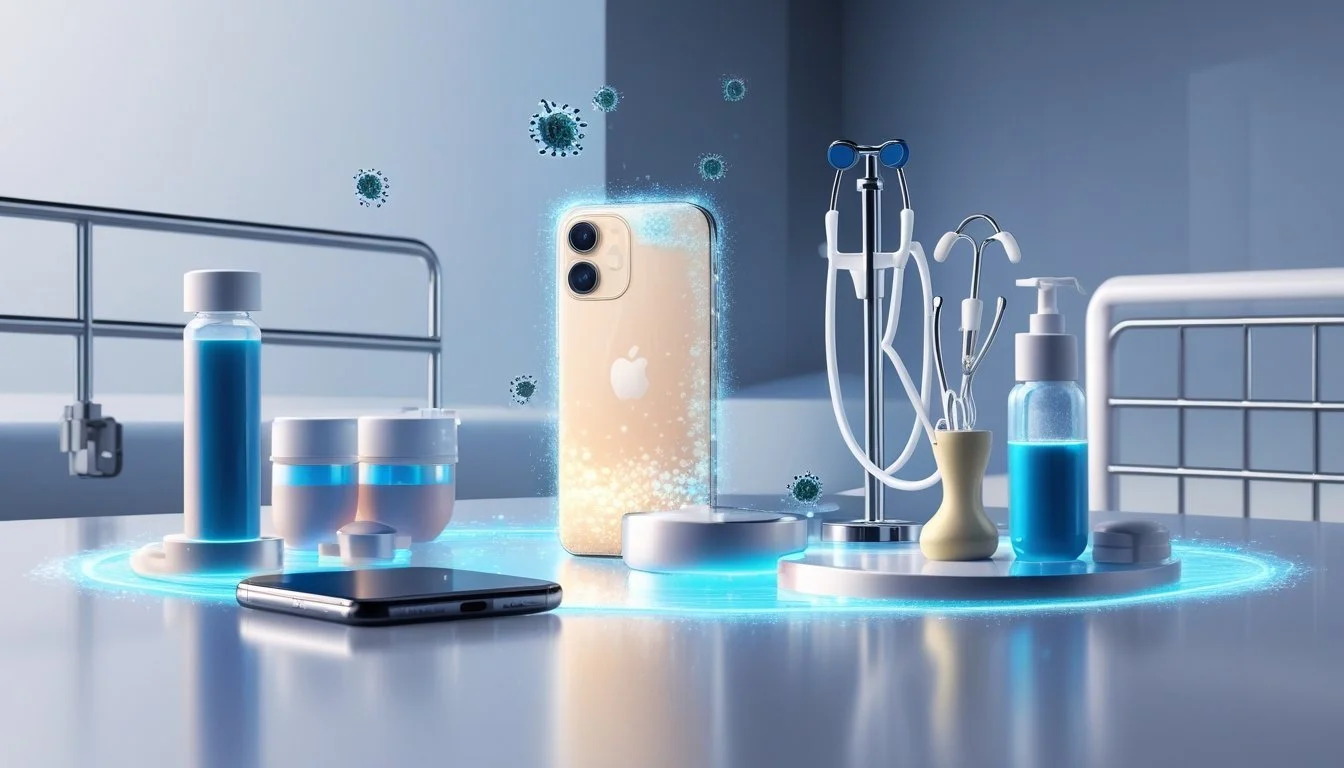
Anti-microbial coatings are used to reduce the transmission of pathogens and improve hygiene across a range of sectors. Their effectiveness depends on surface type, operating environment, and how well the coating resists routine cleaning or abrasion.
Medical Devices and Healthcare Sector
In hospitals, clinics, and long-term care facilities, hygiene is a critical concern due to the risk of healthcare-associated infections (HAIs). Anti-microbial coatings are applied to high-touch surfaces like bed rails, door handles, and medical equipment to limit microbial survival.
Medical devices such as catheters, implantable devices, and surgical instruments often receive specialized coatings to discourage bacterial colonization. This reduces biofilm formation, which is a major cause of device-related infections.
Some coatings contain silver, copper, or other agents known for their anti-microbial properties. The goal is to complement regular cleaning protocols, offering continuous microbial control between disinfection cycles.
In the healthcare sector, these coatings help lower infection risk, safeguard patient outcomes, and can contribute to lower healthcare costs by reducing infection rates.
Food Processing and Packaging
Surfaces in food processing plants and packaging lines frequently encounter moisture, organic matter, and frequent human contact. Anti-microbial coatings help reduce the contamination risk by limiting the growth of bacteria, mold, and fungi on equipment and packaging materials.
Key areas of application include conveyor belts, slicers, preparation surfaces, and the inner linings of packaging. By inhibiting microbial proliferation, these coatings can help extend shelf life, reduce spoilage rates, and uphold food safety standards.
Some packaging now incorporates anti-microbial films or sprays that directly interact with the packaged food, offering an added layer of protection during storage and transport.
Compliance with food safety regulations requires that these coatings are food-safe and do not leach harmful substances into products. Regular monitoring and testing ensure that they remain effective during use.
Public and Consumer Products
Many consumer goods and public surfaces are now manufactured with anti-microbial coatings to address hygiene concerns in everyday settings. Examples include doorknobs, handrails, elevator buttons, and shopping carts found in public spaces.
Personal items such as smartphones, keyboards, kitchen appliances, and even textiles may feature coatings that limit microbial transfer. This is especially valued in environments with high touch frequency and limited opportunity for constant cleaning.
Industrial and household paints are also formulated with anti-microbial agents, which help prevent the growth of bacteria, mold, or mildew on walls and surfaces in moist environments.
In these applications, the primary purpose is to reduce the likelihood of microbial transmission and create safer, cleaner surroundings for users.
Impact on Infection Control and Public Health
Anti-microbial coatings can contribute to infection control efforts by providing an extra layer of defense against pathogens. Their application in high-touch environments targets the surfaces most likely to be involved in the spread of infectious diseases.
Healthcare-Associated Infections
Healthcare-associated infections (HCAIs), including hospital-acquired infections, are a major concern in clinical settings. Surfaces in hospitals and clinics are frequent contact points for both staff and patients.
Anti-microbial coatings are engineered to bond to these surfaces, forming a persistent barrier that can remain effective for up to 15 weeks. This property helps reduce the risk of bacterial survival, especially on high-touch areas such as bed rails, door handles, and medical equipment.
Routine cleaning and disinfection practices remain critical. However, the addition of anti-microbial coatings complements these routines by working continually between cleaning cycles. Studies have demonstrated reduced microbial load on coated surfaces, supporting their role in infection control programs.
Reducing Microbial Contamination
Bacterial and other microbial contamination on surfaces is a key vector for the transmission of infectious diseases, particularly in public and healthcare settings. Coatings infused with bactericidal or bacteriostatic agents limit the ability of microbes to persist or reproduce on treated materials.
This technology is especially useful for surfaces in emergency departments, waiting rooms, and shared medical equipment. It mitigates the risk of cross-contamination, which is crucial in environments with vulnerable populations.
Regular use of anti-microbial coatings may help lower the frequency at which pathogens are recovered from treated surfaces. By reducing the overall bioburden, these coatings support public health measures aimed at lowering the incidence of pathogen transmission in shared spaces.
Performance Factors and Durability

Anti-microbial coatings are evaluated based on their ability to remain effective over time, their resistance to environmental stressors, and their compliance with recognized test standards. Key considerations include how well the coating maintains its antimicrobial function and physical properties in real-world conditions.
Durability and Longevity
The durability of an anti-microbial coating depends on its chemical composition, interaction with surface materials, and exposure to cleaning or mechanical abrasion. Frequent surface cleaning and disinfection can degrade the coating, reducing its functional lifespan. Certain formulations with robust bonding and multi-functional additives tend to withstand wear better.
Environmental factors, such as humidity and temperature, influence the stability and activity of the coating. In high-contact applications, coatings may need to be reapplied or monitored to ensure ongoing protection. Manufacturers may rate coatings for specific service intervals, but actual longevity is influenced by the intensity of use and the cleaning protocols adopted.
Durability also plays a significant role in cost-effectiveness. A longer-lasting coating minimizes maintenance frequency and associated labor costs.
Corrosion Resistance
For surfaces exposed to moisture or chemicals, corrosion resistance is essential. Some anti-microbial coatings integrate corrosion inhibitors or use inherently corrosion-resistant materials, such as certain polymers and ceramic composites.
Corrosion can compromise both the protective and antimicrobial functions of a coating. If the underlying substrate becomes corroded, bacterial adhesion can increase, and the effectiveness of the antimicrobial layer may drop. For metal substrates, anti-microbial coatings that also prevent oxidation help maintain both the physical integrity and the hygiene of the surface.
Selection of coating type should consider the chemical exposure expected in the intended environment. Hospitals, food processing plants, and public transport hubs often require high corrosion resistance due to regular cleaning with harsh agents.
Antimicrobial Testing and Standards
Manufacturers rely on standardized antimicrobial testing protocols to evaluate the effectiveness of coatings against specific pathogens. Common test methods include ISO 22196 for plastics and non-porous surfaces and ASTM E2180 for polymeric materials.
These tests assess reduction rates of bacteria or fungi over set time periods, often using quantitative measurement tables. Test results must demonstrate significant reduction in colony-forming units (CFUs) to pass accepted benchmarks.
Regulatory bodies may mandate specific test standards for coatings used in healthcare or food environments. Adherence to these standards ensures both safety and claimed functionality. Independent third-party testing is frequently required for certified claims and product labeling.
Safety, Regulatory, and Sustainability Considerations

Anti-microbial coatings present unique opportunities and challenges related to human health, ecological impact, and legal standards. Product developers must balance effectiveness with the minimization of risks to users and the environment.
Safety Concerns and Toxicity
The safety of anti-microbial coatings is closely linked to their chemical composition and method of action. Surface coatings that rely on silver, copper, or zinc nanoparticles may inhibit microbes, but they can also release ions or particles that are toxic in high concentrations.
Some coatings pose risks of skin sensitization or allergic reactions. There is also ongoing concern about the potential for long-term human exposure, especially in healthcare and public settings. Additionally, poorly designed coatings may contribute to microbial resistance, undermining public health efforts. Careful toxicity testing and risk assessment are crucial before products reach the market.
Environmental Impact and Sustainability
The environmental impact of anti-microbial coatings includes resource extraction, manufacturing emissions, and disposal concerns. Nanoparticle-based coatings can enter water systems and persist, potentially disrupting aquatic ecosystems. Some ingredients may not degrade easily, causing long-lasting environmental accumulation.
Sustainable solutions focus on bio-based or biodegradable materials and reduced use of persistent chemicals. Improving life-cycle management, reducing packaging waste, and selecting safer raw materials are important strategies. Regulatory trends are pushing manufacturers to adopt cleaner, more ecologically responsible practices throughout the product lifecycle.
Regulatory Compliance
The regulatory framework for anti-microbial coatings has become stricter in 2025, addressing both safety and sustainability. Companies face requirements for detailed product labeling, safety data, and evidence of efficacy. Agencies such as the EPA, ECHA, and FDA monitor formulations and claims to ensure public and environmental safety.
Manufacturers are now adapting to rules that restrict hazardous substances and require more transparency regarding composition and disposal. Non-compliance can lead to product recalls or bans. Ongoing updates and region-specific regulations add complexity, requiring continuous monitoring of the legal landscape.
Economic Considerations
The practical adoption of anti-microbial coatings depends on initial investment, ongoing economic impact, and future market development. Factors such as upfront costs, healthcare savings, and market growth trends shape decisions on their use.
Cost and Cost-Benefit Analysis
Implementation of anti-microbial coatings involves material expenses, application labor, and required maintenance. Upfront costs may be higher than standard coatings, especially for advanced products with proven efficacy.
Healthcare facilities often consider these coatings for high-risk environments like hospitals and surgical rooms. Evidence suggests that coatings can reduce surface contamination, leading to fewer healthcare-associated infections (HAIs). For example, studies indicate a potential decrease in surgical site infection rates, which can translate into cost savings by reducing patient treatment expenses.
The use of anti-microbial coatings can also lower the frequency of chemical surface disinfection. This reduction in chemical use and associated labor may result in additional operational savings. However, the cost-effectiveness depends on infection rates, product durability, and maintenance schedules.
Cost Factor Standard Surface Anti-Microbial Coating Initial Material Cost Low Medium to High Maintenance Frequency Regular Reduced Labor Requirements Moderate Lower (long-term) Chemical Use High Lower
Market Trends and Future Outlook
The global antimicrobial coatings market is growing rapidly, with projections indicating it could surpass $10 billion by 2032. This growth is driven by increasing demand in healthcare, transportation, consumer goods, and public spaces.
Rising awareness of hygiene standards accelerates adoption in hospitals, schools, and public infrastructure. Regulatory updates and emphasis on infection control also contribute to higher demand. Innovations in coating technology further encourage market expansion.
Emerging risks, such as the potential for microbial resistance, are prompting further research. The industry is balancing technical performance, safety, and regulatory compliance. As the market matures, competitive pricing and product differentiation may further shape economic considerations in the sector.

