
Why Food Loses Flavor Before It Spoils
Understanding the Science Behind Diminished Taste
Food often loses its flavor before there are any clear signs of spoilage. The main reason for this early loss of flavor is a combination of chemical changes like oxidation and physical changes such as moisture loss or migration, even before bacteria or mold make food unsafe to eat. These subtle changes can affect taste, aroma, and texture, leaving food bland or stale despite looking and smelling normal.
Everyday examples include bread going stale, chips losing their crunch, or spices losing their potency long before they actually rot. Factors like exposure to air, temperature shifts, and light exposure speed up these changes, making food less enjoyable well before it becomes unsafe. Understanding why flavors fade can help people take steps to better preserve taste and freshness in their kitchens.
Understanding Food Flavor Loss
Flavor changes in food can occur well before there are signs of spoilage. These changes often impact food quality, influencing both enjoyment and nutritional value.
Definition of Flavor Loss
Flavor loss refers to the reduction or alteration of a food’s characteristic tastes and aromas. This can happen due to chemical reactions, such as oxidation, or physical processes, such as repeated heating or improper storage.
For example:
Essential oils in spices can degrade, weakening their impact.
Moisture loss or absorption can lead to blandness.
Volatile compounds responsible for aroma can evaporate or break down.
Subtle changes in temperature, light, or humidity can accelerate these losses. As a result, even food that is safe to eat can taste noticeably dull or different from when it was fresh.
Distinction Between Spoilage and Flavor Loss
Spoilage and flavor loss are not the same, though they can be related. Flavor loss usually happens before spoilage is visible or detected by smell. Spoilage is caused by microbial growth or chemical breakdown that renders food unsafe or unpalatable.
Flavor Loss Spoilage Taste/aroma fades Off-smell, mold, slime Still safe to eat Often unsafe to eat Occurs with aging Occurs with contamination
Flavor loss affects sensory enjoyment, whereas spoilage endangers health. Understanding this distinction is important when evaluating food quality during storage.
Impact on Food Quality
Loss of flavor can affect the desirability and overall quality of foods, even when nutrition and safety are unchanged. Deterioration of taste or aroma may cause people to discard food prematurely, reducing shelf life and increasing waste.
Consumers may increase salt, sugar, or spice to compensate for diminished flavor. This can change the intended nutritional profile of a meal. For example, reheating or freezing can accelerate the loss of delicate flavor compounds, particularly in fresh produce, herbs, and spices.
Flavor, along with nutrition and safety, is an essential pillar of food quality. Foods that maintain their original flavor profile are more likely to be eaten and enjoyed before reaching true spoilage.
Causes of Flavor Decline Before Spoilage
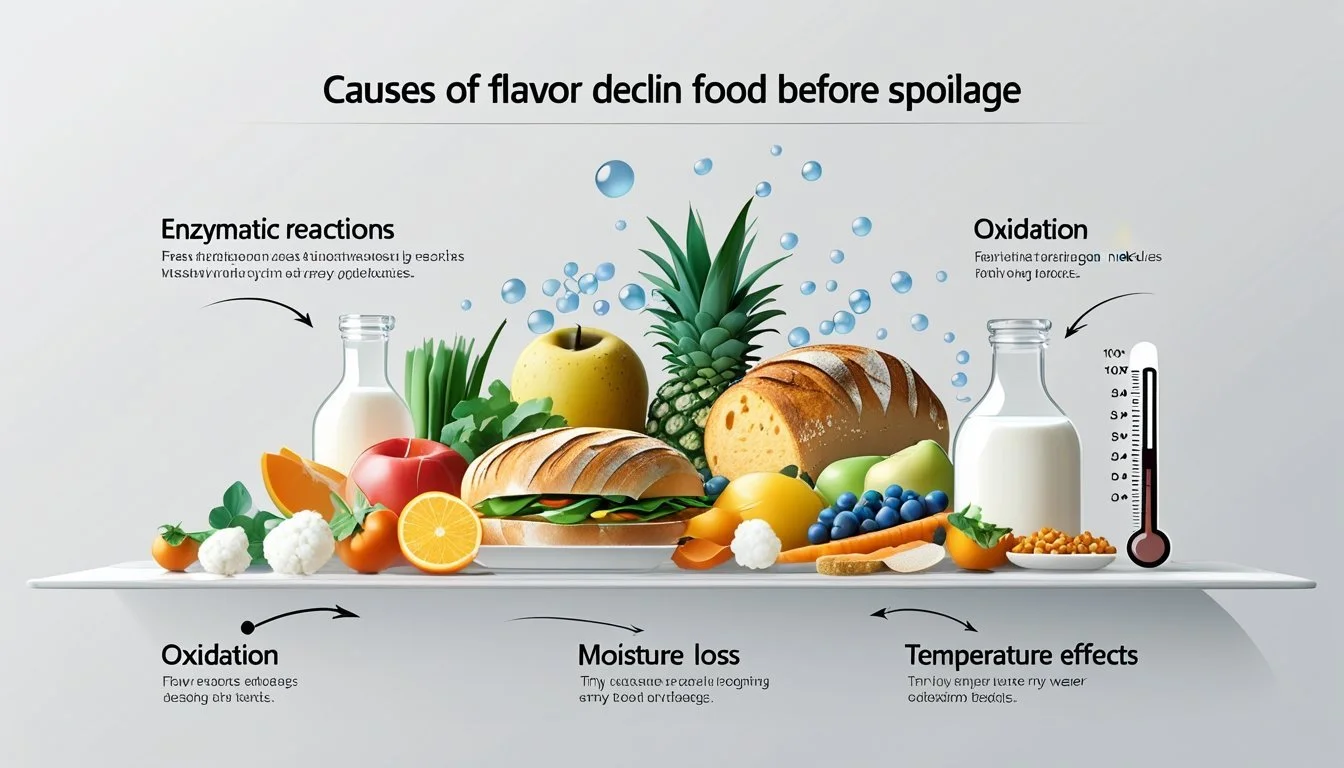
Before food reaches the point of visible spoilage, several chemical and physical changes can reduce its flavor. Key factors include exposure to oxygen, natural enzyme activity, and the loss or movement of moisture in food products.
Oxidation Processes
Oxidation is a primary cause of early flavor loss in many foods. When foods are exposed to air, oxygen interacts with fats and oils, leading to the breakdown of lipid molecules. This process can produce off-flavors commonly described as "stale," "rancid," or "cardboard-like," especially in fatty foods like nuts or cooking oils.
Even foods with little fat can be affected, as oxidation may alter essential flavor compounds and pigments. Vitamins, such as vitamin C, can degrade through oxidation, making fruits taste less fresh. Packaging foods in airtight containers or using antioxidants can limit these reactions but may not prevent all flavor changes.
Table: Effects of Oxidation on Food Flavor
Food Type Affected Compound Resulting Flavor Change Nuts/Oils Unsaturated fats Rancid, bitter Fruits Vitamin C, Aromas Loss of brightness, flat taste Chocolates Cocoa butter Stale, waxy
Enzymatic Activity
After harvest or processing, natural enzymes in food continue to act on carbohydrates, proteins, and fats. Enzymatic reactions can begin breaking down flavor compounds soon after food is exposed to air or sliced. For instance, polyphenol oxidase in apples causes browning and can subtly affect the fruit's aroma and flavor.
Enzyme action may also break down sugars or amino acids, leading to a decline in natural sweetness or savory notes. In some vegetables, enzymes convert chlorophyll, which can cause green items to taste dull before they look spoiled.
To slow these changes, producers may use refrigeration or blanching to inactivate specific enzymes, but this is not always possible in fresh foods.
Key Points:
Common Enzymes: Polyphenol oxidase, lipase, protease
Notable Effects: Loss of sweetness, dull taste, color change
Mitigation: Blanching, cooling, airtight packaging
Moisture and Dehydration
Changes in moisture content or water activity significantly influence food flavor before spoilage occurs. As foods dehydrate, volatile flavor compounds can evaporate, leading to a more muted taste. Bread becomes stale as it loses moisture, while dried herbs may lose their aromatic strength over time.
High water activity can also allow subtle microbial or chemical activity that changes flavor without producing clear signs of spoilage. In confectionery, moisture migration can cause sugar to crystallize on the surface, making the product taste less smooth and balanced.
Proper storage—such as using moisture-barrier packaging—can help preserve both texture and flavor. Managing humidity and water activity is crucial for maintaining the intended flavor profile of many foods.
Role of Environmental Conditions
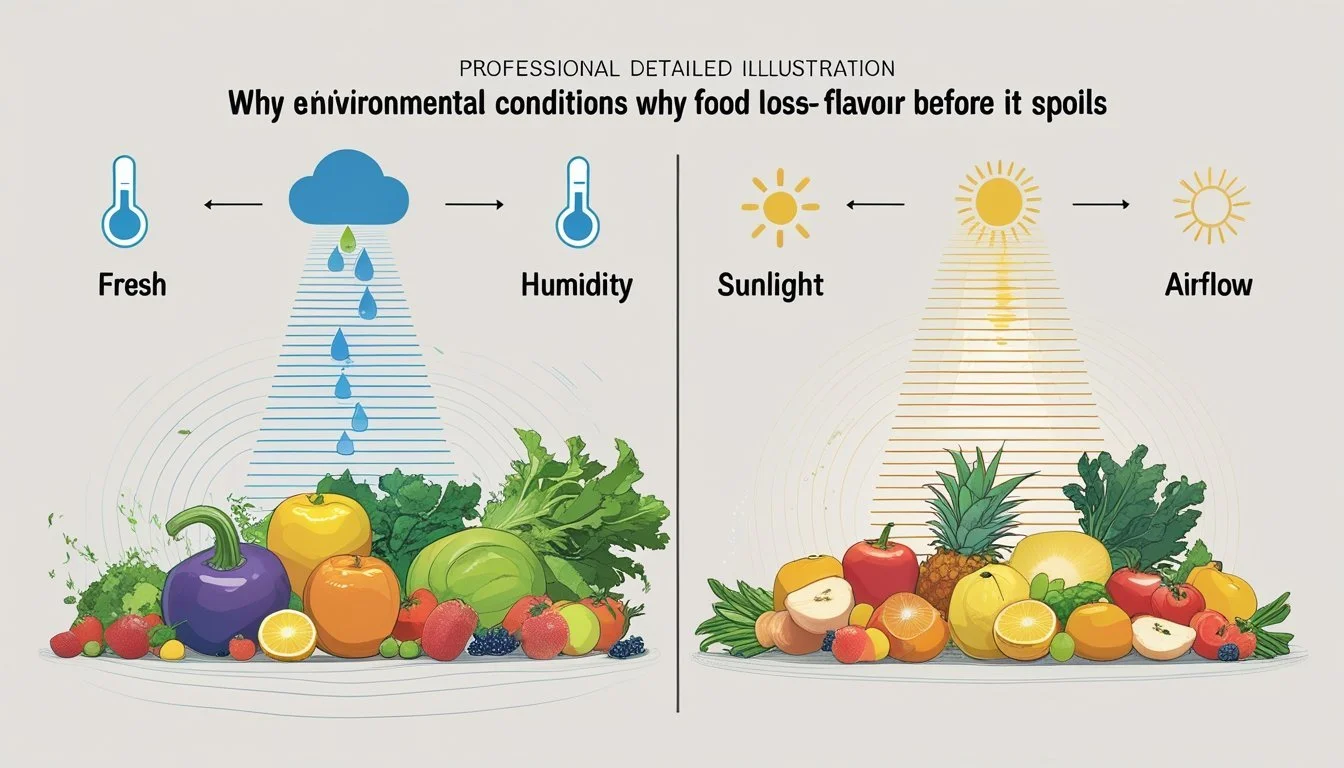
Environmental factors such as temperature, light, and oxygen play a significant role in how quickly food loses its flavor. These elements can cause chemical reactions and physical changes in food that affect taste long before spoilage is visually apparent.
Temperature and Temperature Control
Temperature directly affects the rate of chemical reactions that contribute to flavor loss. Higher storage temperatures accelerate the breakdown of volatile flavor compounds. For example, the aromatic molecules in herbs and spices dissipate faster when exposed to warmth, resulting in duller flavors within days.
Temperature fluctuations are especially harmful. Repeated changes from cold to warm can cause condensation inside packaging, which not only increases moisture but also alters the release of flavor compounds. Many flavor-related enzymatic reactions are temperature-sensitive. Poor temperature control may allow unwanted enzymatic activity, further degrading flavor before there is any clear sign of spoilage.
A table showing optimal storage temperatures for common foods:
Food Type Ideal Storage Temp (°C) Flavor Impact if Warmer Fresh Herbs 0–2 Rapid aroma loss Cheese 2–4 Bitter, stale notes emerge Bread 18–22 Becomes tough, flavor stale
Light Exposure
Light exposure, especially to sunlight or fluorescent bulbs, can degrade flavor-critical compounds. Some vitamins and aromatic oils are photosensitive and start to break down when exposed even to brief bursts of light.
Milk loses its fresh taste quickly if left out in the open because light breaks down riboflavin and other flavor molecules. Nuts and oils develop off-flavors or rancidity as their delicate fats oxidize faster under direct light. Clear packaging increases vulnerability; opaque containers help preserve flavor longer.
Flavor loss due to light is often gradual and not immediately noticeable. Consumers may detect a "flat" or "off" taste weeks before the product looks or smells spoiled.
Oxygen Levels
Oxygen reacts with a wide range of food molecules, causing oxidation that leads to loss of flavor. The presence of oxygen, even in small amounts, can trigger changes in fats, oils, and certain vitamins, leading to stale or metallic tastes long before spoilage.
Vacuum packaging and modified atmosphere packaging slow down the oxidation process by minimizing oxygen exposure. For example, coffee stored in air loses its aroma much faster than vacuum-sealed coffee.
Lists of foods most sensitive to oxygen-induced flavor loss include:
Coffee and tea
Nut oils
Fresh-cut fruits
Cooked meats
Controlling oxygen levels extends flavor retention and ensures food remains appealing in taste for longer periods.
Influence of Packaging and Storage Methods
Food flavor can decline due to chemical changes, interactions with air, and loss of aroma compounds even before visible spoilage occurs. Both the packaging material and the method of storage greatly influence how quickly food loses its flavor.
Packaging Materials and Techniques
Careful selection of packaging helps preserve the freshness and taste of foods. Materials like glass, metal, and specialized food-grade plastics act as barriers against oxygen, moisture, and light, all of which can accelerate flavor loss.
Effective packaging prevents the escape of volatile flavor compounds. Vacuum sealing removes air around the food, reducing oxidation—a major cause of staleness and off-flavors in products like coffee, nuts, and baked goods.
Clear plastic and paper packaging, unless specially treated, often provide poor protection against oxygen and light, increasing the risk of flavor changes before spoilage. Airtight containers and resealable bags can help, but high-barrier materials remain best for retaining peak flavor.
Refrigeration and Freezing
Refrigeration is widely used to slow down the processes that lead to both spoilage and flavor loss. By reducing temperature, enzyme activity and chemical reactions that break down flavors are delayed.
However, some foods are sensitive to cold. Tomatoes and certain fruits may lose aroma or suffer texture changes when refrigerated, resulting in muted flavor even if the food remains safe to eat.
Freezing significantly halts the reactions that break down flavor components. Still, improper freezing (such as fluctuating freezer temperatures) or poor packaging may lead to ice crystal formation and “freezer burn,” causing a dry taste and loss of original flavor. Vacuum sealing and proper wrapping reduce these risks.
Modified Atmosphere Packaging
Modified atmosphere packaging (MAP) adjusts the combination of gases (such as oxygen, carbon dioxide, and nitrogen) inside a package to preserve taste and extend shelf life.
MAP is common with fresh meats, produce, and baked goods. Reducing oxygen limits the oxidation that leads to rancidity or flavor dulling, while increasing carbon dioxide can inhibit microbial growth.
The type of food determines the optimal gas mixture. For example, fresh-cut produce often benefits from lower oxygen and higher carbon dioxide, keeping flavors stable. MAP, combined with sturdy barrier films, postpones both spoilage and noticeable flavor loss better than standard packaging methods.
Enzymatic and Chemical Changes
Food quality declines due to both enzymatic activity and chemical reactions long before visual spoilage appears. These processes change the taste, aroma, and appearance, often leading to flavor loss while the food still seems safe to eat.
Maillard Reaction and Browning
The Maillard reaction involves a reaction between amino acids and reducing sugars at relatively mild temperatures. This reaction is responsible for browning in baked goods, grilled meat, and toasted bread.
While the Maillard reaction is often desirable for flavor, if it continues or happens prematurely, it can produce off-flavors and a bitter aftertaste. Even in storage, low-level Maillard browning can dull sweetness or leave a stale note in cereals, nuts, and dairy.
Foods like milk powders, coffee, and snack bars can lose their characteristic flavor when Maillard browning begins to dominate. Visual browning may not be obvious at first, but noticeable flavor changes often occur early in the process.
Key factors:
Temperature: Maillard reaction speeds up as temperature rises.
Moisture content: Low to moderate moisture facilitates browning.
Storage time: Longer storage increases off-flavor risk.
Enzymatic Spoilage
Enzymes, such as polyphenol oxidase, catalyze changes that affect the flavor and appearance of many foods. Even at refrigeration temperatures, enzymatic activity can cause slow but significant changes.
Fruit and vegetables often lose flavor quickly as enzymes begin to alter texture and aroma compounds. For example, polyphenol oxidase causes browning in apples and potatoes, impacting both taste and color.
In dairy and meat, enzymes can release amino acids and fatty acids, sometimes resulting in a slightly sour or bitter flavor before actual spoilage. Mild enzymatic hydrolysis may leave milk tasting stale or fruit less aromatic, making enzymatic spoilage a key cause of early flavor loss.
Rancidity Development
Rancidity results from the breakdown of fats and oils, primarily through two processes: enzymatic hydrolysis and chemical oxidation. One primary enzyme involved is lipase, which splits triglycerides into free fatty acids, producing off-flavors.
Chemical oxidation, commonly called oxidative rancidity, occurs when fats react with oxygen. This leads to the formation of aldehydes and ketones, compounds responsible for unpleasant, stale, or “painty” odors.
Products most affected include nuts, seeds, snack foods, and cooking oils. Even if rancid foods look normal, they often taste bitter or soapy. Often, consumers notice these flavor changes well before there are any visible signs of spoilage.
Quick reference:
Type of Rancidity Main Cause Key Result Enzymatic (Hydrolytic) Lipase enzyme Free fatty acids, off-flavor Oxidative Oxygen Aldehydes, rancid odor
Physical and Mechanical Impacts
Physical and mechanical changes can often lead to a noticeable decline in food flavor, even when spoilage has not yet set in. These factors directly affect the integrity of food by altering its structure, moisture content, and sensory attributes.
Bruises and Physical Damage
Bruises and cuts disrupt the cell structure within foods like fruits and vegetables. When these physical damages occur, they cause membranes to break and cellular fluids to leak out. This process often exposes the food to oxygen, which speeds up enzymatic reactions.
Enzymes such as polyphenol oxidase become active after damage, leading to browning and flavor breakdown. The exposed tissues also lose moisture faster, resulting in a drier texture and duller taste.
Physical damage can also increase the rate of nutrient loss. For example, vitamin C degrades more quickly in bruised produce, further reducing flavor intensity.
Examples of foods affected by physical damage:
Food Type Common Physical Impacts Effect on Flavor Apples Bruising, cuts Loss of snap, rapid browning, muted sweetness Leafy Greens Crushing, tearing Rapid wilting, bitterness increases Tomatoes Pressure points, splits Wateriness, bland taste
Texture and Appearance Changes
Texture and appearance are closely tied to the flavor experience. Moisture loss, compaction, and changes in firmness can alter how food releases flavors in the mouth.
Temperature fluctuations and improper handling can make foods feel rubbery, mushy, or dry. These physical shifts affect mouthfeel, disrupting the normal break-down and release of flavor compounds.
Loss of visual appeal can also impact the perception of taste. When food looks unappetizing or has visible signs of physical deterioration, such as wrinkling or discoloration, people may expect and perceive a weaker or altered flavor, even before spoilage microorganisms become a concern.
Many foods, such as baked products and dairy, suffer flavor loss when texture changes disrupt how aroma molecules are distributed or volatilized during eating.
Biological Factors Influencing Flavor
Changes in food flavor often begin before clear signs of spoilage. Microbial activity, fermentation processes, and natural aging all play a role in how perishable and semi-perishable foods lose their original taste profile.
Microbial Growth and Subtle Changes
Bacteria and other microorganisms can start altering a food’s flavor well before visible mold or spoilage appears. As these microbes metabolize nutrients present in foods, they produce small amounts of acids, enzymes, and other byproducts. Even minimal microbial growth can release off-flavors or diminish the food’s freshness.
Lactic acid bacteria, for example, can introduce sour notes or earthy aromas. In semi-perishable foods, slower microbial activity means these flavor changes develop gradually and can be detected before obvious spoilage signs. Factors like temperature, moisture content, and storage conditions affect the speed and extent of these changes.
Table: Effects of Microbial Growth on Flavor
Microorganism Common Byproducts Early Flavor Impact Lactic Acid Bacteria Lactic acid, enzymes Sour, tangy notes Yeasts Alcohols, esters Fermented aromas Other Bacteria Ammonia, sulfur compounds Slight bitterness, off-odors
Fermentation Effects
Fermentation, a controlled microbial process, can positively or negatively influence food flavor depending on conditions and timing. While fermentation is used to create products like yogurt and sourdough, unwanted or partial fermentation in non-fermented foods can cause unexpected flavor shifts.
As lactic acid bacteria and yeasts consume sugars and starches, they produce acids, alcohols, and gases. These byproducts can mask or alter natural flavors, often before food becomes unsafe. In some perishable foods, low-level fermentation leads to sourness or carbonation, changing taste long before texture or appearance is affected.
Maintaining low temperatures and controlling air exposure can reduce the risk of unwanted fermentation. Once fermentation is detectable by taste, the food’s original flavor is already altered.
Natural Aging of Perishable Foods
Flavor loss can also result from the natural aging process in fruits, vegetables, dairy, and meats. Enzymatic activity continues after harvest or processing, leading to the breakdown of key flavor compounds. For example, fruits may lose sweetness and develop bland or mushy notes as natural enzymes transform sugars and acids.
Semi-perishable foods age more slowly but eventually display similar trends. Lipid oxidation in cheeses and meats causes subtle rancidity, even before spoilage odors form. Physical changes in structure and moisture can further mute characteristic flavors, leaving foods less vibrant in taste as they age.
Proper storage and handling are crucial to slow down these biological changes and help foods retain their flavor for as long as possible.
Food Categories and Susceptibility
Certain foods lose flavor more quickly than others due to their water content, preservation method, and packaging. The flavor life of a food often depends on how easily microbes, oxygen, and enzymatic reactions can interact with it.
Differences in Perishable vs. Dried Foods
Perishable foods such as fresh meat, fish, fruits, and dairy products are at high risk for rapid flavor loss. This is because these foods contain high moisture and are exposed to air, allowing flavor compounds to dissipate and spoilage organisms to grow.
Dried foods, including grains, dried fruits, and powdered products, have had most of their water removed. This reduces enzymatic and microbial activity significantly, slowing both spoilage and flavor loss. However, some dried foods can still lose aroma and taste over time, especially if not stored in airtight containers.
Table 1: Comparison of Perishable and Dried Foods
Food Type Moisture Content Susceptibility to Flavor Loss Fresh Meat High High Dried Fruit Low Medium Cheese Medium-High Medium-High Powdered Milk Very Low Low
Role of Water Activity
Water activity (a_w) measures the availability of water for microbial growth and chemical reactions. Foods with high water activity, such as cut fruits or soft cheese (a_w > 0.95), lose flavor rapidly. Water acts as a solvent, helping volatile flavor molecules escape into the air or become substrates for microbes.
In dried foods, water activity is much lower (a_w < 0.60), which limits these reactions. Flavor tends to degrade more because of oxidation or absorption of off-odors from the environment than from microbial action. Proper packaging can help maintain low water activity and preserve flavor longer by blocking moisture and air.
Canned and Vacuum-Sealed Goods
Canned and vacuum-sealed foods are protected from oxygen and airborne microbes, which helps maintain both freshness and flavor. In these foods, flavor loss typically occurs due to long storage times at room temperature or exposure to light, leading to slow chemical changes.
Vacuum sealing removes most of the air, minimizing oxidation and slowing the degradation of sensitive flavors. For canned goods, the heat treatment used during processing can cause some initial flavor changes, but it also stops further enzymatic breakdown.
List: Key Factors Affecting Flavor in Sealed Foods
Amount of residual oxygen in the package
Light exposure during storage
Storage temperature
Initial processing conditions
With proper storage, vacuum-sealed and canned goods retain their taste much longer than their fresh or unpackaged counterparts.
Food Safety and Nutritional Considerations
Food can lose its appealing odor and flavor before it is considered unsafe to eat, and this often happens due to changes in volatile compounds and oxidation. Nutritional value may also decrease over time, while microbial contamination can create foodborne illness even if food does not look, smell, or taste spoiled.
Odor and Quality vs. Safety
A change in odor or flavor is not always a sign that food is unsafe. Many foods lose aroma and taste due to loss of volatile organic compounds, moisture loss, or oxidation, without actually being hazardous to eat. For example, frozen leftovers may lose flavor after months, yet still be safe if kept at recommended temperatures.
Visual and sensory cues like smell and color are useful for rejecting spoiled food, but they are not fully reliable for safety. Some pathogens do not create noticeable changes to appearance or odor. It is important to consider storage recommendations and expiration dates, not just sensory quality, when assessing if a food is safe.
Nutritional Value Loss
The nutritional content of food can decrease while it is still safe to consume. Exposure to air, light, and temperature fluctuations can break down vitamins, especially vitamin C and some B vitamins, as well as certain antioxidants and phytonutrients.
A table illustrating common nutrients lost during storage:
Nutrient Likely to Degrade Common Triggers Vitamin C Yes Light, air B vitamins Yes Heat, moisture Antioxidants Sometimes Oxidation
Degradation of nutrients does not impact immediate safety but may reduce the overall health benefits of a food. Proper storage, such as sealing containers and refrigerating, can slow these losses.
Foodborne Illnesses and Consumption Decisions
Foods can harbor bacteria, viruses, or molds that cause illness even before any visible spoilage occurs. Some pathogens, such as Salmonella or E. coli, do not alter the taste, color, or smell of food while contaminating it.
Contamination may result from improper handling, cross-contamination, or inadequate refrigeration. Food safety guidelines recommend discarding perishable foods left at room temperature for more than two hours, regardless of odor or appearance.
Decisions about consuming food should not rely solely on sensory evaluation. Following safe handling and storage practices is the most effective way to reduce the risk of foodborne illness.
Prevention and Mitigation Strategies
Maintaining food flavor requires attention to storage, preservation, and packaging methods. Loss of taste often occurs before visual spoilage becomes obvious, highlighting the importance of these practices.
Proper Storage Practices
Proper storage slows the loss of flavor by limiting exposure to air, moisture, and fluctuating temperatures. Refrigerators should operate at or below 4°C (40°F), while freezers must be at -18°C (0°F) or lower.
Store aromatic foods like herbs, coffee, and spices in airtight containers, away from light and heat. Use the FIFO (First In, First Out) method to cycle items, reducing the risk of long-term flavor degradation.
Humidity control also matters. For example, vegetables like lettuce last longer in high humidity drawers, while onions and garlic keep their taste best in low-moisture, cool settings.
Preservation Techniques
Traditional and modern preservation techniques are designed to slow deterioration and retain flavor. Canning, drying, and pasteurization destroy or deactivate enzymes and microbes that cause off-flavors.
Drying removes moisture, which halts most microbial growth and enzymatic activity responsible for staleness. Pickling infuses foods with acidic brines, preserving both texture and taste.
Thermal processing—like blanching before freezing—prevents flavor loss by inactivating enzymes. Fermentation helps maintain or enhance flavor by encouraging beneficial microorganisms, such as lactic acid bacteria, while discouraging spoilage organisms.
Packaging Innovations
Advanced packaging extends flavor retention by creating protective barriers against oxygen, moisture, and light. Vacuum sealing is widely used for meats, cheeses, and dried foods as it removes air and slows chemical flavor changes.
Modified atmosphere packaging (MAP) replaces oxygen with gases like nitrogen or carbon dioxide, reducing oxidation of sensitive foods such as salads and ready meals. Resealable and multi-layered packaging also guard against aroma loss and contamination.
Smart packaging uses sensors to monitor freshness and alert consumers to potential spoilage. Materials with moisture absorbers or oxygen scavengers are increasingly utilized to further preserve original flavor profiles during storage and transport.
Minimizing Food Waste and Maximizing Shelf Life
Recognizing and addressing early flavor loss can prevent premature disposal of food. Effective storage and handling practices play a critical role in both preserving flavor and extending the shelf life of perishable items.
Recognizing Early Signs of Flavor Loss
Many foods begin to lose flavor before clear signs of spoilage appear. Stale bread, wilted herbs, and slightly sour milk are examples where taste and aroma start deteriorating even when the product is still safe to eat.
The main causes of early flavor loss include exposure to air, light, and temperature changes. Oxidation, moisture loss, and chemical reactions also accelerate this process. For example:
Coffee and spices: Lose aroma when stored in open containers.
Leafy greens: Become bland if kept in humid environments.
Consumers can identify early flavor decline by noting subtle changes in smell, color, and texture. Paying attention to these early indicators makes it easier to use items in cooked dishes, smoothies, or baked goods rather than discarding them.
Extending Shelf Life Responsibly
Proper storage is one of the most effective strategies to slow down the causes of food spoilage. Refrigeration keeps perishables fresh, while airtight containers prevent staling and protect flavors.
For optimal shelf life:
Food Type Best Storage Practice Effect Dairy Coldest part of fridge Slows bacteria growth Bread Cool, dry place or freezer Reduces staling Spices Dark, airtight containers Retains aroma longer Leafy Greens Dry towel wrap in fridge Prevents wilting
Using older ingredients in cooked meals and training staff or family members on rotating stock can also reduce food waste. Regularly reviewing expiration and "best before" dates helps avoid unnecessary disposal of foods that are still good to use.
Conclusion
Food can lose flavor well before it actually spoils. This loss often comes from changes at the chemical level, such as oxidation and the breakdown of volatile flavor compounds.
Temperature fluctuations, exposure to light, and repeated reheating can speed up these processes. For example, fatty foods exposed to air react with oxygen, which leads to stale or bland taste even if the food is still safe to eat.
Cultural practices and storage methods also play a role. Improper packaging, high humidity, and long storage can all reduce the intensity of food flavors before any signs of spoilage appear.
Key factors that reduce food flavor include:
Oxidation (reaction with air)
Light exposure
Loss of volatile compounds
Repeated heating or reheating
Poor storage conditions
Many of these changes are invisible and do not always mean the food is unsafe. However, understanding the causes can help individuals maintain better flavor in food and reduce unnecessary waste.

