Food Truck Laws in Ohio
Navigating Regulations and Permits

Operating a food truck in Ohio involves navigating a series of regulations designed to ensure safety, hygiene, and compliance with local laws. Entrepreneurs looking to venture into the mobile food industry must acquire various permits and licenses similar to those required for traditional restaurants. These permits include a business license, food handlers permits for each employee, a seller's permit, and a specific food truck license, sometimes referred to as a mobile food facility permit.
In addition to state-wide regulations, Ohio's food trucks are subject to local ordinances that can vary from one municipality to another. As a result, food truck owners often have to be well-informed about the nuances of the law in each area they operate. Notably, statewide regulations, such as Ohio Senate Bill 150, have streamlined some aspects of this process by providing a regulatory framework that allows food trucks more fluidity to operate across towns and cities within Ohio.
Enforcement of these regulations includes ensuring food trucks meet the safety standards outlined in the Ohio Fire Code. This code establishes basic safety measures for mobile food units, which include provisions for safe handling and storage of fuels like LP-Gas, and compliance is mandatory for all mobile food units operating in the state. Adhering to these laws is essential not only for legal operation but also for the protection of the public and the longevity of the food truck business.
Starting Your Food Truck Business
Starting a food truck business in Ohio requires careful planning to ensure compliance with all state and local regulations. Prospective food truck owners must navigate several legal and procedural steps to set up and operate their mobile food service legally and safely.
Business Structure and Legal Requirements
In Ohio, you must determine the appropriate business structure for your food truck. Structures include sole proprietorships, partnerships, and various types of corporations. A Doing Business As (DBA) may be necessary if operating under a fictitious business name. This decision will impact tax obligations to the IRS, liability issues, and financial management strategies for the individual or persons involved.
Obtaining Necessary Licenses and EIN
Securing an Ohio business license is a critical step. Additionally, you'll require a unique Employer Identification Number (EIN) from the IRS if you hire employees. Depending on location, you may also need a transient vendor's permit, a mobile food license, and adherence to specific county regulations. Refer to the official guide on Starting a Food Truck Business in Ohio 2024 for a detailed explanation of each required license.
Understanding Ohio Food Safety Regulations
Food safety is paramount in the food service industry. Operators must understand guidelines for handling potentially hazardous foods with a focus on minimizing risk. This involves regular inspections by the local board of health and compliance with their criteria. Your food truck should be treated as any retail food establishment, including obtaining a license for either a mobile food service operation or a mobile retail food establishment.
Food Truck Operations and Compliance
Operational compliance includes vehicle safety regulations, food preparation standards, and equipment usage. Ohio mandates adherence to the Ohio Fire Code for mobile food units. Food trucks must secure legal parking locations and maintain a commissary as a home base for cooking, preparing and storing food. Learn more about fire safety measures at Mobile Food Units - Ohio.
Insurance and Liability Considerations
Acquire appropriate insurance to protect your mobile food business from unforeseen events, including liability insurance to cover claims related to foodborne illness or accidents. Insurance not only safeguards the business but is often required for legal operation in various Ohio jurisdictions.
Food and Menu Planning
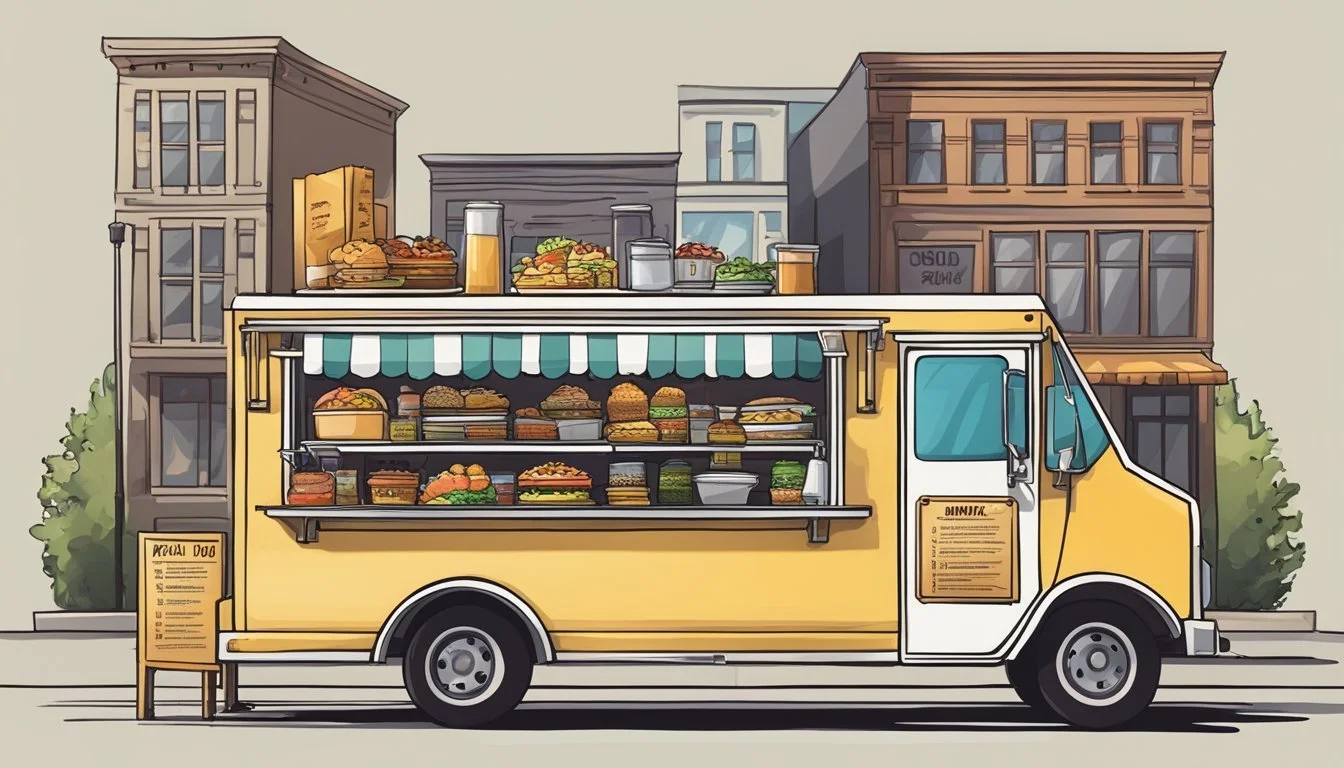
In managing a food truck in Ohio, meticulous attention to menu selection, ingredient sourcing, and food handling ensures compliance with state regulations and customer satisfaction.
Menu Selection and Food Preparation
Selecting a menu for a food truck involves considering the vehicle's cooking capabilities and gas supply. It is essential to design a menu that can be efficiently executed within the spatial and equipment constraints of the truck. Full meals or individual meal components should be chosen based on their ability to be prepared and cooked in a mobile setting. The menu should also reflect the type of food that can be served quickly to customers, maintaining both quality and safety standards.
Sourcing Ingredients and Supplies
When operating a food truck in Ohio, sourcing high-quality ingredients and supplies is crucial for successful food preparation. Ohio’s food truck operators must establish reliable supply chains for fresh and safe ingredients, which sometimes includes partnering with local farms or wholesalers. It is equally important to secure a consistent and compliant gas supply for cooking needs. Regulations surrounding these supplies must be followed to ensure that the retail food establishment standards are met.
Handling of Prepackaged and Unprocessed Foods
Food trucks often offer a mix of prepackaged food and meals prepared on-site. Ohio law requires operators to handle prepackaged items, which might fall under cottage food production operation regulations, with care to avoid contamination. Additionally, unprocessed foods such as fruits and vegetables, must be stored and prepared following the state's food safety guidelines to prevent foodborne illnesses. Proper handling and storage practices are mandatory for both prepackaged and unprocessed items ensuring they are safe for consumption.
Sales, Taxation, and Financial Management
Managing sales and taxation is a crucial aspect for food trucks operating in Ohio. Proper financial management and record-keeping not only ensure compliance with state regulations but also lay the groundwork for a successful business.
Navigating Ohio's Sales Tax for Food Trucks
Food trucks in Ohio must register for a sales tax license and are required to collect and remit sales tax on all eligible transactions. It is important to recognize when sales tax needs to be applied. Generally, food that is consumed on premises is subject to sales tax, while packaged food intended for off-premises consumption may be exempt. Keeping track of these transactions is crucial for accurate tax reporting.
Effective Financial Management and Record Keeping
Robust financial management involves meticulous record-keeping of all sales, expenses, and tax records. Food truck operators should maintain a clear ledger of transactions that include:
Date of sale
Amount collected
Tax collected (if applicable)
Method of payment
This information will be essential for reporting to the Ohio Department of Taxation and helps in preparing for the annual tax filing. An organized system for tracking financial data can also aid in making informed business decisions and forecasting for future growth.
Special Considerations for Alcohol Sales
Selling alcohol in Ohio as a mobile food vendor involves navigating complex regulations to obtain the necessary permits. Adherence to these laws is crucial for the legal operation of food trucks that wish to include alcoholic beverages in their service options.
Understanding Ohio's Alcohol Laws for Mobile Vendors
Ohio enforces specific alcohol regulations that food trucks must follow to sell alcoholic beverages legally. Mobile vendors need to understand the distinction between alcoholic and nonalcoholic beverages and be aware that the sale and distribution of beer, wine, and intoxicating liquor requires adherence to state laws. Operators must be particularly mindful of the need for a designated area, often referred to as a "patio," where patrons can consume alcoholic drinks.
Obtaining Alcoholic Beverage Permits and Licenses
In Ohio, food trucks seeking to sell alcohol must secure the appropriate permits, such as the A-1-A permit, which is comprehensive and allows the sale of wine, beer, and spirits. The A-1c permit is another option, tailored for craft breweries that may partner with food trucks to extend their service offerings. The A-2 and A-2f permits apply to specific types of alcohol sales. To qualify for certain permits, a food truck may need to be endorsed as a retail food establishment or a food service operation. Acquiring these permits is often a multi-step process which requires vendors to navigate the state's legal framework efficiently.
Location and Zoning
When launching a food truck business in Ohio, selecting a suitable location and understanding zoning laws are crucial. These decisions can significantly impact the viability and success of the operation.
Selecting the Right Location for Your Food Truck
The importance of a strategic location cannot be overstressed for a food truck's success. A food truck's address should be in an area with high foot traffic, such as business districts, near colleges, or popular parks. Additionally, proximity to events on the calendar year, like festivals, farmers markets, or locations where veterans' organizations and volunteer emergency medical service organizations gather, can increase visibility and sales.
Adhering to
Health Department and Inspection Protocols
Adherence to health department standards and thorough preparation for regular inspections are crucial for food truck operations in Ohio. These protocols ensure food safety and compliance with the laws set forth by the local board of health.
Preparing for Regular Health Inspections
Food truck owners should conduct self-inspections regularly to prepare for official health inspections. This process includes:
Verifying that all employees have up-to-date food handlers permits.
Checking that potentially hazardous foods are stored at correct temperatures.
Ensuring the cleanliness and sanitation of all surfaces and equipment.
Implementing proper food storage and food service operation practices.
Owners can review the Ohio Regulations Regarding Mobile Food Units to understand the specific standards required.
Maintaining Health Department Standards and Certifications
Maintaining health department standards involves:
Routine Training: Employees must receive ongoing training in food safety to remain informed about the latest standards and practices.
Documentation: Maintaining accurate records of food temperatures, cleaning schedules, and employee training is a must for proving compliance during an inspection.
Certifications: All food trucks must have current certifications, as mandated by the local board of health, displayed visibly for both customers and inspectors.
For detailed information on local health department standards, food truck operators can reference materials provided by the Ohio Department of Health Food Safety Program.
Additional Compliance and Endorsements

In Ohio, food trucks and other mobile food businesses are subject to a range of regulations that ensure food safety and public health. Staying compliant involves obtaining specialized permits, adhering to food processing regulations, and sometimes working with commissaries for food preparation needs.
Mobile and Specialized Food Service Permits
Operating a food truck in Ohio requires a Mobile Food Service Operation license, ensuring that these entities are consistently reviewed for safety and sanitation practices. These permits are crucial, not just for the operation of the food truck but also for maintaining the confidence of customers and authorities that the business is up to code.
Compliance with Federal and State Food Processing Regulations
Food trucks that incorporate food processing or manufacturing into their operations must comply with both federal and state regulations. This includes aligning with standards set forth by the Director of Agriculture in Ohio and adhering to the U.S. Food and Drug Administration's guidelines for food processing to avoid contamination and ensure consumer safety.
Working with Commissaries and Commercial Kitchens
In many cases, food trucks must prepare and cook their offerings in an approved commissary or commercial kitchen. This endorsement is not just about space; it’s about ensuring that the food service operation meets stringent health and safety regulations. Cooking in a licensed kitchen helps streamline operational efficiency and often simplifies some compliance challenges associated with food preparation directly within the confined space of a mobile unit.