
10 Meal Prep Ideas for Chinese New Year
Festive and Effortless Recipes
Chinese New Year, also known as the Spring Festival or Lunar New Year, is a time steeped in tradition and celebrated with an array of customs that honor heritage, family, and the hopeful ushering in of prosperity and good fortune. It is a festival that centers around family reunions, where friends and relatives gather to bid farewell to the outgoing year and welcome the new one with open arms and high spirits. The foods prepared and consumed during this festive season are deeply symbolic, with certain dishes believed to bring luck, prosperity, and longevity to those who partake in the feasting.
Meal prep for this significant holiday is more than just a culinary endeavor; it is a way to embody the festival's rich culture and significance. Each dish has a special meaning, from the roundness of dumplings symbolizing family togetherness to the length of noodles representing a long life. Smart preparation means considering both the symbolic value of the foods and the practicalities of serving them to large gatherings. Preparing meals ahead of time ensures that the celebration remains stress-free, allowing more time to be spent in the company of loved ones, which is at the very heart of the festival.
With the festival drawing near, individuals adept at planning and those less seasoned in the kitchen alike can benefit from a carefully curated list of meal prep ideas. These ideas must embrace the traditional foods of the season while offering a fresh perspective that respects the time-honored customs of Chinese New Year. The planning should facilitate a harmonious balance between the symbolic and the savory, helping to create a festive table that is both meaningful and mouthwatering.
Significance of Food in Chinese New Year Celebrations
During Chinese New Year, every dish serves more than just a culinary purpose; it embodies wishes for the upcoming year. Food is intrinsically woven into the celebrations, with each item selected for its auspicious symbolism, often tied to its pronunciation or appearance.
Dumplings (Jiaozi): Shaped like ancient Chinese money, they represent wealth and prosperity. Eating them is believed to bring financial fortune.
Fish (Yú): Because it's pronounced the same as "surplus," it's a sign of abundance and hopes for more prosperity.
Spring Rolls: Their golden color resembles bars of gold, indicating a wish for wealth.
Other foods carry similar significance:
Tang Yuan (Sweet Rice Balls): Signify unity and togetherness, essential values during the festive period.
Longevity Noodles (Changshou Mian): Symbolize a wish for longevity and a long life.
Families gather to enjoy meals that are rich in meaning:
Niangao (Sticky Rice Cake): The word "gao" suggests a higher income or position, representing a year of growth.
Shrimp & Prawns: Embody joy and happiness, as the word in some Chinese dialects sounds like laughter.
The phrase "Gong Xi Fa Cai," which translates to "wishing you enlarge your wealth," is often heard and aptly reflects the desire for prosperity and good fortune.
In essence, the New Year's feast is more than just savoring delicious food; it’s a tapestry of auspicious symbols and wishes conveyed through culinary traditions, echoing the community’s hopes for the future.
Traditional Chinese New Year Dishes
The Chinese New Year, also known as the Spring Festival, is rich in tradition with food symbolizing luck, wealth, and longevity. Families gather to share a bounty of dishes that are steeped in symbolism, each chosen to bring good fortune for the year ahead.
Prosperous Fish Recipes
Fish, particularly when served whole, is synonymous with prosperity and abundance in Chinese culture. Therefore, steamed whole fish is a must-have dish for the Chinese New Year celebration. A classic recipe includes a light soy sauce-based dressing, ginger, and spring onions, signifying prosperity. Serving the fish with its head and tail intact represents a positive beginning and end to the new year.
Savory Dumpling Delights
Dumplings are often associated with wealth and good fortune due to their shape resembling gold ingots. Popular during the festival, dumplings can be stuffed with a variety of fillings, including pork, cabbage, and chives. A typical family activity is to prepare dumplings together on Chinese New Year's Eve, sealing in luck for the coming year.
Nourishing Noodle Dishes
Noodles, particularly long life noodles (Changshou Mian), are a symbol of happiness and longevity. Served uncut to signify a long life, these noodles are typically stir-fried with a mix of vegetables or served in a broth. The longer the noodle, the greater the wish for a long and fulfilled life.
Fortunate Stir Fry Variations
Stir-frying is a versatile cooking method that can incorporate ingredients representing various auspicious meanings. Kung Pao Chicken blends the heat of chilies, the crunch of peanuts, and the tenderness of chicken for a dish that promises fortune. Another favorite, Beef and Broccoli, balances the richness of beef with the freshness of green broccoli, hinting at a harmonious year to come.
Lucky Side Dishes
Side dishes can be just as symbolic as main courses during the Chinese New Year. Bok choy, due to its jade-green color, signifies prosperity and wealth. Other sides like spring rolls resemble gold bars, foreshadowing a year filled with fortune, while lettuce wraps sound like "rising fortune" in Cantonese, adding a playful pun to the celebratory meal.
Festive Appetizers and Snacks
Chinese New Year is a celebration that centers around family and togetherness, and preparing and sharing appetizers is a meaningful tradition. These starter dishes not only whet the appetite but also symbolize prosperity, happiness, and the coming together of loved ones.
Appetizing Spring Rolls
Spring rolls, with their golden, crispy exteriors, are symbolic of gold bars, inviting wealth and luck into the new year. A common filling combination includes shredded vegetables and minced meat, wrapped in a thin dough skin and fried to a perfect crunch. Serving suggestion:
Place spring rolls on a platter with dipping sauces like sweet chili or soy sauce.
Present alongside a steaming teapot for a warming start to the meal.
Bountiful Dumplings
Dumplings signify prosperity due to their resemblance to traditional Chinese silver ingots. Families often gather to prepare dumplings, filling them with ingredients such as ground pork, cabbage, and chives. For added festivity, include a coin in one of the dumplings as a token of extra good fortune for the finder. Preparation tips:
Boil or pan-fry dumplings and serve with black vinegar or chili oil.
Make a variety to symbolize the togetherness of family, each one contributing different fillings.
Sweet and Savory Egg Rolls
Egg rolls, a variation of spring rolls, combine a mixture of sweet and savory ingredients, encapsulating happiness and good fortune. Fillings can range from minced pork to shredded vegetables, with a hint of sugar for sweetness. To make them:
Prepare a large batch, as egg rolls are a crowd-pleaser and disappear quickly.
Serve with a selection of sauces for dipping, such as hoisin sauce or sesame paste.
Delightful Dim Sum Assortment
Dim sum offers a variety of bite-sized dishes, from steamed buns to rice noodle rolls, which are ideal for sharing among family. This assortment is a miniature feast within itself, promoting togetherness and joy as each dish is savored. Serving approach:
Arrange the dim sum in bamboo steamers for an authentic presentation.
Encourage communal dining, passing the steamers around so everyone can partake in the selection.
Auspicious Desserts and Sweets
During Chinese New Year, desserts are not just treats for the palate but also symbols of luck and prosperity. Each sweet carries significant cultural meaning, enhancing the festive spirit among family and friends.
Sweet Nian Gao
Nian Gao, the Chinese New Year cake, is a quintessential dessert that is believed to bring good luck and prosperity. This sticky rice cake is typically made with glutinous rice flour and brown sugar, resulting in a rich sweetness and a chewy texture. Traditionally, families steam or fry Nian Gao as a gesture to ensure a higher year ahead.
Tang Yuan: Symbol of Family Unity
Tang Yuan are glutinous rice balls that represent family harmony and togetherness. Served in a sweet syrup, these balls are often filled with sweet sesame or red bean paste. Eating Tang Yuan during the Lunar New Year festival signifies a sweet and cohesive family relationship.
Prosperous Chinese Almond Cookies
Chinese Almond Cookies are another treat symbolizing good fortune and joy. Each cookie is designed to resemble a coin, indicating wealth in the future. They are sweet, crispy, and usually marked with an almond in the center, signifying a wish for a fruitful new year.
Fortune Cookies
The fortune cookie, while not traditionally Chinese, has become associated with Chinese festivities. These light, crispy cookies encase a piece of paper with words of wisdom or predictions about the future. They often end a meal on a note of fun and laughter.
Fruitful Tea and Chocolate Pairings
Pairing tea with chocolate can be a refreshing end to a New Year's feast. Dark chocolate paired with a robust oolong or a delicate white tea with milk chocolate can bring a sense of renewed energy and family joy. This modern twist on New Year desserts offers a less traditional but equally harmonious way to celebrate the season.
Regional Variations and Specialties
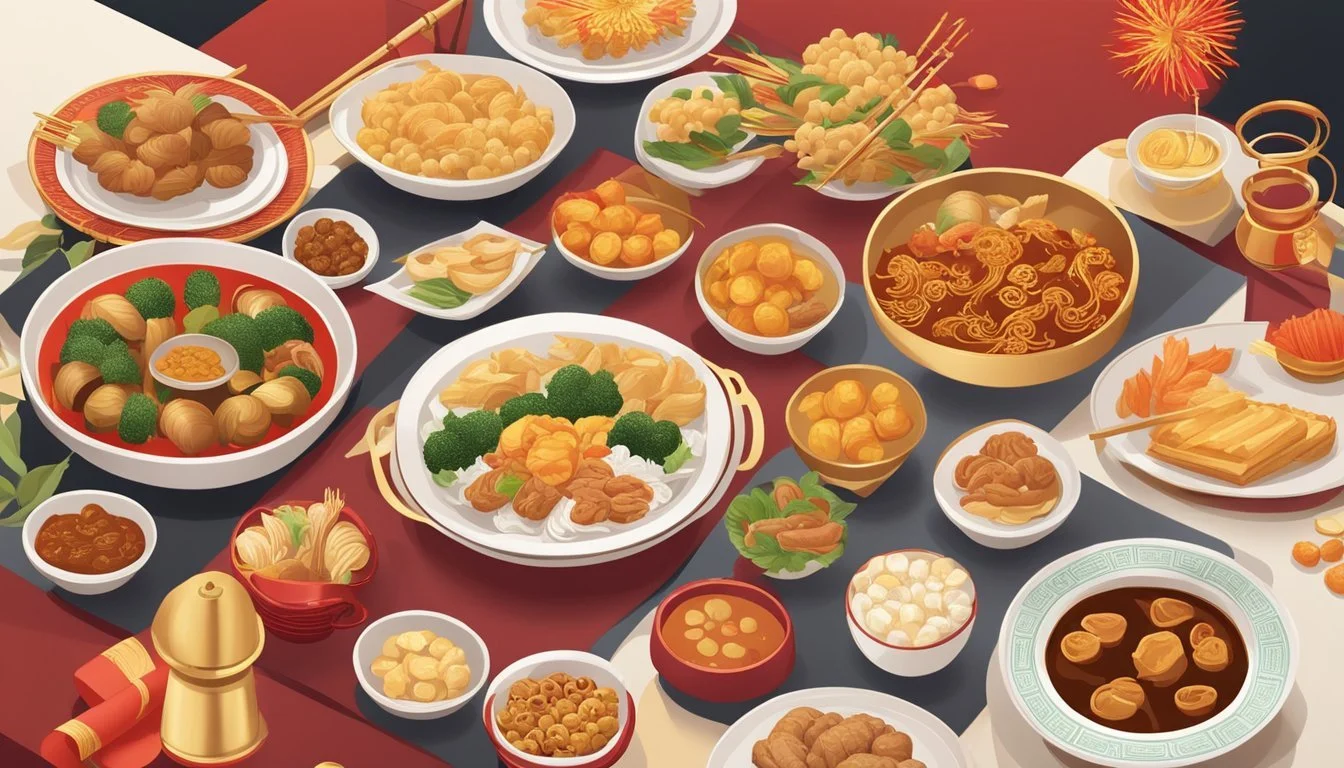
Chinese New Year brings to light the richness of China's regional cuisines, each offering distinctive tastes and traditions. Families across the country pay homage to their heritage with meals that signify luck and prosperity.
Cantonese Classics
In Cantonese communities, dim sum reigns supreme, with bite-sized delights being a staple for festive gatherings. Char Siu, or Chinese BBQ Pork, is another Cantonese specialty, recognized for its savory-sweet glaze and tender texture. These dishes not only reflect the region's culinary expertise but also the warmth and joy of family celebrations during Chinese New Year.
Cantonese Classics
Dim Sum
Char Siu (Chinese BBQ Pork)
Szechuan Spices
Szechuan cuisine is synonymous with bold flavors, characterized by the use of garlic, chili peppers, and the numbing Sichuan peppercorn. Mapo Tofu, a comforting blend of soft tofu set in a spicy, bean-based sauce, and Kung Pao Chicken, a harmony of spicy, sweet, and nutty tones, perfectly illustrate the heartiness and diversity of Szechuan regional foods during this festive period.
Szechuan Spices
Mapo Tofu
Kung Pao Chicken
Northern Delicacies
The North of China, particularly known for its hearty foods to combat the colder climate, takes pride in dumplings during Chinese New Year. These meticulously crafted parcels are more than just a dish; they symbolize wealth and are a heartfelt component of family reunions. Peking Duck, (What wine goes well with duck?) with its crispy skin and succulent meat, is a lavish Northern dish that lends a regal touch to any celebration.
Northern Delicacies
Dumplings
Peking Duck
Meal Prep Strategies for the New Year Feast
Proper planning and preparation can make the Chinese New Year celebration a delightful experience. By focusing on early grocery shopping, preparing ingredients in advance, employing flavor-enhancing cooking techniques and storing leftovers efficiently, one ensures a festive feast that is both delicious and manageable.
Grocery Shopping List
To ensure ease and convenience, it's crucial to create a detailed grocery list. This should include:
Proteins: Chicken for poaching, shrimp for cakes, and ribs for frying.
Vegetables: Various greens for salads and stir-fries, carrots for rice cake, and extra for garnishes.
Starches: Rice for making sticky rice pearl meatballs and flour for dumpling dough.
Flavorings: Ginger, garlic, and scallions for aromatic oils; soy sauce for seasoning.
Miscellaneous: Fermented red bean curd for ribs and all necessary ingredients for desserts.
Advance Preparation Tips
Meal prep is key for a seamless get-together. One can:
Marinate proteins such as beef or chicken the night before to allow flavors to penetrate.
Prepare dough for dumplings and allow it to rest.
Pre-cook certain items such as braised meats (What wine goes well with braised meats?) and stews that can be easily reheated.
Cut and store vegetables properly to retain freshness for salads, noodles, and stir-fries.
Cooking Techniques for Maximum Flavor
To enhance the flavors in dishes:
Braising: Slow cook meats in soy sauce and spices for a tender and savory outcome.
Steaming: Fish and dumplings are steamed to preserve delicate flavors and textures.
Stir-frying: Quick and high-heat cooking for vegetables ensures they retain crunch and nutrients.
Post-Celebration Storage and Reuse
After the celebration:
Freeze leftovers: Properly store leftover dumplings or braised dishes (What wine goes well with braised dishes?) by freezing them.
Reheat using the appropriate method: Use an oven for meats to maintain texture.
Transform leftovers: Turn remaining rice into fried rice or leftover vegetables into a stir fry for subsequent meals.
Celebrating Chinese New Year Beyond the Kitchen

Chinese New Year is not solely about feasting; it also encompasses a host of vibrant cultural activities, meaningful decorations, and deep-rooted family traditions that contribute to the festive atmosphere.
Cultural Activities and Games
Chinese New Year is replete with various cultural activities that bring families and communities together. The iconic Dragon Dance is a captivating spectacle where dancers maneuver a long, serpentine dragon puppet through streets, thought to bring good luck and drive away evil spirits. Families also engage in playing traditional games such as Majiang (Mahjong), card games, and board games, all fostering a spirit of togetherness and friendly competition.
Decorating for Prosperity and Happiness
During the Lunar New Year, homes and public spaces are adorned with decorations imbued with auspicious meanings and cheer. Lanterns in vibrant red and gold hues, symbolizing fortune and joy, are hung in abundance. The use of red—an auspicious color believed to ward off bad fortune—is prevalent in decorations, with couplets bearing lucky phrases gracing doorways. Ornaments shaped like oranges and fish signify abundance and prosperity.
Gift-Giving and Red Envelopes
The tradition of giving is central to Chinese New Year, especially in the form of red envelopes or 'hongbao'. These envelopes contain money and are given by the elders to children and unmarried adults, symbolizing the transfer of fortune and blessings. The act of giving reinforces familial bonds and shares the wishes of good health, prosperity, and happiness for the coming year.
Family Traditions and Customs
Family remains the cornerstone of Chinese New Year celebrations, with many participating in an annual reunion dinner, typically held on the eve of the festival. This is a time for family members to gather and honor both the immediate and extended family, including departed ancestors. Recalling family histories and engaging in ceremonies to pay respect to ancestors are integral parts of the festival, continuing a legacy of hereditary pride and unity across generations.
Conclusion: Embracing the Lunar New Year Spirit
Preparing meals for the Lunar New Year is more than just an exercise in hospitality; it's a powerful gesture of ushering in fortune and embracing the essence of togetherness. Families and friends often gather, symbolically sealing the bonds that have thrived over the past year and will continue to strengthen in the times ahead.
Key Aspects of the Lunar New Year:
Fortune: Each dish holds meaning, from noodles symbolizing longevity to dumplings that resemble ancient Chinese currency, suggesting wealth for the year.
Togetherness: The preparation and sharing of food reflect the core value of unity within the community.
Friendship: New Year's meals often introduce an opportunity to make amends, reinforce existing bonds, and forge new alliances.
Closing Ceremonies: The conclusion of the Lunar New Year festivities typically includes looking forward with optimism.
In the warmth of the kitchen or the glow of the dining room, families typically engage in the closing ceremonies of the celebration, reflective of shared hopes and collective aspirations. It's common to find individuals expressing gratitude and looking forward to what the new year may bring.
As one savors the tastes of tradition and innovation, the spirit of the Lunar New Year permeates every aspect of the celebration, encapsulated not only in the foods served but in the very act of coming together. It's an annual reminder that no matter the shifts and turns of life, some things—like the New Year's promise of new beginnings—remain perennial.

