
Sourdough in Space
The Future of Baking in Zero-Gravity Environments
Sourdough bread (What wine goes well with bread?), a staple of artisanal bakeries and home kitchens alike, is known for its tangy flavor, chewy texture, and crispy crust. Sourdough's unique properties come from a fermentation process that relies on naturally occurring lactobacilli and yeast. This time-honored method of bread making is now facing its next frontier: the microgravity environment of space. The project launched by the MIT Space Exploration Initiative investigates the viability of baking sourdough aboard spacecraft, addressing a desire not only to sustain astronauts but also to offer the comfort of fresh bread in a sterile space environment.
Baking in space is an intricate scientific challenge. Without Earth's gravity, traditional baking techniques can't be replicated directly. In the confines of space stations like the International Space Station, scientists and engineers have to get creative to overcome obstacles such as the lack of convection, which affects heat distribution, and the potential danger of crumbs in a zero-gravity environment. A German team took on the challenge by developing an oven specifically designed for space, which aims to enable astronauts to make bread that doesn’t produce potentially harmful crumbs.
Through a combination of innovative technology and a deeper understanding of sourdough's fermentation process, researchers are striving to recreate this cherished culinary experience for astronauts. The pursuit not only enhances the quality of life in orbit but also contributes to the body of knowledge about food science and biotechnology in space. The success of these missions could be a small step in spacefaring, but it signifies a giant leap in the quest for making long-term space exploration more livable and enjoyable for those who embark on it.
History of Baking Bread in Space
Since the early days of space exploration, astronauts have endeavored to take the comforts of home beyond Earth, including the staple of many diets: bread. However, traditional bread poses various challenges in a microgravity environment.
From Gemini 3 to ISS
The history of bread in space began with the Gemini 3 mission in 1965 when astronaut John Young smuggled a corned beef sandwich into the spacecraft. This act demonstrated the challenges of eating bread in microgravity as crumbs floated in all directions, potentially harming onboard equipment. Following this incident, space missions switched to using tortillas as a bread substitute to reduce the risk of crumbs in the controlled cabin environment of spacecraft like the ISS.
Alexander Gerst and Bake in Space
In recent years, there has been a resurgence in the effort to bake bread in space. German astronaut Alexander Gerst participated in the "Bake in Space" experiment during his 2018 mission on the ISS. The experiment aimed to create crumb-free bread suitable for space consumption, utilizing a specially devised dough and a microgravity oven designed to bake bread in orbit for the first time. This innovation could enhance the quality of life for astronauts by providing a taste of home while addressing the unique challenges that come with baking in a zero-gravity setting.
Sourdough Bread: Earth vs. Space
Exploring the art of baking sourdough bread in the unique environments of Earth and space yields fascinating contrasts, especially when accounting for the presence or absence of gravity.
Characteristics on Earth
On Earth, sourdough bread is prized for its tangy flavor and chewy texture, largely attributed to the fermentation process carried out by wild yeasts and lactic acid bacteria. These microorganisms require specific conditions to thrive:
Temperature: Optimal fermentation occurs in warm environments, which enhance the sourness of the dough.
Hydration: Sourdough typically has high hydration, which contributes to a moist crumb and well-developed gluten network.
These conditions are easily achieved in Earth-based kitchens, allowing the dough to undergo a long fermentation, with folds incorporated to strengthen the dough rather than traditional kneading.
Challenges in Microgravity
In space, the absence of gravity—microgravity—presents unique challenges to sourdough bread baking:
Air Bubbles: Without gravity, the gases produced during fermentation do not rise, affecting the bread's texture.
Moisture Management: Distributing moisture evenly throughout the dough is harder in microgravity, impacting dough consistency.
The crumb of the bread must also be considered. On the International Space Station (ISS), crumbs from traditional bread could pose a hazard, floating into equipment or being inhaled. Innovations such as specially designed ovens and crumb-free bread recipes are essential for safe and successful baking in space environments.
Technological Innovations for Space Baking
Advancements in technology are making it possible to overcome the unique challenges of baking in space. These innovations are crucial for the well-being of astronauts on long-duration missions, such as those to Mars, where sustainable baking methods will be essential.
Sebastian Marcu and the Space Oven
Sebastian Marcu is a pivotal figure in the progress of space baking technology, having co-founded Bake in Space. This company, in partnership with the German Aerospace Center, is behind the creation of a specialized oven designed to function in microgravity. This oven allows for the baking of bread, a task that has traditionally faced obstacles due to the absence of gravity. The oven's design compensates for the lack of a conventional rise in baked goods caused by yeasts and leavening agents, which behave differently in space.
Sustainable Baking Technology on Mars
For long-term missions, particularly those to Mars, sustainable innovation in baking is critical. The technological requirements are not just for creating food that is nourishing but also for ensuring psychological well-being through familiar, comforting meals. Sustainable baking technology leverages the limited resources available on Mars to enable baking. This involves using advances in space fermentation and adapting recipes and baking methods to Martian conditions, where traditional earth-based techniques cannot be directly applied.
The Role of Crumbs in Space
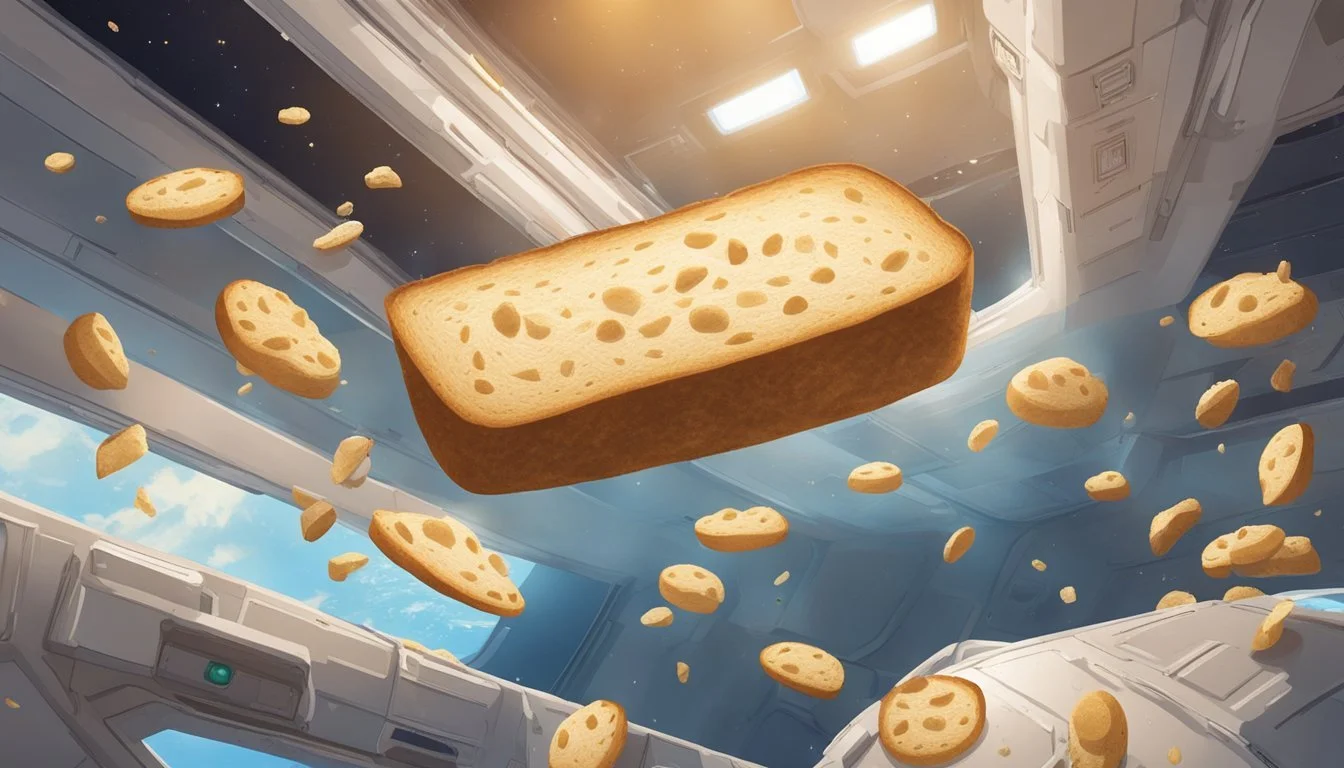
Safety regulations aboard spacecraft meticulously address the presence of food crumbs due to the unique challenges they pose in a microgravity environment.
Microgravity Concerns: In space, crumbs do not fall to the floor as they do on Earth. Instead, they float freely, potentially infiltrating sensitive equipment or air filters which can lead to technical malfunctions. Additionally, crumbs pose a risk of inhalation or irritation to the astronauts, a situation that could be dangerous when medical assistance is not readily available.
Containment Measures: Solutions like tortillas have been used as bread substitutes to minimize the risk of crumbs. However, the desire for variety and the psychological comfort of familiar, earth-like food has led to innovative experiments to bake crumb-free bread in space.
Bake In Space Project: A significant initiative is the Bake In Space experiment which aims to create bread that produces minimal crumbs. The development of a special dough and the use of a compact, low-energy convection oven are critical components of this endeavor. They intend to deliver the taste of "typical" German bread rolls astronauts can enjoy without the problematic crumbs.
Challenge Solution Crumb navigation Special dough formulations Air quality Low-crumb production techniques Equipment safety Contained baking environments
These efforts not only enhance the quality of life for astronauts but are also essential for long-duration missions where both physical and psychological comforts are vital for maintaining the health and well-being of the crew. The science of baking in space thus directly contributes to the broader goal of safe and sustainable space exploration.
Nutritional and Cultural Significance
Sourdough bread extends its nutritional and cultural importance from Earth to the realm of space travel, directly impacting astronauts' well-being and connecting them to earthly traditions.
Improving Astronauts' Quality of Life
The inclusion of sourdough bread in space missions addresses nutrition, which is crucial for maintaining the health and performance of astronauts. The fermentation process inherent in sourdough production enhances food properties such as preservation and palatability. This improves the flavor and texture of the bread, making it a more desirable option compared to the standard prepackaged space food. Fermentation also allows for the natural enhancement of certain micronutrients and can potentially aid in digestion. The introduction of fresh bread in space could significantly boost morale and therefore the overall quality of life for crew members.
Cultural Impact of Fresh Bread in Space
Bread carries deep cultural significance as it is a staple food across the globe, symbolizing shared community and tradition. Fresh sourdough bread in space acts as a reminder of Earthly customs and comforts, thereby reinforcing a psychological connection to home which is crucial during extended periods in the isolation of space. The act of bread-making can offer astronauts a familiar and therapeutic activity, fostering a sense of normalcy and well-being. By baking sourdough in space, astronauts can continue to celebrate their heritage and maintain a cultural ritual that has been an integral part of human history.
Future of Baking Beyond Earth's Orbit
As humanity extends its reach into space, the need for sustainable food preparation methodologies, including baking, will become vital for space tourists and astronauts. These developments are geared toward long-duration missions and signals the growing intersection between space travel and culinary science.
Space Tourism and Gastronomy
Space tourism is poised to become a luxury experience, and with it comes the expectation of high-quality, palatable meals. The emergence of suborbital flights and potentially hotels in low Earth orbit present unique opportunities and challenges for baking in microgravity environments. For instance, companies like Bake In Space have tested baking crumb-free bread on the International Space Station. This innovation mitigates the risks of loose crumbs in zero gravity, which can damage equipment and pose health hazards.
To address these challenges, food scientists and engineers are developing specialized equipment such as microgravity ovens. Such advancements ensure that space tourists can enjoy freshly baked goods, akin to what they would expect on Earth, enhancing their overall experience.
Long-term Food Supply Strategies
Deep-space exploration necessitates robust long-term food supply strategies for astronauts. These strategies revolve around efficiency, sustainability, and the nutritional content of meals. For deep-space missions, like those planned for Mars, securing a reliable food supply is crucial as resupply missions are not a feasible option.
Bioregenerative life support systems involve cultivating crops in space as part of the food supply chain, yet baking with freshly grown ingredients remains a complex task. Researchers focus on sourdough starters as a potential solution, leveraging their natural fermentation process to create baked goods with longer shelf lives. This not only provides essential calories but also psychological comfort for astronauts during extended missions.
In this endeavor, it's vital to continually improve upon:
Space-specific baking equipment that operates efficiently in reduced gravity
Sustainable packaging solutions to preserve baked products
Closed-loop food systems that integrate waste management with food production
Together, these innovations form the cornerstone of a sustainable culinary approach to space travel, aiming to provide astronauts with a taste of home while millions of miles away.
Scientific and Practical Aspects of Dough in Space
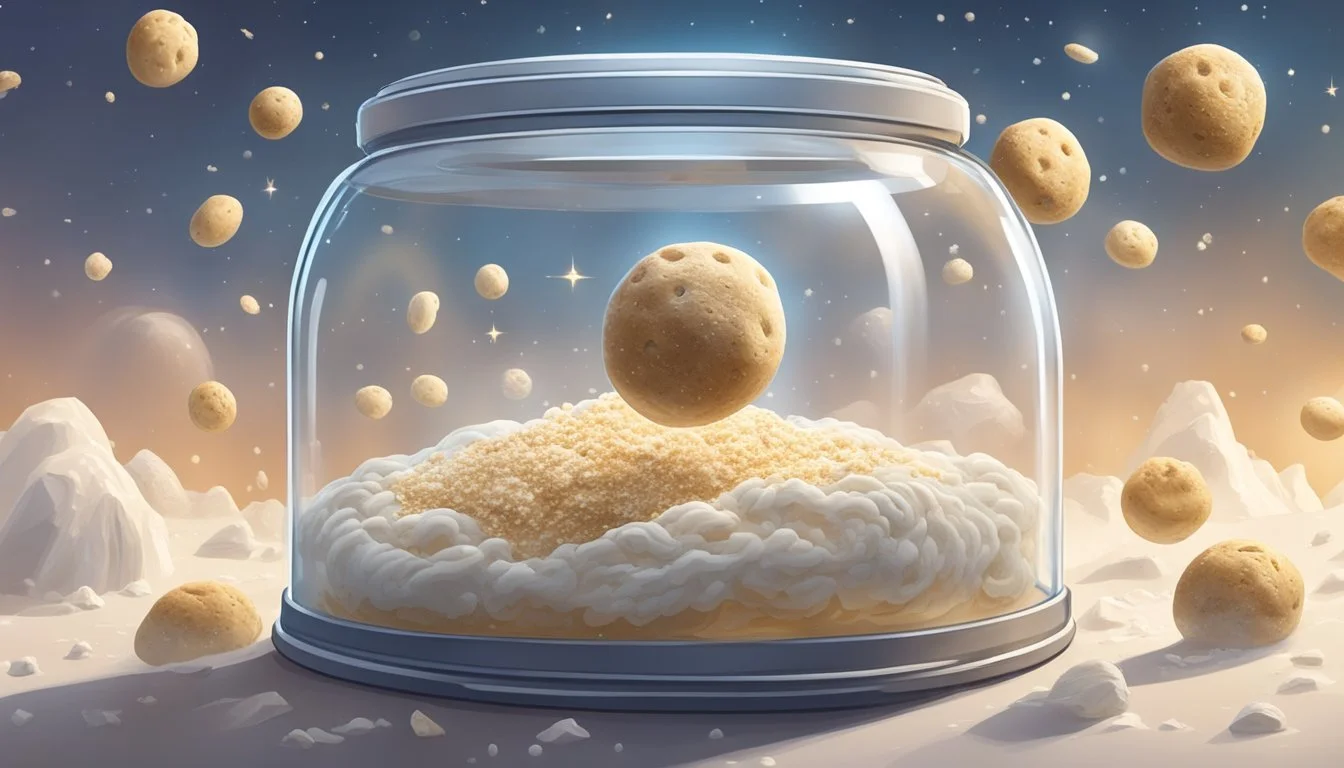
The challenge of baking sourdough in space revolves around adapting to microgravity environments and ensuring the stability and function of yeast and bacteria cultures. It requires a reevaluation of the traditional baking process from the ground up.
Yeast and Bacteria Cultures
In the confined and controlled environment of a spacecraft, managing yeast and bacterial cultures is critical. On Earth, sourdough starters are a symbiotic mix of bacteria and yeast that ferment the dough, impacting its rise and flavor. In space, the behavior of these cultures could differ due to changes in gravity, radiation levels, and cabin conditions. Ensuring that these cultures remain viable in microgravity is vital for successful bread making beyond Earth. Potential solutions include;
Selecting robust strains of yeast and bacteria that can survive space conditions.
Closed-system fermentation to maintain environmental stability.
Permanent availability of sourdough starters as a reliable resource over commercial yeast.
Zero-G Baking Process
The actual baking process in microgravity introduces unique challenges. Traditional methods on Earth rely on stable temperatures and the known behavior of gases and liquids. Here are specific aspects of the zero-g baking process:
Temperature control: A consistent and energy-efficient baking temperature is harder to maintain in the absence of natural convection.
Crumbs management: In microgravity, crumbs can become a hazard, hence the dough must be designed to minimize this issue.
Microgravity itself necessitates a redesign of the bread-making process. These conditions affect everything from kneading and shaping the dough to the chemical processes within the dough itself during fermentation and baking. The recipe needs careful adaptation to bake bread that maintains its structure and quality without presenting risks to the crew or the equipment.
Collaborative Space Food Projects
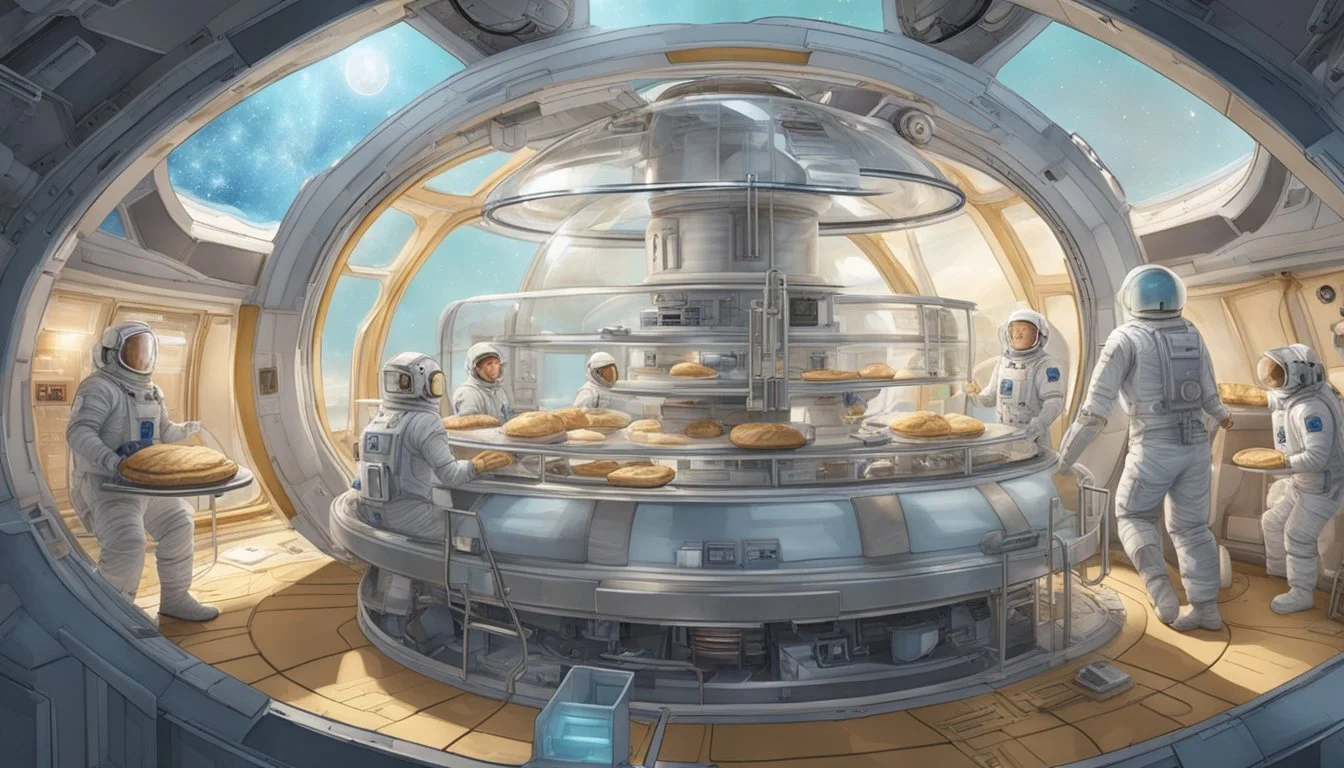
Space food projects have seen remarkable collaboration from various space agencies and private companies to enhance the culinary experience beyond Earth.
ESA and German Aerospace Involvement
The European Space Agency (ESA) and the German Aerospace Center (DLR) have demonstrated a keen interest in developing baking solutions suitable for space environments. A notable project is Bake In Space, which tackled the unique challenges of bread-making aboard the International Space Station during the Horizon mission in April 2018. They aimed to address the issues of crumbs in microgravity and the absence of thermal convection which is vital for traditional baking.
NASA and SpaceX Contributions
NASA and SpaceX have been vital players in the advancement of space food technologies. Together, they explore new frontiers in nutrition and culinary science for astronauts. For instance, NASA's contest for developing the space food of the future attracted global innovators, working on production technologies that are not only efficient but also align with the constraints of space travel, including weight and space limitations. Meanwhile, SpaceX's role in supplying the International Space Station has been crucial, enabling the testing of new food systems in space and facilitating the potential adoption of innovative food technologies.
Innovations in Space-grade Bread Production
Explorations in space-grade bread production aim to solve novel challenges presented by the space environment. These encompass ensuring both safety and edibility of bread for astronauts, which diverges significantly from Earth-based baking practices.
Corned Beef Sandwich vs. Space-grade Bread
In 1965, astronaut John Young smuggled a corned beef sandwich into space, leading to crumbs floating in microgravity, an incident that highlighted the need for space-safe food. Space-grade bread must be designed to minimize crumb production due to the potential hazards that loose crumbs pose in a spacecraft, such as getting into equipment or being inhaled by astronauts.
Space agencies and companies have since moved toward baking bread that is both crumb-free and palatable. The endeavors to bake sourdough bread on Mars tackle the challenges of off-Earth agriculture and sustainability. Starters for sourdough are considered due to their robustness and the potential to create a crumb-free bread structure suitable for space.
New Frontiers in Vacuum Baking
Vacuum baking has emerged as a cutting-edge technique to accommodate the absence of thermal convection in space. Since traditional baking is not feasible in a microgravity environment, alternative methods are developed for space applications.
One method being experimented with is the use of closed systems that simulate pressure and thermal conditions to mimic an Earth-like baking environment. This aims at overcoming the issue of baking at the right temperature, something that poses a significant challenge in the spacecraft. Space bread must be baked thoroughly, yet without the release of dangerously hot air bubbles commonly managed by Earth's gravitational effects.
These advancements signify important steps towards providing astronauts with not only sustenance but also the psychological comforts of familiar foods such as freshly baked bread.
Space Food as a Driver for Technological Development
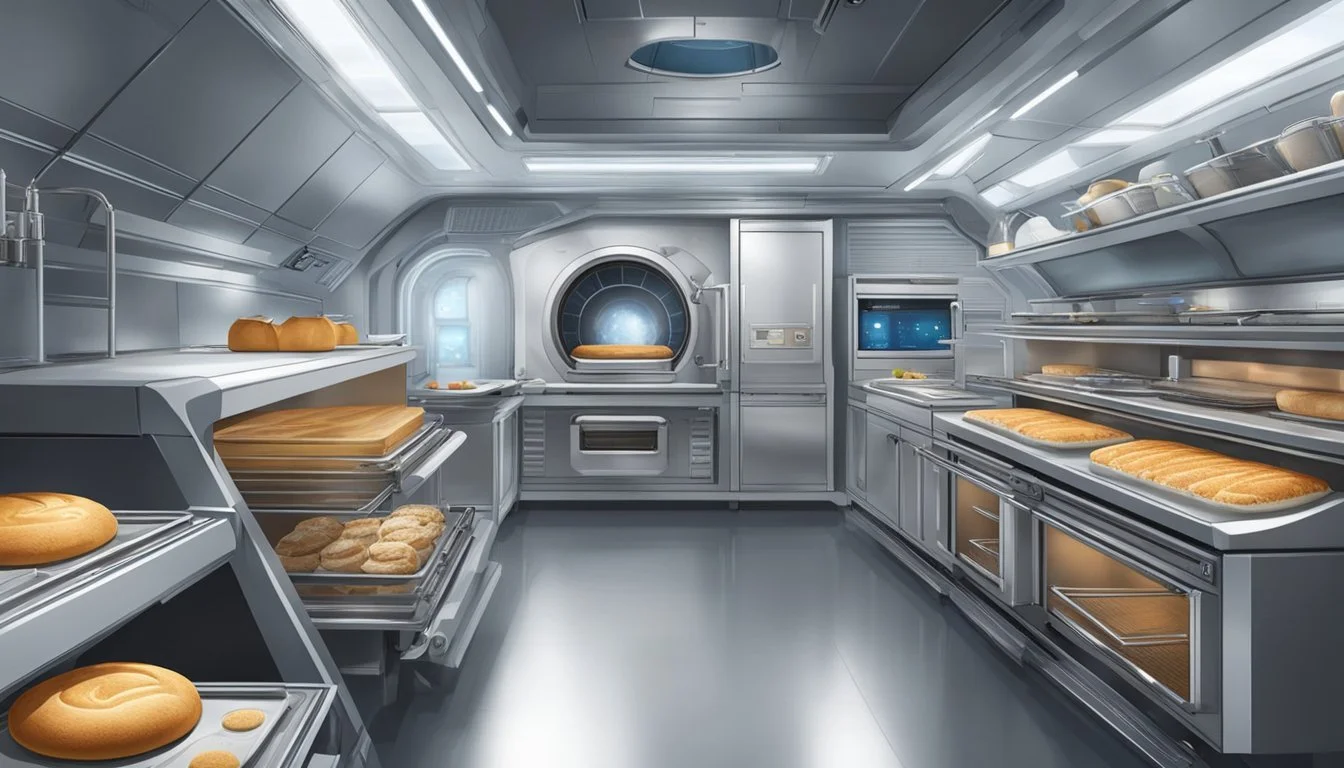
In the pursuit of cosmic exploration, space food not only sustains life beyond Earth but also propels technological innovation. Space missions necessitate food that is light, nutritious, and long-lasting. These requirements catalyze advancements in food preservation and preparation technologies.
Development projects aimed at perfecting sourdough bread for Mars missions illustrate this trend. Bread requires fermentation, a challenge in microgravity environments. Technology designed to overcome this could have far-reaching applications, potentially transforming food processing both in space and on Earth.
Private spaceflight companies like SpaceX push the envelope further. These entities create a commercialized approach to space travel, involving private vehicles that could carry innovations, such as specially engineered sourdough, to space. This relationship between food and technology is symbiotic. As each space food challenge is met, the technology becomes more sophisticated, which in turn, could make space travel more commonplace.
Goals in Space Food Technology:
Efficient packaging to minimize weight and space
Maximizing nutritional content
Prolonging shelf-life without compromising quality
Adapting to space conditions, such as zero-gravity cooking
Innovation Drivers:
Space agencies' requirements: to sustain health over long missions
Commercial interests: to create viable products for new space economies
Consumer preferences: astronauts desire diverse, appetizing menus
The development space has seen novel technologies emerge, such as closed-loop life support systems that recycle waste into food. This perpetual need for innovation showcases how space food continues to be a significant impetus in technological progression.
Conclusion
Advances in space exploration have led to a unique challenge: the ability to bake in space. Freshly baked bread, a staple on Earth, poses both a psychological and nutritional potential benefit to astronauts on long-duration missions. German scientists and other international teams are addressing the issue of baking without gravity, where traditional methods must be rethought to prevent issues such as escaping crumbs, which can be hazardous in a space environment.
Bread-making in space encompasses more than the creation of a zero-gravity recipe. It involves the development of specialized ovens designed to operate under microgravity conditions and ensure safety onboard spacecraft and habitats. The initiative not only aims to grant astronauts the luxury of freshly baked bread, but also contributes to broader sustainable life-support systems.
The dough used in these space-baking experiments is also being considered for its unique fermentation processes in a microgravity environment. Studies are suggesting that space might have implications on the growth and behavior of yeast, potentially influencing the taste and texture of the bread.
The pursuit of a viable solution for bread baking in zero gravity is more than a culinary endeavor; it is emblematic of humanity's drive to bring Earth’s comforts to new frontiers, improving mental wellbeing and quality of life beyond our planet. The outcomes of these projects could have significant implications for future long-term space missions, Mars colonization, and beyond.