Alcohol and Drinking Laws in Parker County, Texas
Your Essential Guide

Parker County, Texas, is subject to the state's Alcohol Beverage Code, which provides a precise framework for the sale, consumption, and regulation of alcohol. As in the broader state of Texas, individuals must be at least 21 years of age to legally consume alcoholic beverages. Compliance with the Texas Alcoholic Beverage Commission (TABC) is mandatory, and the commission plays a key oversight role in the enforcement of these regulations. The state's approach is known for being particularly stringent, with strict enforcement of laws against driving under the influence (DUI), a rigorous process for age verification, and meticulous inspection of licensed premises.
Within Parker County, specific local statutes complement state laws to address the intricacies of alcohol sales and consumption. For instance, the sale of packaged liquor is restricted on certain holidays, including New Year's Day, Thanksgiving Day, and Christmas Day, which is consistent with Texas' general alcohol regulations. Moreover, Parker County has designated hours for when bars and restaurants can sell alcohol, a common practice in jurisdictions to ensure public safety and order.
Understanding the nuances of these regulations is crucial for residents and businesses to maintain compliance. Violations of these laws can lead to administrative hearings and penalties, reflecting the county's commitment to uphold the standards set forth by both local and state authorities. It is important for businesses, especially those who deal in the retail sale of alcoholic beverages, to adhere to both the TABC codes and local mandates regarding the purchasing and selling of alcohol as stipulated by law.
Overview of Parker County Alcohol Laws
In Parker County, Texas, the regulations governing the sale and consumption of alcohol are derived from the Texas Alcoholic Beverage Code. State law prohibits the sale of packaged liquor on Sundays. This law applies to liquor stores, supermarkets, and gas stations within the county's jurisdiction. However, beer and wine sales are permitted within certain hours, reflecting the state's distinction between different types of alcoholic beverages.
The sale of alcoholic beverages is subject to specific regulations, which vary depending on the type of establishment and the alcohol content of the beverages. For instance, businesses that hold a wine-only package store permit in conjunction with a beer license may not sell wine with an alcohol content greater than 17% on Sundays or past 10 p.m. on any other day.
Below is a brief outline of pertinent points related to alcohol sales in Parker County:
Liquor Sales: Not permitted on Sundays.
Beer and Wine Sales: Allowed during designated times except for high-proof wine on Sundays and after 10 p.m.
Sale Locations: Includes liquor stores, gas stations, and supermarkets, with specific rules.
It's important for businesses and consumers to be aware that Parker County follows the state-mandated laws which are enforced by the Texas Alcoholic Beverage Commission (TABC). Violations of these alcohol laws and regulations can lead to legal repercussions including administrative hearings and penalties. Residents and businesses must adhere to these rules to ensure compliance with the state's legal framework concerning the alcoholic beverage industry.
Licensing and Permits
In Parker County, Texas, the Texas Alcoholic Beverage Commission (TABC) is the primary authority for issuing licenses and permits related to alcoholic beverages. Businesses seeking to sell alcohol must navigate through a spectrum of permit types and adhere to a strict licensing process.
Obtaining a License
To obtain a liquor license in Parker County, an establishment must apply through the TABC. The process includes a thorough review of the applicant's qualifications and the premises. Retailers, brewpubs, clubs, and distributors are among the various entities that must secure the appropriate license to operate. The TABC processes around 100,000 licenses and permits annually, indicating a well-established system for managing applications.
Step 1: Submit an application to the TABC.
Step 2: Undergo a background check and premises inspection.
Step 3: Meet all TABC regulatory requirements and local codes.
Step 4: Receive approval and comply with TABC regulations for operation.
Types of Permits
Parker County businesses may require different types of permits depending on the nature of their operations. The TABC issues a variety of permits such as the Package Store Permit for entities selling sealed alcoholic beverages to be consumed off-premises, and other specific permits tailored for brewpubs which may both produce and sell beverages on-site.
Package Store Permit: Allows for the sale of liquor in sealed containers.
Brewpub Permit: Enables the brewing and retail sale of beer on the same premises.
These permits are critical for the legal sale and distribution of alcoholic beverages within the county, reinforcing the TABC's role in regulating Texas's three-tier system, which separates the production, distribution, and sale of alcohol to prevent monopolies and encourage competition.
Sale Hours and Days for Alcohol
In Parker County, Texas, the sale hours and days for alcohol are strictly regulated. Consumers should be aware of when they can purchase alcohol to comply with these laws.
Weekday and Weekend Sales
Monday through Friday: Packaged beer and wine sales are allowed from 7:00 a.m. to midnight. Mixed beverages can also be sold during these hours.
Saturday: For packaged beer and wine, sales start at 7:00 a.m. and extend to 1:00 a.m. the following day. Similarly, mixed beverages are permissible for sale until 1:00 a.m.
Sunday:
Packaged beer and wine sales are permissible from noon to midnight.
Purchases of alcohol with food service may begin at 10:00 a.m.
Mixed beverage sales are not permitted on Sundays, with some exceptions for businesses serving food.
Holiday Restrictions
Certain holidays incur additional restrictions on the sale of alcohol:
New Year's Day: If it falls on a Monday, the sale of packaged liquor on January 2nd is prohibited.
Thanksgiving Day: No packaged liquor sales are allowed on this day.
Christmas Day: Similar to Thanksgiving, the sale of packaged liquor is banned.
On the nights preceding these holidays, alcohol sales must cease by 9:00 p.m. This does not apply to businesses holding a late hours permit, where customers may purchase alcohol until 2:00 a.m. every day, but consumption must end by 2:15 a.m.
Specific Regulations for Retailers
Retailers in Parker County, Texas, must navigate a framework of regulations that govern the sale of alcoholic beverages. Retailer-specific laws outline responsibilities for various types of establishments, ranging from bars to grocery stores.
Bars and Restaurants
Bars and restaurants must adhere to a series of regulations regarding the sale and service of alcoholic beverages. Service hours for alcohol are dictated by the Texas Alcoholic Beverage Commission (TABC). They are not permitted to sell alcohol past 2 a.m. on any day, and sales can resume at 7 a.m. on weekdays and Saturdays, and at noon on Sundays. Additionally, all employees handling alcoholic beverages must be TABC certified.
Grocery and Convenience Stores
Grocery and convenience stores, along with gas stations like Walmart, are subject to specific rules for selling beer and wine. These establishments cannot sell liquor but may offer beer and wine during specified hours: Monday through Friday starting at 7 a.m., Saturdays beginning at 7 a.m. until 1 a.m. Sunday morning, and after noon on Sundays. Furthermore, they must ensure that all employees receive proper TABC certification.
Liquor Stores
Liquor stores or package stores in Parker County operate under a distinct set of regulations. They are the only retail entities allowed to sell liquor. Their operating hours are Monday through Saturday, 10 a.m. to 9 p.m., with no sales on Sundays, Thanksgiving Day, Christmas Day, or New Year’s Day. In addition, a "21 To Enter Sign" is optional but can be displayed to indicate that minors are not allowed to enter the premises.
Drinking Age and Minor Restrictions

In Parker County, Texas, as in the rest of the state, the legal drinking age is firmly set at 21 years. Persons under this age are considered minors with respect to alcohol consumption and possession. Texas law explicitly outlines the restrictions and penalties for underage drinking offenses.
Possession and Consumption:
Minors: Individuals under 21 are prohibited from possessing or consuming alcoholic beverages. Violations can result in misdemeanor charges, fines, and other penalties.
Exceptions to the Rule:
Within a Residence: A minor may consume alcohol in a private residence under the supervision of a consenting adult parent, guardian, or spouse.
Religious Ceremonies: Consumption of alcohol by minors as part of a religious ceremony is permissible.
Penalties for Violations:
Class C Misdemeanor: Acquisition, possession, or consumption of alcohol by a minor.
Misrepresentation of Age: If a minor falsely states their age to obtain alcohol, it could lead to misdemeanor charges.
Adult Responsibility:
Adults, including parents and guardians, are cautioned against providing alcohol to minors, which is considered an offense unless it occurs in a private residence and with the adult's presence.
Texas’s stance on underage drinking reflects a commitment to safeguard young individuals from the potential risks associated with early alcohol exposure and aims to deter irresponsible consumption or possession. Compliance is critical to avoid legal repercussions for both minors and adults.
DUI Laws and Penalties

Parker County, Texas, enforces strict DUI (Driving Under the Influence) laws to maintain public safety on the roads. Motorists are subject to legal action if they operate a motor vehicle with a blood alcohol concentration (BAC) of 0.08% or more, or if they are intoxicated by drugs or alcohol.
First Offense:
Fine: Up to $2,000.
Jail: 3 mandatory days, up to 180 days upon conviction.
License: Loss of driver's license for up to one year.
Second Offense:
Fine: Up to $4,000.
Jail: 30 days to one year upon conviction.
License: Loss of driver's license for up to two years.
Third Offense:
Fine: $10,000.
Prison: Two to ten years.
Underage DUI:
Any detectable amount of alcohol may result in DUI charges, emphasizing zero tolerance for underage drinking and driving.
Courts in Parker County, including the Justice of the Peace, are responsible for adjudicating DUI cases. They ensure that all penalties align with Texas state laws and that justice is served fairly. The penalties for DUI violations are designed as a deterrent, seeking to lessen the occurrence of impaired driving within the county.
It is mandatory for those arrested under suspicion of DUI to submit to breath or blood tests as per Texas law. Refusal to comply can result in additional penalties, such as an automatic suspension of the driver's license. Individuals facing DUI charges may seek legal assistance, but the evidence of impairment typically leads to the penalties prescribed under the law.
Local Options and Dry Areas
In Parker County, Texas, the sale and distribution of alcoholic beverages are regulated by local option elections. These elections determine whether to permit the sale of specific types of alcoholic beverages within various precincts. They are an exercise in democracy allowing communities to govern the availability of alcohol at a local level.
Dry Areas are regions where the sale of alcoholic beverages is prohibited. While Parker County does not completely forbid alcohol sales, certain precincts or cities within the county may choose to remain or become dry through these local options.
The process generally begins with a public hearing, allowing for community engagement and debate on the issue. If there is considerable interest, residents, often through a petition, can bring the matter to a vote. Subsequently, a local option election is arranged. The outcome of such elections is binding and reflects the collective decision of local voters regarding the sale of alcohol.
The Texas Alcoholic Beverage Commission (TABC) oversees the administration of these elections, ensuring compliance with state regulations. Furthermore, the local justice of the peace courts have the authority to govern the sale of alcohol in their respective precincts. This creates a patchwork of wet, dry, and mixed areas within the larger geographic confines of Parker County. Cities like Weatherford and Willow Park may have different alcohol laws compared to the rest of the county.
Entity Role in Alcohol Legislation County Hosts local option elections City Can have specific alcohol laws Dry Counties Prohibit alcohol sales Public Hearing Discussions before a vote Vote Determines local alcohol policies House Not directly involved in local decisions Justice of the Peace Court Can regulate alcohol sales in precincts
These regulations ensure Parker County residents maintain a strong voice in shaping their communities' stance on alcohol sales.
Alcohol Content and Beverage Classifications
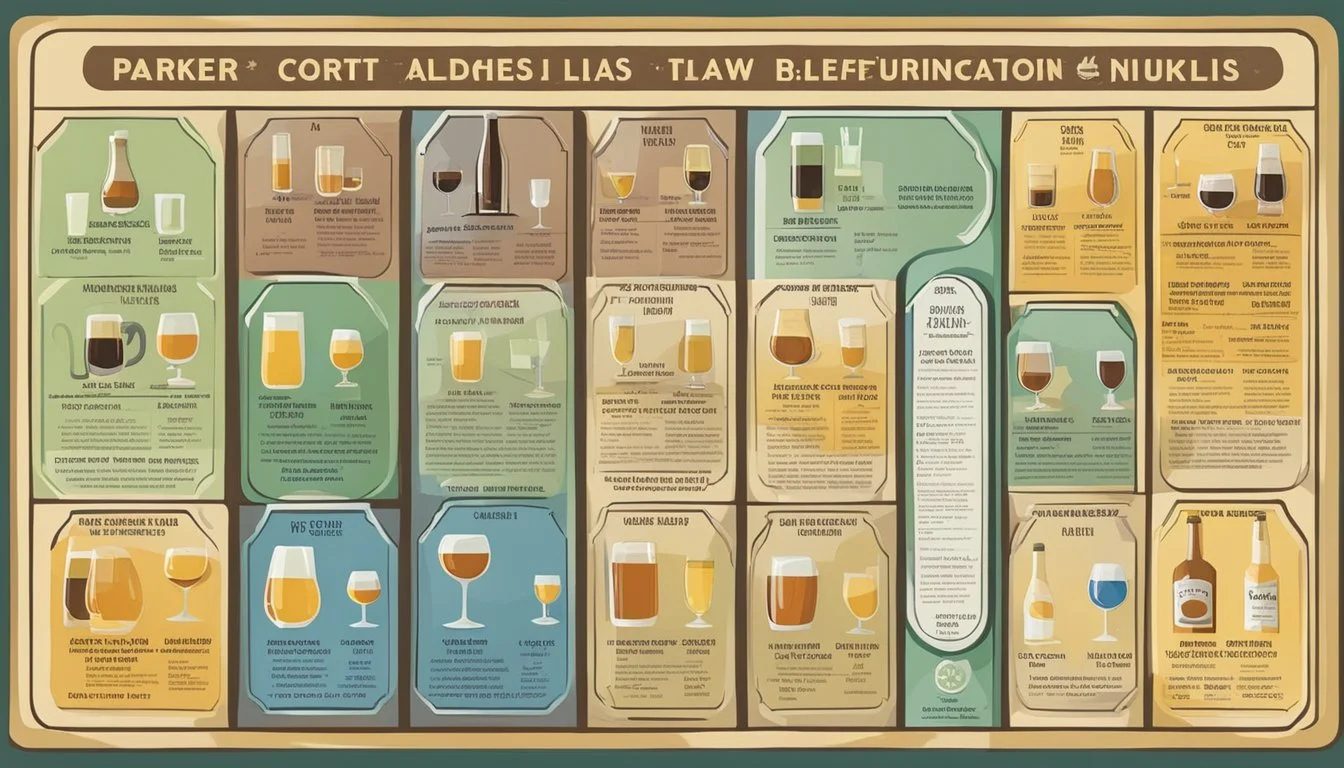
In Parker County, Texas, alcoholic beverages are defined by the Texas Alcoholic Beverage Code, which stipulates that an alcoholic beverage contains more than one-half of one percent of alcohol by volume. These beverages are categorized into various classes based on their production methods and alcohol content.
Beer and ale are common malt beverages with alcohol content varying by brand and type. By definition, beer typically has a lower alcohol by volume (ABV), usually under 5%, while ale, another form of malt beverage, can have a higher ABV due to different fermentation processes.
Wine, different from malt beverages, is created through the fermentation of grapes or other fruits. In Texas, wines can vary greatly in alcohol content, often ranging between 9% and 16% ABV.
Distilled spirits represent a different classification, encompassing liquors such as vodka, rum, and whiskey. These are produced through distillation and have higher ABV percentages, generally starting at 40%.
The following table outlines typical ABV ranges for each beverage classification:
Beverage Type Typical ABV Range Beer 3-5% Ale 5-14% Wine 9-16% Distilled Spirits 40-50%+
Under Texas law, the sale and classification of these alcoholic beverages are regulated with specific hours of operation for establishments dealing with their sale. Parker County adheres to these state-level regulations, ensuring that the sale and consumption of these beverages are managed responsibly.
Legal Responsibilities of Sellers and Consumers
In Parker County, Texas, both alcohol sellers and consumers have specific legal responsibilities under state law. The Texas Alcoholic Beverage Commission (TABC) sets forth and enforces these regulations to ensure public safety and compliance.
Sellers must adhere to the following:
Limiting sales to certain hours:
Liquor Stores: Mon-Sat, 10:00 a.m. to 9:00 p.m.
No Sunday Sales for packaged liquor
Grocery Stores/Gas Stations: Beer and wine sales have different restrictions
Ensuring no sales to minors or intoxicated persons
Following all TABC rules concerning permits and licenses
Consumers should be aware of:
Purchase Limits: No excess in limits allowed by law for personal consumption
Prohibition of public consumption in certain areas as designated by local premises rules
Understanding DUI-related offenses: Legal blood alcohol limit is 0.08%
Donation of alcohol is regulated, and individuals and businesses should consult the TABC to understand the related allowances and restrictions.
Lastly, private clubs and permitted sales venues must track sales and ensure they only serve members or authorized individuals, in line with TABC regulations. Compliance with these state laws and TABC rules is crucial to maintain the operational status of any business dealing with alcohol and to avoid penalties or legal issues.
Additional Resources
For those interested in further information about alcohol laws in Parker County, Texas, several resources are available:
Texas Alcoholic Beverage Commission (TABC): As the state's authority on Texas alcohol laws, the TABC offers comprehensive details on the regulations governing retail sales of alcohol. Their website provides a range of educational materials and resources.
Local Government Websites: Parker County's official website keeps residents informed on local option elections that can impact the types of alcohol sales permitted within the county.
Legal Firms: Law offices specializing in Texas alcohol laws, such as Michael & Associates, offer interpretations and explanations of state legislation and regulations. Their insights can be particularly helpful for businesses dealing with liquor licensing and compliance.
Here is a brief overview of the resources available:
Entity Type of Resource Description Website Texas Alcoholic Beverage Commission State Authority Regulations and educational materials on alcohol laws in Texas. tabc.state.tx.us Parker County Official Website Local Government Information on local laws and elections related to alcohol sales. parkercountytx.com Law Offices (e.g., Michael & Associates) Legal Firms Legal advice and information on compliance with Texas liquor laws. N/A
Readers should utilize these resources to stay informed about the latest developments in alcohol-related legislation and how they affect retail sales and consumption within Parker County.
Recent Legislation Changes

In Parker County, Texas, modifications in the law reflect a shift in the state's approach to alcohol regulation, particularly highlighting the alcohol-to-go measures.
Alcohol-to-Go Regulations
The Texas Legislature has passed new legislation permitting the sale of alcohol-to-go, which allows restaurants to offer takeaway alcoholic beverages with food purchases. This permanent change was enacted to support the hospitality industry, especially in the wake of economic pressures. Certain criteria must be met for alcohol-to-go sales:
The buyer must be a registered guest purchasing a meal.
Alcoholic beverages must be in sealed containers.
The order must include food (establishing it as accompanying a meal).
Moreover, the law stipulates that publicly traded corporations operating hotel bars may benefit from this change, offering a new avenue for revenue through alcohol-to-go services, provided they comply with the existing licensing framework.