How do you eat a falafel wrap?
Mastering the Art of Mess-Free Enjoyment

Falafel wraps are a staple in Middle Eastern cuisine, revered for their flavorful combination of herbs, spices, and legumes. Traditionally, they consist of deep-fried balls or patties of spiced ground chickpeas or fava beans tucked into a warm pita or flatbread. These wraps are often adorned with a variety of fresh vegetables, pickles, and sauces, creating a meal that is both satisfying and nutritious. As a fast food that aligns with vegan and vegetarian diets, falafel wraps offer a plant-based protein source that appeals to a wide audience, catering not just to dietary preferences but also to those seeking a delectable eating experience.
The versatility of falafel wraps makes them suitable for any meal, easily customized with additional ingredients like hummus or tahini sauce to enhance their flavor and texture. This customizability is also evident in the choice of accompaniments that can range from simple salads to more elaborate sides such as tzatziki—a creamy sauce made from yogurt, cucumber, garlic, and herbs—as highlighted in several culinary guides. Whether served at street food stalls or in restaurants, falafel wraps continue to be synonymous with quick, healthy eating across various cultures, embodying a fusion of tradition and contemporary dietary trends.
Exploring the Basics of a Falafel Wrap
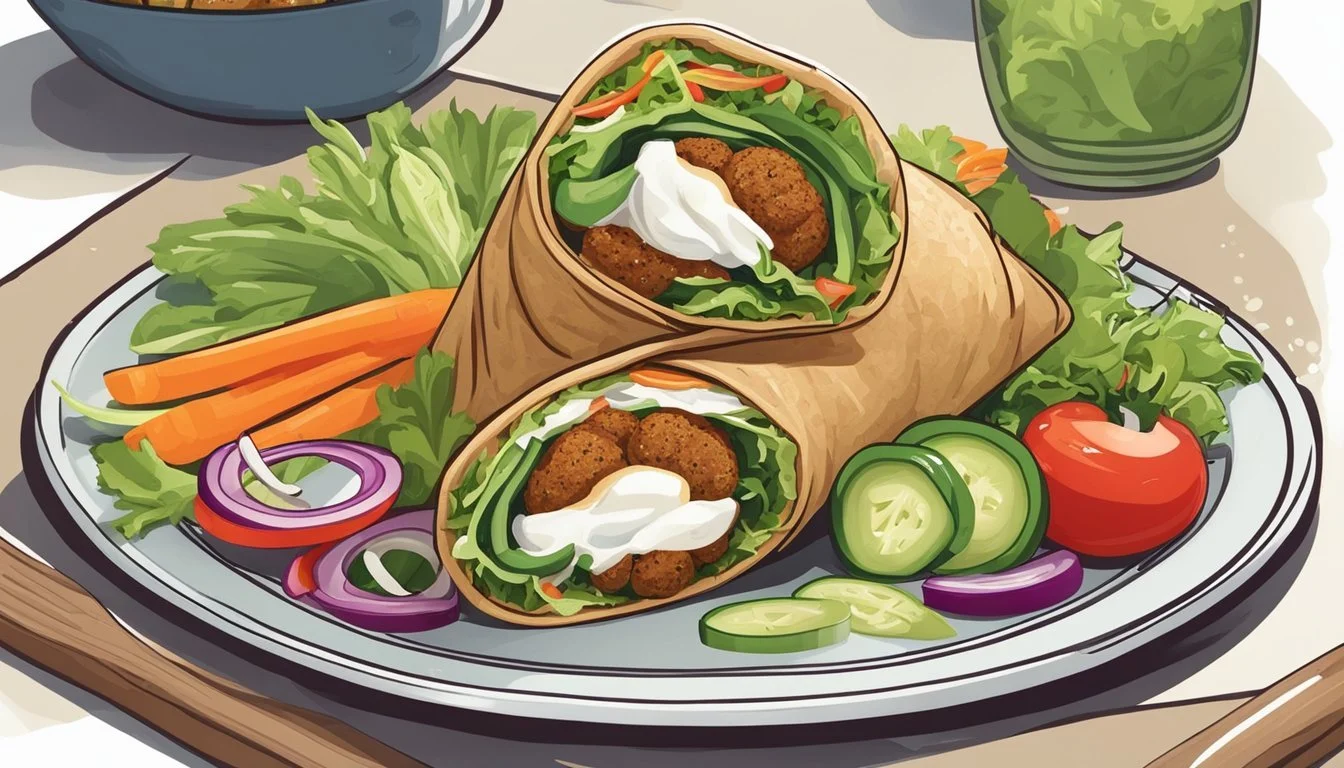
A falafel wrap is a popular Middle Eastern dish that consists of deep-fried balls or patties of spiced chickpeas, wrapped in bread with various accompaniments. This section examines the core components, from the falafel itself to the typical breads and fillings used to create this savory, handheld meal.
Defining Falafel and Its Cultural Heritage
Falafel, the centerpiece of the wrap, is a Middle Eastern delicacy primarily made from ground chickpeas, or sometimes fava beans, mixed with herbs and spices. It's deep-fried until golden-brown, offering a crispy exterior with a soft, flavorful interior. Falafel has a rich history, often linked to Egypt, but enjoyed across the Middle East, each region adding its own twist to the recipe.
Types of Bread for Wraps
The choice of bread is pivotal in crafting the perfect falafel wrap. Common options include:
Pita Bread: A slightly leavened flatbread that puffs up to create a pocket, ideal for stuffing with falafel and toppings.
Shrak: A traditional, unleavened flatbread that's thinner than pita, often used in Jordan and Palestine.
Tortilla: A non-traditional but convenient alternative that readily holds the wrap's contents.
Essential Ingredients and Variations
In addition to falafel and bread, a variety of fillings enhance the wrap's flavors:
Sauces: Tahini sauce, a creamy, sesame-based condiment, and hummus, a spread made from pureed chickpeas and tahini, are essential for adding moisture and taste.
Vegetables: It’s common to include diced tomatoes, cucumbers, and pickled veggies for crunch and tanginess.
Greens: Lettuce or cabbage can provide a fresh, crisp element.
Optional Add-ons: Some variations include tabbouleh, feta cheese, or a drizzle of hot sauce for extra flavor.
While each region in the Middle East may have its own version, the common thread is the combination of these elements to create a delicious and satisfying wrap.
Preparation Techniques
Mastering the preparation techniques is essential for a flavorful and texture-perfect falafel wrap. Consistency in the falafel mix, the cooking method, and the final assembly play pivotal roles in the final taste and experience of enjoying a homemade falafel wrap.
Creating the Perfect Falafel Mix
For a robust falafel mix, one starts by soaking raw chickpeas overnight, which are then ground in a food processor along with fresh herbs and spices. To ensure cohesion and the right consistency, the mix is often enhanced with baking powder before shaping.
Ingredients are usually combined as follows:
Chickpeas: Soaked and drained (not canned)
Herbs: Parsley, cilantro, and sometimes mint
Spices: Cumin, coriander, garlic, and salt
Baking powder: For leavening and crispness
Baking vs. Frying Falafel
Fried falafel is traditional, offering a crispy exterior and a moist interior. One heats oil in a deep skillet or a deep fryer to around 350°F (175°C) and fries the balls until golden brown. Alternatively, for a healthier option, one may bake falafel at around 375°F (190°C) until they are firm and slightly golden.
Frying Method:
Heat oil to 350°F (175°C)
Fry falafel in batches to ensure even cooking
Baking Method:
Preheat the oven to 375°F (190°C)
Bake on a lined sheet for approx. 25-30 minutes, flipping halfway through
Wrapping Strategy
The execution of the wrap is crucial. One typically lays open a flatbread or pita, places a line of falafel down the center, and adds toppings like tahini sauce or hummus. The wrap is then folded tightly around the filling, ensuring an even distribution of flavors in each bite.
Wrapping Steps:
Place the warmed flatbread or pita on a flat surface
Arrange 2-3 freshly cooked falafel balls down the center
Add greens, and dress with tahini or hummus
Wrap tightly, folding in the sides to secure the filling
Complementing the Falafel Wrap with Vegetables and Sauces
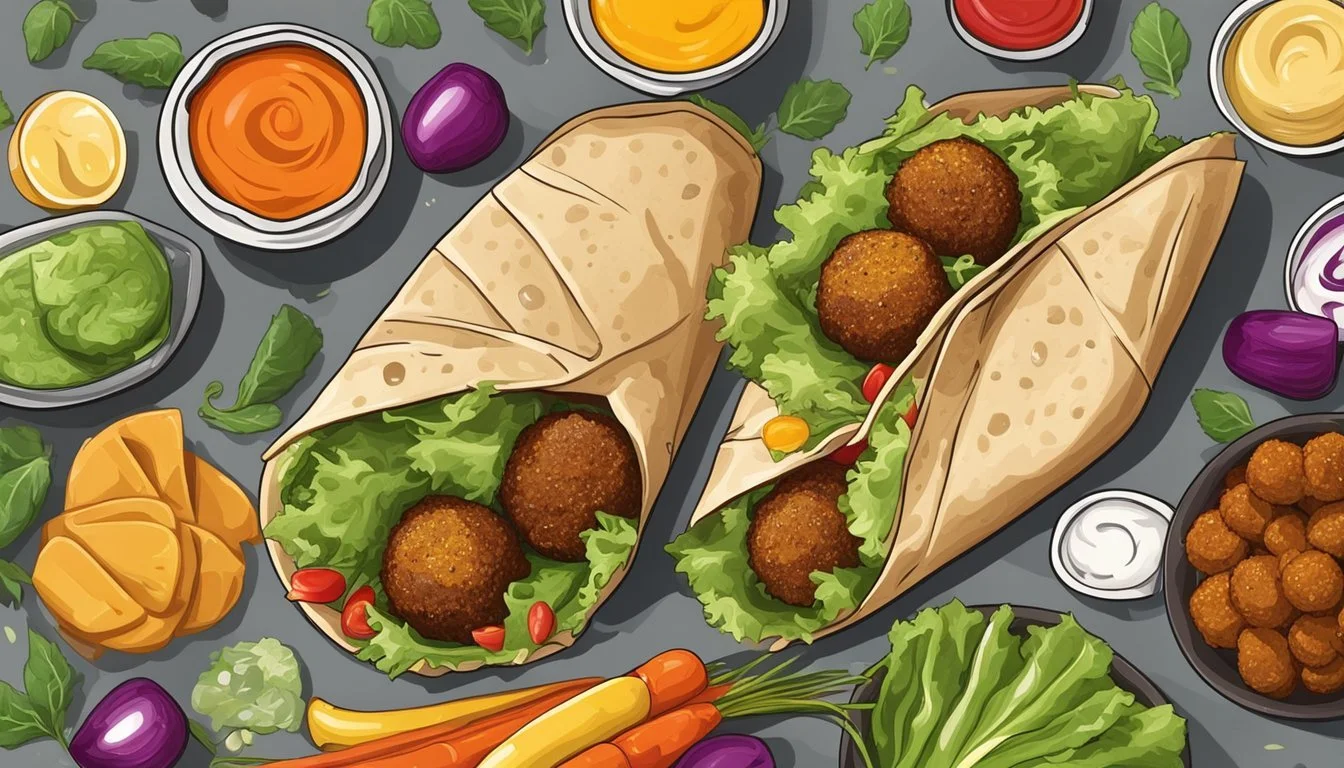
A falafel wrap’s appeal largely comes from the crunch and freshness of vegetables paired with the creamy, tangy kick of sauces. The right vegetables and condiments can elevate the humble falafel to a symphony of flavors and textures.
Selecting Fresh Vegetables
When assembling a falafel wrap, choosing fresh vegetables is crucial for adding crunch, flavor, and nutritional value. Traditionally, lettuce provides a crisp base often accompanied by sliced tomatoes and cucumbers, which offer juiciness and a refreshing bite. Onions, typically red for a balance of sweetness and sharpness, can be included raw or as pickles, lending a tangy crunch that contrasts well with the other ingredients.
Lettuce: Romaine or iceberg for crunch
Tomato: Sliced or cubed for juiciness
Cucumber: Thinly sliced for freshness
Onion: Red onions, raw or pickled for tartness
Pairing with Sauces and Condiments
The sauces chosen for a falafel wrap serve to complement the spices of the falafel and the fresh vegetables. Tahini sauce, a creamy sesame-based condiment, is a staple in falafel wraps for its smooth texture and nutty flavor. For a zestier option, tzatziki, made with yogurt, cucumbers, and herbs, offers a cool and garlicky note. A falafel wrap can also be enhanced with other sauces like hot sauce or garlic mayo, depending on one's preference for heat or additional flavor layers.
Tahini Sauce: Sesame-based, smooth, nutty
Tzatziki: Yogurt and cucumber, cool, garlicky
Additional Sauces: For heat or extra flavor—think hot sauce or garlic mayo
Nutritional Profile
The nutritional profile of a falafel wrap is influenced by its ingredients, which offer a mix of protein, fiber, and calories. Nutrition can vary depending on preparation methods and the choice of condiments and bread.
Health Benefits of a Falafel Wrap
Falafel wraps, when prepared with health in mind, can provide fundamental nutrients to one's diet. The falafels themselves are often made from chickpeas, which are a good plant-based source of protein and fiber. This protein is essential for muscle repair and growth, while fiber aids in digestion and can help maintain a healthy weight by promoting a feeling of fullness. Additionally, falafel wraps can include a variety of vegetables, which contribute vitamins and minerals to the meal.
Considering Caloric Intake
The caloric intake of a falafel wrap can vary widely. A typical falafel wrap is estimated to contain 350-450 calories per serving, but this can change based on the size, ingredients used, and cooking methods. One should be wary of falafel that is deep-fried as it increases the fat and calorie content, but options cooked in unsaturated fats like avocado oil can be a healthier choice. To better manage calorie consumption, it is advisable to opt for whole wheat or gluten-free wraps if desired, add an abundance of vegetables, and select sauces with lower sugar content.
Customizing Your Falafel Wrap
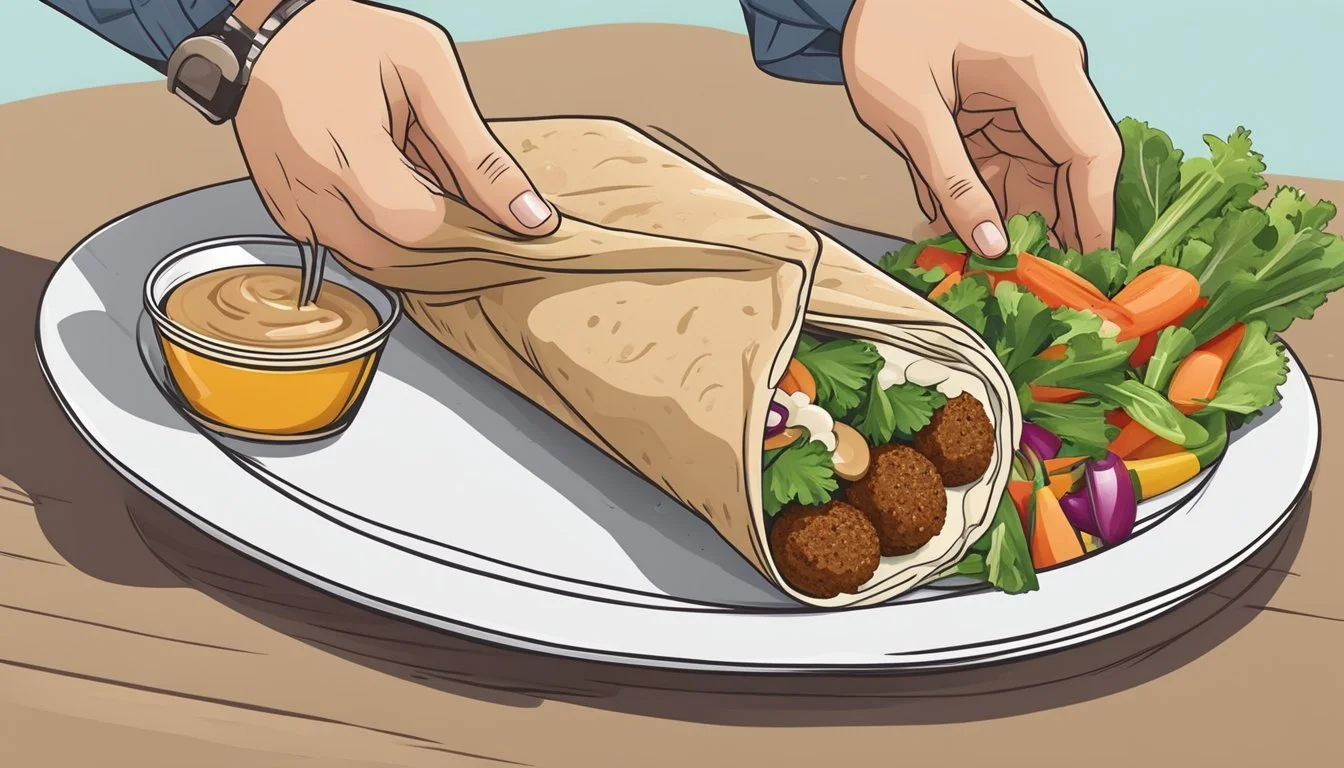
When preparing a falafel wrap, individuals can tailor the dish to meet specific dietary needs or to incorporate varied flavors. This customization can ensure the wrap is enjoyable for everyone, regardless of dietary restrictions or taste preferences.
Adapting the Recipe for Dietary Restrictions
For those following a vegan diet, using falafel—typically vegan by nature—as the wrap's centerpiece is ideal. Achieving a gluten-free version involves selecting a gluten-free wrap alternative such as corn tortillas or gluten-free pita bread. To enhance the wrap and maintain its vegetarian integrity, one might opt to include homemade hummus, providing both flavor and a creamy texture without the need for animal products.
Creative Toppings and Fillings
The falafel wrap's versatility allows for a variety of fillings and toppings to suit any palate. Here’s a breakdown to inspire creativity:
Sauces and Spreads:
Tahini sauce, a staple in Middle Eastern cuisine, offers a nutty flavor.
Homemade hummus adds a smooth, rich base layer.
Vegetables:
Crunchy options include sliced cucumbers, bell peppers, and red onions.
Leafy greens like spinach or iceberg lettuce contribute freshness and texture.
Additional Proteins (for non-vegan variants):
Crumbled feta cheese or slices of grilled chicken can be added to the wrap.
Extras:
Slices of avocado provide a buttery taste and a boost of healthy fats.
Pickled vegetables, (What wine goes well with pickled vegetables?) such as turnips or cabbage, introduce a tangy element.
By selecting preferred ingredients, the wrap becomes a personal expression of one's culinary tastes. Whether one keeps it strictly vegan with a tahini-drizzled falafel and avocado pairing, or goes for a vegetarian recipe with a medley of vegetables and homemade hummus, the possibilities are endless.
Serving and Presentation
In preparing falafel wraps, one must focus on both form and function, ensuring the wraps are assembled efficiently and presented appealingly. The inclusion of garnishes and attentive serving contribute significantly to the wrap's overall enjoyment.
How to Assemble the Wrap Efficiently
To assemble the wrap, one should lay a piece of pita bread on a clean, flat surface, slightly warmed for pliability. It's crucial to layer ingredients systematically to avoid overstuffing. One starts with a smear of hummus or tahini sauce, followed by neatly placing the falafels, making sure there's room to roll the wrap without tearing the bread. Adding fresh tabbouleh provides a citrusy crispness. One should carefully roll the pita over the ingredients, tuck in the sides, and roll up tightly, securing it with paper towels for hand-held eating.
Tips for Garnish and Serving
When garnishing, chefs favor a colorful, textured approach. Drizzling with sauces like tahini or a zesty lemon dressing enhances flavor. A sprinkle of chopped parsley adds freshness while a few slices of pickled vegetables bring in a tangy crunch. For those aiming to showcase their culinary creations, carefully slicing the wrap in half at a diagonal and presenting it on a wooden board can make it Instagram and Pinterest worthy. They adhere to practical tips for making a falafel wrap, such as draining the falafel well to avoid sogginess and using sturdy pita that won't disintegrate upon the first bite.
Culture and Trends
Falafel wraps have risen to prominence in both food culture and online trends. They cater to various dietary preferences and showcase the rich culinary heritage of Middle Eastern cuisine.
Falafel Wrap in Social Media
On platforms like Instagram and Pinterest, falafel wraps have become a popular subject. Users frequently share images of their homemade creations or their dining experiences at Middle Eastern restaurants. Such posts often amass significant attention, typically garnering likes and shares, especially within vegan and food enthusiast communities. The visual appeal of falafel wraps, with their blend of vibrant ingredients, makes them particularly photogenic and thus highly sharable on social media.
The Globalization of Falafel
Falafel has gone from being a staple in Middle Eastern cuisine to a global phenomenon, largely thanks to its versatility and appeal as a vegan-friendly option. Across the world, culinary innovators have adapted the traditional falafel wrap to suit local tastes and the latest food trends, maintaining its essence while giving it a new twist. This global reach has transformed falafel from a regional specialty into a worldwide staple, found in a myriad of settings from street food carts to high-end restaurants.