
How Moisture Migration Leads to Staling in Baked Goods

Moisture migration is a key process that directly causes bread to stale by redistributing water between the crumb and the crust. After baking, water moves from the softer crumb to the drier crust, changing the texture and mouthfeel of both parts of the loaf. This transfer results in the crust losing its crispness while the crumb becomes firmer and less enjoyable to eat over time.
Staling is more than just a change in freshness; it is also driven by complex changes in starch and proteins as moisture shifts through the bread. Even factors like how quickly bread is baked and how it’s stored can speed up or slow down these changes. For anyone interested in baking or preserving bread quality, understanding how moisture migration leads to staling is essential.
Understanding Moisture Migration
Moisture migration plays a central role in bread quality changes during storage, particularly as it impacts texture and shelf life. Understanding how moisture moves and redistributes helps explain why bread and other baked products stale even when stored in sealed packaging.
Defining Moisture Migration
Moisture migration refers to the movement of water molecules from one part of a food product to another. In bread, water typically moves from regions of higher moisture content, like the crumb (interior), towards drier areas such as the crust (surface).
This process is influenced by differences in water activity and temperature within the loaf. Water moves until a balance is reached. This movement can cause the crust to absorb moisture and lose its crispness, while the crumb may become firmer and more prone to staling.
Key Points:
Driven by gradients in moisture content
Affected by temperature and storage conditions
Impacts both product texture and shelf life
Moisture Redistribution in Baked Goods
After baking, the bread crumb holds higher moisture levels compared to the crust, which is dry and crisp. During cooling and storage, moisture migrates from the crumb towards the crust, gradually changing the texture of both components.
Crust softening typically occurs as it absorbs water from the crumb, resulting in a less desirable, leathery surface. At the same time, the crumb loses some water, contributing to increased firmness and dryness. Even in wrapped bread, where total moisture remains almost unchanged, this moisture movement alters sensory qualities.
Steps affecting moisture redistribution include:
Baking: High heat dries out the crust.
Cooling: A sharp gradient forms between crust and crumb.
Storage: Water continues to migrate, altering textures.
Moisture Equilibrium and Distribution
Moisture equilibrium is the state achieved when water distribution becomes uniform throughout the bread loaf. This occurs as water activity levels equalize between crust and crumb, causing changes in both moisture content and physical texture.
In practice, reaching equilibrium leads to a loss of the crisp crust and a firmer, more staled crumb. The final moisture distribution depends on factors such as initial baking conditions, cooling rate, packaging, and storage humidity.
Table: Factors Affecting Moisture Equilibrium
Factor Impact on Moisture Equilibrium Baking temperature Higher heat dries crust faster Storage humidity High humidity slows staling Packaging Sealed packaging reduces loss Cooling speed Rapid cooling slows redistribution
A clear understanding of moisture equilibrium and distribution helps bakers control staling by adjusting processing and storage variables.
The Science of Staling
As bread ages, physical and chemical processes reshape its texture and freshness. Changes in water distribution, starch restructuring, and biochemical reactions collectively drive staling.
Mechanisms Behind Bread Staling
Bread staling is mainly the result of moisture migration and starch changes. Moisture leaves the crumb, migrating to the crust and even escaping into the environment.
The crumb, which starts out moist and soft, becomes drier as this movement happens. The crust, which was originally crisp, loses water and softens.
This transfer alters the mechanical properties of the bread, causing it to lose the tender, resilient bite associated with freshness. Packaging methods significantly affect the rate and extent of these changes, with unwrapped bread losing moisture quickly but retaining crust texture longer.
Role of Amylopectin Retrogradation
Amylopectin, a key starch component, plays a central role during staling. After baking, gelatinized starches begin to reassociate—a process known as retrogradation.
As amylopectin chains crystallize, they expel water. This crystallization makes the bread crumb firmer and less elastic over time.
Retrogradation is influenced by storage temperature and bread formulation. Lower temperatures accelerate amylopectin crystallization, which is why bread stored in the refrigerator often goes stale faster. The table below summarizes effects:
Factor Effect on Amylopectin Retrogradation Low temperature Increases rate High moisture Slows process Additives (e.g. fat) Reduces extent
Enzymatic and Oxidative Changes
Certain enzymes continue to act after baking, impacting staling. Amylases further break down starch, modifying crumb softness in the first hours.
Oxidation affects lipids in bread, leading to flavor losses and subtle textural shifts. These oxidative changes can also interact with proteins, limiting dough elasticity and affecting the crumb structure.
Enzyme activity and oxidation rates depend on the recipe and storage conditions. Lower humidity, for example, can reduce enzyme effectiveness but may heighten oxidation’s impact over time.
Relation Between Texture and Staling
Staling is usually measured by changes in bread texture. As moisture migrates and starch retrogrades, the crumb—the soft inner part—becomes tougher and less springy.
Instrumental tests, such as measuring crumb firmness, directly correlate with consumer perceptions of staleness. A stale bread crumb feels dry and crumbly rather than soft and resilient.
Crust texture also shifts as water migrates out of the crumb and into the crust, which may become leathery instead of crisp. Texture loss is a key indicator by which consumers judge bread freshness.
Impact of Moisture Migration on Bread Quality
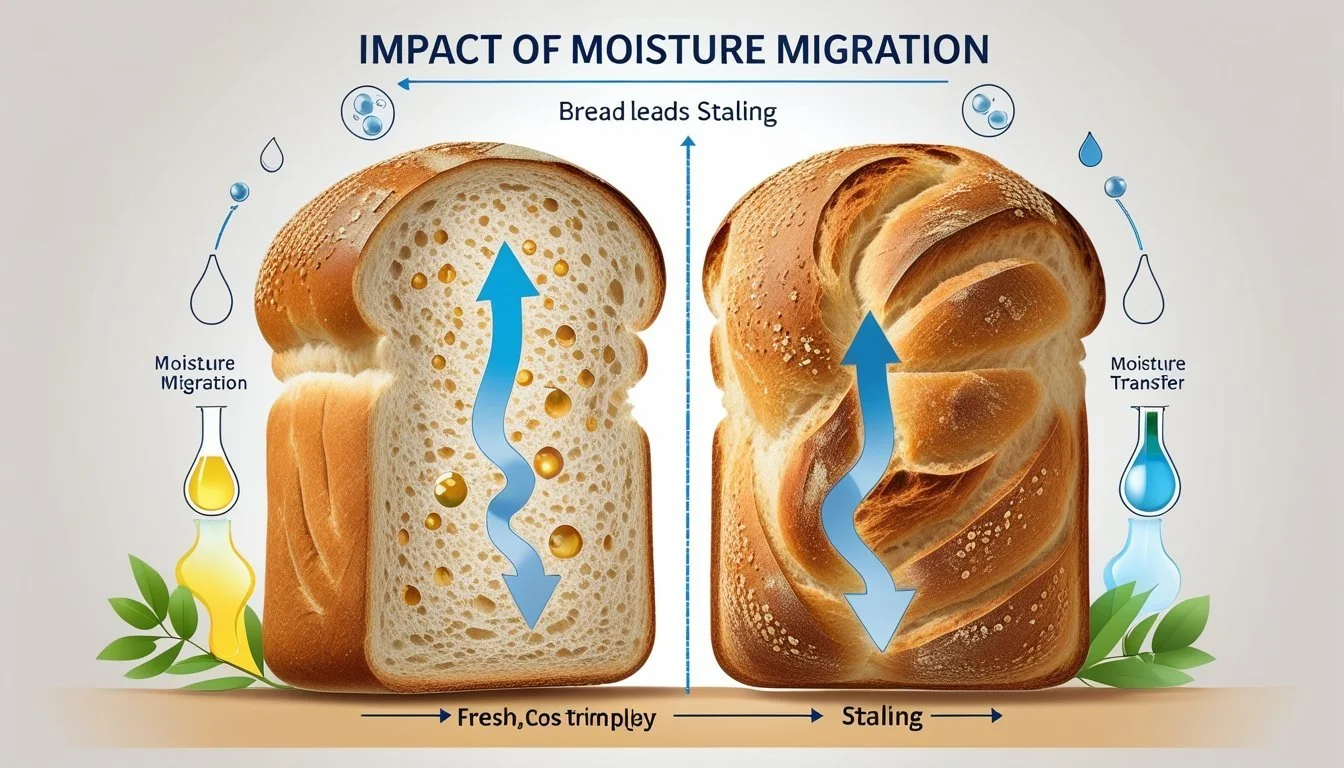
Moisture movement from the bread crumb to the crust affects several aspects of bread, influencing texture, sensory properties, and the physical strength of the loaf. These changes are central to the process of staling, which can lead to noticeable declines in product quality over time.
Effects on Crumb Softness and Loaf Volume
As bread stales, water migrates from the soft crumb to the drier crust. This causes the crumb to lose moisture, leading to increased firmness and a reduction in softness.
A firmer crumb is less pleasant to chew and is one of the most immediate indicators of staling to consumers. In addition to affecting texture, moisture loss from the crumb may cause a subtle reduction in loaf volume due to shrinkage.
Key effects include:
Loss of crumb softness, making slices harder and less springy.
A denser structure as staling progresses.
Slight loss of loaf volume, particularly in breads with lower initial moisture content.
Storage conditions and packaging can moderate these effects, but moisture migration is a significant driver of reduced freshness.
Alterations in Taste and Aroma
Moisture loss not only affects texture but also plays a direct role in altering the taste and aroma of bread. As water leaves the crumb, volatile aroma compounds dissipate more easily, reducing the characteristic fresh-baked scent.
The crumb can taste drier, and some flavors may become muted or less distinctive. Lower moisture can also enhance perception of staleness, making the bread seem bland.
Notably, the crust may accumulate some moisture, softening its texture and diminishing its desirable crispness. This combination makes the overall eating experience less enjoyable.
Changes in Bread Structure and Dough Strength
Water migration affects the internal structure of the bread, with consequences for dough strength and the mechanical properties of the loaf.
As the crumb loses water, starch retrogradation increases and the protein-starch matrix becomes more rigid. This shift can be documented through increased crumb firmness and reduced elasticity.
Structural changes include:
Higher brittleness of both crumb and crust.
Reduced ability to compress and bounce back.
Greater tendency for the bread to crumble when sliced.
Altogether, these structural shifts are a core reason why staled bread becomes less appealing for most uses.
Stages of Moisture Migration in Bread Processing
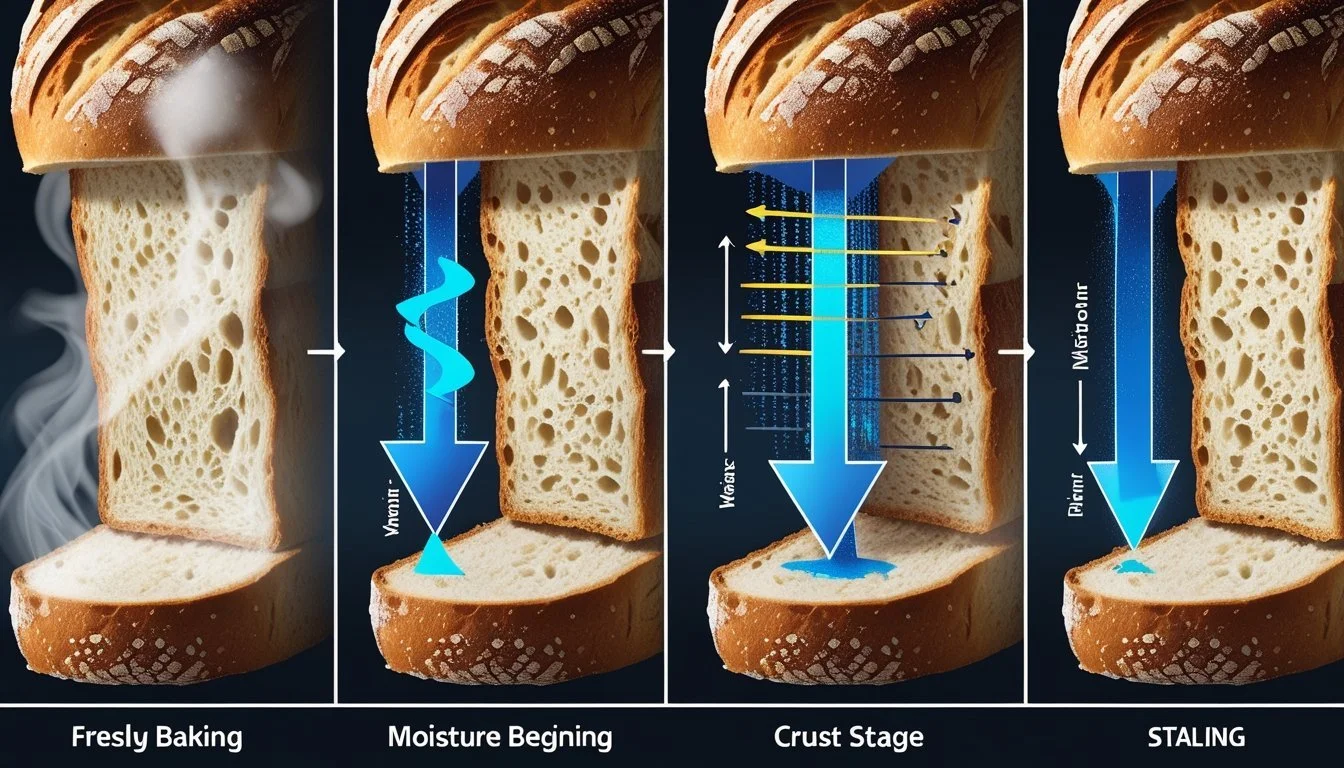
Moisture migration in bread is shaped by specific processing stages. Each phase—mixing, baking, and cooling—directly affects the distribution and behavior of water within the loaf, which plays a major role in bread freshness and eventual staling.
Mixing and Dough Hydration
During mixing, water is added to flour and other ingredients. Hydration activates gluten-forming proteins and allows starch granules to absorb water. The ratio of water to flour and the efficiency of mixing determine how well water is distributed throughout the dough.
Thorough mixing ensures even moisture content, promoting the development of a smooth dough matrix. Inadequate hydration or inconsistent mixing can result in dry spots or areas prone to rapid moisture loss. Proper hydration at this stage is critical, as it sets the stage for the bread’s structure and influences subsequent moisture migration.
After mixing, dough is often allowed to rest to ensure equilibrium. This resting period allows water to penetrate all components, resulting in more uniform hydration before fermentation and baking begin.
Baking and Internal Temperature
Baking involves subjecting the hydrated dough to high heat. As oven temperature rises, internal dough temperature increases, typically reaching around 95–100°C (203–212°F) in the center. This heat causes starch gelatinization and protein coagulation, setting the bread’s crumb structure.
Moisture migrates from the interior toward the surface during baking. Steam is generated and can escape from the bread’s surface, leading to a concentration gradient. The crust loses water quickly and dries out, while the crumb retains more moisture due to slower evaporation.
This bake-induced migration is crucial. The final baked bread will have a firm outer crust and a moist crumb, but the initial water boundary formed during baking prompts the later gradual movement of moisture from crumb to crust.
Cooling and Moisture Redistribution
After baking, bread is removed from the oven and begins to cool. During this phase, moisture continues to migrate, moving from the moist crumb toward the drier crust. Cooling slows down the movement of water but does not stop it entirely.
The redistribution of moisture creates a new equilibrium within the loaf. This process is strongly influenced by storage conditions, airflow, and temperature. Improper cooling—such as wrapping bread while it is still warm—can trap moisture, softening the crust and accelerating texture changes.
Moisture loss from the gluten network and ongoing water movement between crumb and crust both contribute to bread firming and crust softening. Understanding this stage is important for extending shelf life and maintaining bread quality.
Factors Influencing the Rate of Staling
Staling is driven by moisture loss and redistribution inside bread, impacting texture and freshness. The pace at which these changes occur depends on temperature, packaging type, and how bread is stored.
Effects of Storage Temperature and Shelf Life
Storage temperature has a direct impact on how quickly bread stales. At lower temperatures just above freezing (like in a refrigerator), starch retrogradation speeds up, causing the crumb to firm and bread to lose its softness rapidly.
Bread kept at room temperature tends to stay fresher for a longer period, as starches retrograde slower in this range. Very high temperatures can lead to excess moisture loss, drying the product prematurely.
Shelf life is also affected by the rate of moisture migration between crumb and crust, which is promoted or slowed by the storage environment. Fluctuating temperatures can accelerate water movement, making the bread stale faster.
Role of Packaging in Moisture Control
Packaging acts as a barrier to reduce moisture loss from the bread into the environment. Materials like plastic films help retain internal moisture, keeping the crumb soft and delaying crust hardening.
Poor or absent packaging allows faster evaporation, especially from the crust, leading to a firm texture. Effective packaging prevents not just drying but also minimizes moisture migration from crumb to crust, which is critical in preserving freshness.
Vacuum-sealed or modified atmosphere packaging can extend shelf life further by controlling the exchange of gases and humidity. Bread stored in paper bags may stale quicker due to higher moisture permeability, compared to sealed plastic or foil.
Technological Interventions to Control Moisture Migration
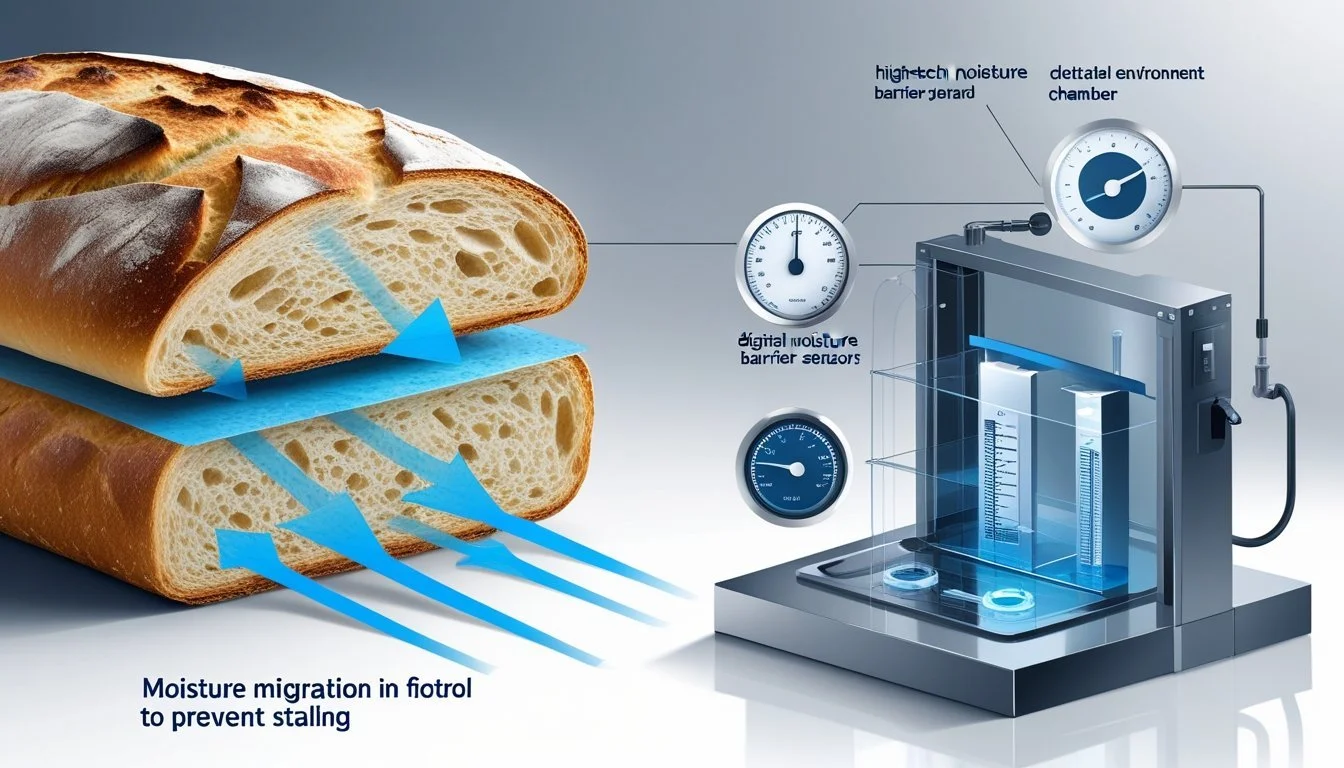
A range of technological solutions target moisture migration in foods, focusing on barriers, ingredient modifications, and analytical monitoring. These interventions help slow staling, maintain texture, and extend shelf life in baked goods and other multi-domain foods.
Role of Emulsifiers
Emulsifiers are commonly used to modify the interaction between water and starches or fats in bakery products. By altering the distribution of water, they can help slow retrogradation, which is a major driver of bread staling. Common types like mono- and diglycerides work by forming complexes with amylose, limiting crystallization and helping the crumb stay soft.
A key function of emulsifiers is to create physical and molecular barriers to moisture migration. This helps keep moisture levels stable within different components of layered or filled foods and reduces quality loss due to uneven drying or absorption.
Emulsifiers also impact the shelf life by improving dough handling, bread volume, and resistance to staling. They are valued for their ability to exert these effects at low usage levels, which minimizes cost and sensory impacts.
Enzyme-Based Anti-Staling Solutions
Enzymes such as amylases and lipases are used to limit staling through targeted modifications of starch or lipid structures. Amylases break down amylopectin chains, which delays the recrystallization associated with crumb firming. Lipases affect dough lipids, making them less prone to water loss and structure changes during storage.
These enzymes are often specific in their action, ensuring that they promote softness without causing gumminess or excessive breakdown. Their incorporation can be fine-tuned based on parameters like flour type, product moisture content, and expected shelf life.
Enzyme formulations are increasingly designed to be heat-stable, surviving baking and remaining active during storage. This targeted activity contributes to ongoing freshness improvements even after processing is complete.
Advances in Nuclear Magnetic Resonance Analysis
Nuclear magnetic resonance (NMR) is now a leading analytical tool for studying water mobility and distribution in food matrices. It provides non-destructive measurement of moisture content, molecular interactions, and phase transitions during storage.
Researchers use NMR to observe changes in water binding and migration over time, directly correlating these findings with texture changes and staling rates. Data collected help optimize formulations and processing for desired shelf-life attributes.
NMR enables rapid quality checks during production. Its sensitivity to subtle moisture changes makes it valuable for developing new anti-staling interventions and for quality assurance in large-scale manufacturing environments.
Extending Freshness and Improving Consumer Experience
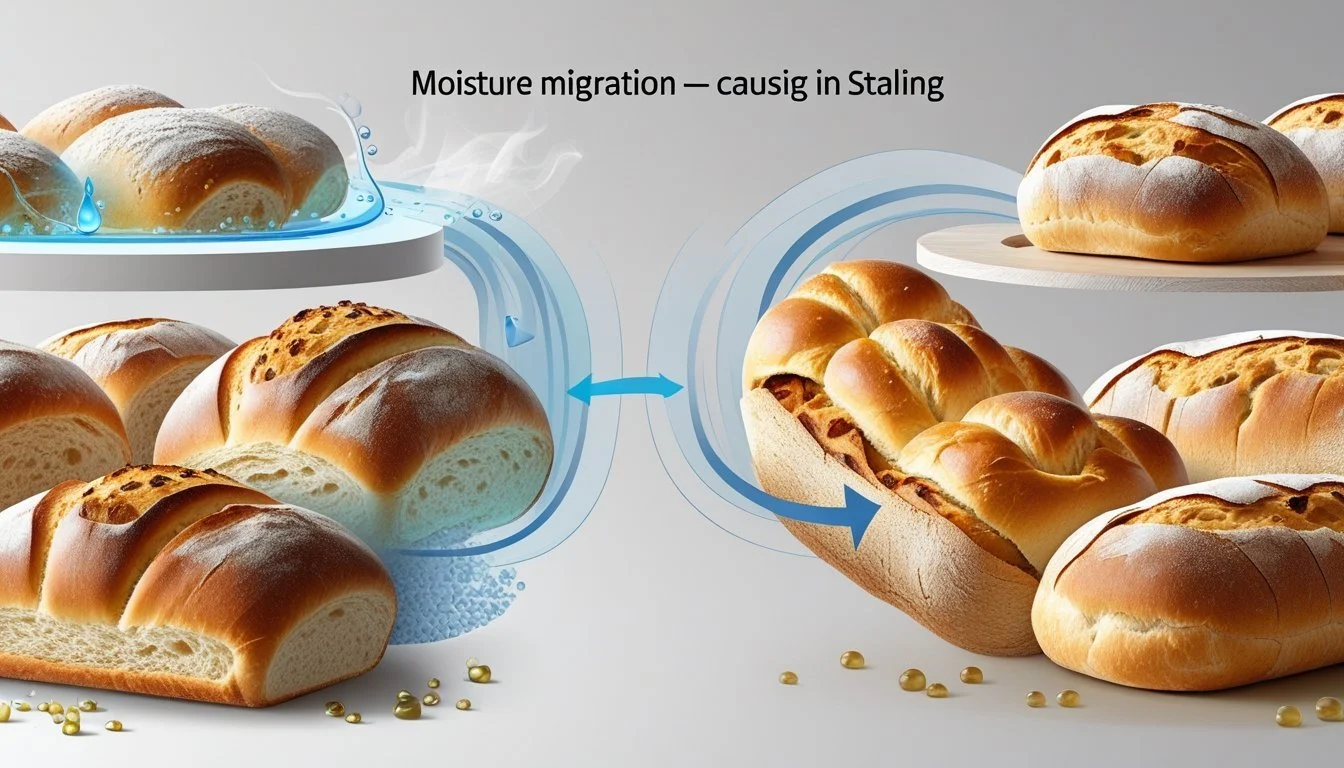
Minimizing moisture migration is vital for preserving bread and bakery products’ freshness. Attention to packaging technologies and controlled processing techniques can help retain desirable flavor and texture while inhibiting staling.
Optimizing Packaging Solutions
Proper packaging is essential for controlling moisture transfer and slowing down staling. Modern approaches use films with specific moisture and oxygen barriers to reduce water vapor movement. Active packaging systems such as moisture absorbers and antimicrobial liners further inhibit mold and bacterial growth.
Modified atmosphere packaging (MAP) replaces ambient air with precise gas mixtures like nitrogen and carbon dioxide. This slows down oxidative reactions and controls microbial development. Packaging choice also impacts flavor retention, as some materials are better at keeping volatile compounds responsible for fresh aroma and taste.
Clear labeling and resealable closures offer convenience, letting consumers maintain freshness after opening the package. These strategies combine to extend shelf life and improve product quality from the point of purchase through storage.
Innovations in Baking and Frying Techniques
Careful control of baking and frying parameters directly influences moisture content and shelf stability. Lower baking temperatures or shorter times can trap more moisture, but may accelerate staling if not balanced. Conversely, overbaking leads to a drier product that stales quickly.
Some bakeries add emulsifiers, enzymes, or sourdough starters to slow crumb firming and preserve soft texture. Adjusting fat content, especially in fried products, forms a barrier against moisture exchange and can enhance mouthfeel and flavor.
Technological advances have allowed for real-time moisture monitoring during baking and frying. Automated systems adapt conditions to ensure uniform results and optimal moisture levels, ultimately delivering bakery items with prolonged freshness and improved eating quality.

