
What Best Before Really Means for Different Countries
A Clear Guide to Global Food Labeling

Consumers often see "best before" dates on packages, but the meaning can depend on where they live. In most countries, "best before" marks the period during which food maintains its best quality, not its safety, and eating products past this date is usually not dangerous but may mean reduced taste or texture. Unlike "use by" dates, which refer to safety, "best before" is about freshness and desirability.
Countries have different regulations and interpretations when it comes to these date labels, which can lead to confusion for shoppers, especially when buying imported goods. Knowing how "best before" works in various regions helps people make informed choices and reduce unnecessary food waste.
Understanding 'Best Before' Dates
The labeling of food products with dates like "best before" and "expiry" varies by country and is essential for consumer safety and minimizing food waste. Understanding these terms helps buyers make informed choices and maintain food quality.
Definition and Purpose
A best before date marks the period during which a food product maintains its ideal freshness, flavor, texture, or nutritional value. It is used on many pre-packaged foods and is generally determined by manufacturers based on testing and quality standards.
The best before label is not about food safety but rather about peak quality. After this date, the food may lose flavor or texture but is often safe to eat if stored correctly and there are no signs of spoilage.
Consumers often encounter additional phrases like best by, enjoy by, or best if used by. These are usually interchangeable with "best before" and are aimed at helping buyers select products at their freshest.
Difference Between 'Best Before', 'Use By', and 'Sell By'
Best before is primarily about the recommended period for best quality. It should not be confused with:
Label Main Focus Role on Food Products Best Before / Best By Quality Indicates freshness peak Use By Food Safety Specifies last date safe to eat Sell By Inventory Date Tells store how long to display product
Use by dates are related to safety, especially for perishable items where eating after the date can pose health risks. Sell by is used mainly by retailers to manage stock and is rarely relevant to consumers.
Labels like best if used by or enjoy by also aim to direct consumers toward food at its best quality but don't refer to safety.
'Best Before' vs Expiration Dates
A best-before date (or "best by") is not the same as an expiration date. Expiration dates are used for products where food safety is a concern, such as infant formula, meal replacements, or some pharmaceuticals.
While a best-before date signals freshness and peak quality, an expiration date is a deadline after which the product should not be consumed for safety reasons.
Countries differ in how these distinctions are made. For example, Canadian regulations require "best before" on short shelf-life foods, but "expiry date" must be used when safety is at stake. In many other countries, expiration and best-before terms are sometimes used incorrectly or interchangeably, which can cause confusion.
Products past their expiration dates must be discarded, while foods past their best-before dates may be eaten if their quality remains acceptable and there is no visible spoilage. This distinction helps reduce unnecessary food waste while maintaining safe consumption practices.
Country-Specific Regulations and Approaches
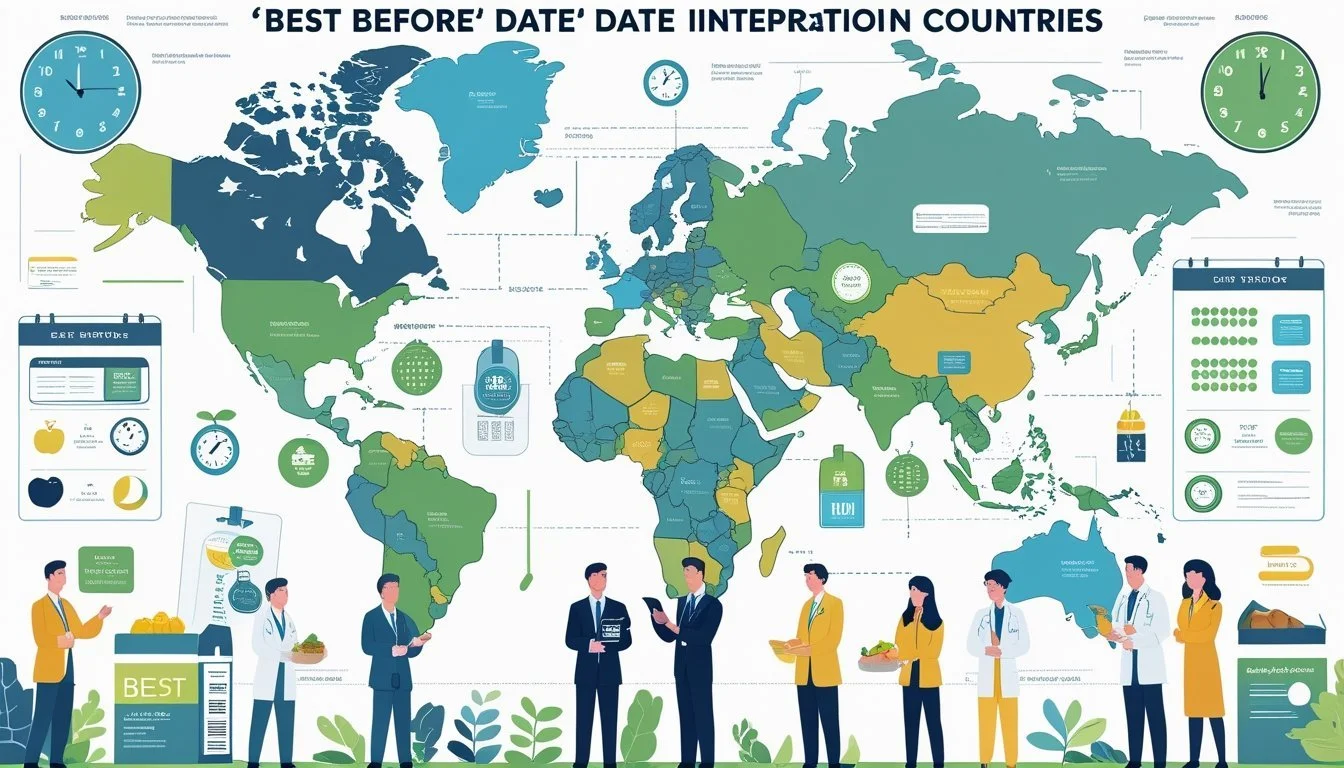
Best before labelling is enforced and interpreted differently worldwide. Regulations, inspection protocols, and consumer guidance all affect how dates must appear on packaging and how consumers are protected.
Canada: Labelling Laws and Enforcement
In Canada, the Canadian Food Inspection Agency (CFIA) regulates food labelling requirements. Most pre-packaged foods with a shelf life of 90 days or less must display a best before date in both English and French.
CFIA actively inspects and enforces these standards. Non-compliance may lead to fines, mandatory recalls, or legal actions.
Food labels must be clear and legible, and the best before date is intended to indicate peak freshness, not food safety. Some foods, such as canned goods and bottled water, are exempt from these requirements.
Manufacturers must also include proper storage instructions if the product's shelf life depends on conditions such as refrigeration. This requirement protects consumers and helps retailers minimize food waste.
European Union: Harmonized Standards
The European Union adopts a harmonized approach through Regulation (EU) No. 1169/2011. "Best before" dates are mandatory on most pre-packaged foods, while products that are highly perishable must carry a "use by" date instead.
Labelling must use standard EU languages depending on the market. The food label should be easy to read and placed in a clear area.
Member states may enforce penalties for non-compliance, but the standard guides all EU countries. The regulations help ensure high levels of consumer protection and food safety across member states.
There is a push within the EU to reduce food waste by educating consumers about the distinction between "best before" and "use by." This effort aims to prevent perfectly safe food from being discarded.
United States: Federal and State Guidance
In the United States, federal regulations do not require "best before" dates on most foods. The Food and Drug Administration (FDA) only mandates date labelling for infant formula; other food date labels, including "best by," are voluntary but subject to truth-in-labelling requirements.
Some states have additional requirements or guidelines, leading to inconsistencies nationwide.
Manufacturers usually set dates to indicate quality, not safety. Food may be sold or consumed after the listed date as long as it is still wholesome. The USDA provides guidance to help consumers understand label meanings.
Due to differing state practices, enforcement varies. Most regulatory actions focus on ensuring honesty and clarity on food packaging rather than mandating a universal format.
Asia-Pacific: Regional Variations
The Asia-Pacific region features diverse labelling regulations, with countries setting their own standards and enforcement protocols. Japan and Australia require best before dates on many pre-packaged foods, but scope and format differ.
In Japan, food labels must include dates for perishable goods and are tightly regulated. Manufacturers are subject to regular inspection.
Australia mandates best before or use by dates depending on food type, with enforcement handled by the national food standards code.
In China and other countries, enforcement and labelling depend on product category, often with additional local rules. Multilingual labels are common due to export-focused industries. Consumer protection levels vary, reflecting differences in local enforcement and awareness campaigns.
Key Components of Food Labelling
Food labelling provides essential information that allows consumers to make informed decisions and avoid misleading information. Clear labelling enables easy identification of products, safe food handling, and supports transparency in the food supply chain.
Name of the Food and Description
The name of the food is required to clearly identify the product and differentiate it from similar items. It should use recognized terms that are easily understood by customers. Generic or vague names can cause confusion and may lead to the purchase of unintended products.
A precise description is often included alongside the name to clarify the nature of the food or its intended use. This description must indicate any processes or treatments applied, such as “smoked,” “pasteurized,” or “frozen.” Accurate naming protects consumers from misleading information and is frequently regulated by national and international standards.
Using specific naming practices helps enforce consistency and ensures that consumers are not misled about what they are buying. In many regions, regulators require the name and description to match the product’s actual characteristics.
List of Ingredients
All ingredients present in the food must be listed in descending order by weight at the time of manufacture. This helps consumers with food allergies, dietary restrictions, or specific ingredient preferences make safe and informed choices. Allergens must usually be highlighted, sometimes in bold or a separate allergy box.
Compound ingredients—those made from more than one component—should themselves be broken down unless exempt by local regulations. For example, “chocolate chips (sugar, cocoa butter, cocoa mass).”
Providing an accurate and complete list of ingredients prevents misleading information and enhances transparency. Misstating or omitting ingredients is prohibited as it could result in health risks or a loss of consumer trust.
Net Quantity and Display
Net quantity indicates the exact amount of food in the package, using standard units like grams, kilograms, milliliters, or liters. The purpose is to allow consumers to compare similar products easily and to ensure they receive the quantity promised by the manufacturer.
This information must be displayed clearly and prominently, often on the front of the packaging. Font size, placement, and contrasting background are regulated to ensure visibility and legibility.
Accurate net quantity labelling safeguards against deceptive packaging practices, such as excessive empty space (slack fill) or misrepresentation of weight. The clear display of quantity is a legal requirement in most countries to protect consumers and maintain fair trade practices.
The Science Behind Shelf Life and Freshness
Shelf life for food products is determined by how long a product maintains its safety and quality under specific storage conditions. Several factors, including microbial growth and preservation methods, influence how long food stays fresh and suitable for consumption.
Role of Microorganisms and Food Deterioration
Microorganisms such as bacteria, molds, and yeasts are a leading cause of food spoilage. They multiply when food is stored at improper temperatures or for too long, accelerating deterioration and potential safety risks.
Shelf life is determined based on when microbial growth begins to affect a food’s taste, smell, texture, or safety. Some foods, like dairy and fresh meat, spoil quickly due to their high moisture and nutrient content, which supports rapid microorganism growth.
The presence of oxygen, high temperatures, and humidity can also increase the activity of spoilage organisms. Manufacturers conduct microbial and sensory testing to set accurate "best before" dates, ensuring consumers can identify when food may no longer meet expected quality standards.
Food Production and Preservation
Food production techniques significantly impact how long food maintains freshness. Methods such as pasteurization, canning, freeze-drying, and vacuum sealing reduce exposure to air, limit microbial presence, and slow chemical changes that degrade quality.
Preservatives, both natural (like salt or vinegar) and artificial, extend shelf life by inhibiting microbial activity. Packaging materials also play a key role, with technologies designed to limit moisture and oxygen exposure, helping foods stay fresh for longer periods.
Manufacturers routinely assess shelf life using stability tests, considering storage temperature, light, and packaging type. These controlled processes provide data that guides the setting of "best before" dates for different products and markets.
Health and Food Safety Concerns
"Best before" dates can influence perceptions of whether food is safe to eat, but they do not guarantee safety. Issues such as foodborne illness and cross-contamination still need consideration, regardless of date labels.
Foodborne Illness and Food Poisoning
Products consumed beyond their "best before" date are generally still safe if they look, smell, and taste normal. The main risk comes with "use by" dates, which are assigned to foods that become unsafe with spoilage, such as fresh meat or dairy.
Eating food past its "use by" date can increase the risk of foodborne illness due to bacteria like Salmonella, Listeria, or E. coli. The risk of food poisoning is particularly relevant for vulnerable populations, such as pregnant women, young children, the elderly, and immunocompromised individuals.
Safe storage conditions are critical. Improper refrigeration, even before the "best before" date, can significantly raise the risk of harmful bacteria multiplying. Date labels should be used as a guide, but food safety always depends on storage, handling, and preparation practices.
Cross-Contamination Risks
Cross-contamination occurs when harmful bacteria or allergens transfer from one food or surface to another, leading to possible illness. This risk is not related to "best before" dates but to how food is handled in kitchens and during storage.
Foods like raw poultry, eggs, and seafood are common sources. Using the same cutting board or utensils for raw and ready-to-eat foods can spread bacteria. Washing hands and cleaning surfaces help minimize hazards.
"Best before" foods are often viewed as less risky, but if handled incorrectly or stored near raw items, even shelf-stable products can be contaminated. Maintaining clean preparation areas and separating foods are key steps in preventing cross-contamination regardless of labeling.
Consumer Impacts and Behavior

Consumers’ daily decisions on food rely heavily on food label information, especially “best before” dates. The way these dates are interpreted impacts food safety, household food waste, and overall consumer protection.
Understanding and Interpreting Labels
A significant number of consumers misinterpret “best before” as an indication that food is unsafe after the listed date, while in reality, these labels typically reflect quality, not safety. In the European Union and other regions, confusion is common due to overlaps with “use by” and “expiry” dates.
Many shoppers discard perfectly safe food when “best before” dates pass, leading to increased food waste. Research shows that cultural differences, education, and the clarity of food labeling all influence consumer understanding. For example, some countries provide explicit explanations on packaging, using visual symbols or short clarifications, while others have less clear messaging.
Misunderstandings often stem from ambiguous language or inconsistent label formats. A simple guideline is:
Label Type Meaning Best Before Quality declines after this date, but food may be safe Use By Safety is not guaranteed after this date
Consumer Protection Against Misleading Information
Clear labeling is essential for consumer protection. Misleading or unclear information can prompt unnecessary disposal of foods that are still edible, increasing household food waste and economic loss.
Consumer protection agencies in various countries monitor manufacturers for compliance with labeling regulations. In some regions, regulators have pushed for standardized language and education campaigns. These efforts are focused on reducing confusion by aligning official definitions with public understanding.
Misleading information on labels may include vague terms or fine print that consumers overlook. Regulatory bodies may enforce penalties if food labels are found to be intentionally deceptive. Public information campaigns, targeted especially in the EU, aim to combat misconceptions through mass education and clear point-of-sale messaging.
Accurate labeling and straightforward explanations are increasingly seen as necessary safeguards not only against foodborne risks but also against unnecessary waste driven by misunderstanding "best before" dates.
Reducing Food Waste Through 'Best Before' Awareness
Understanding the difference between food quality and food safety can help consumers make better decisions, especially when evaluating products like dairy that often list "best before" dates. Educating people about what these dates really signify encourages smarter consumption and less waste.
Common Causes of Food Waste
A significant portion of food waste happens because of confusion over food labeling, especially around "best before" dates. Many consumers mistakenly see these dates as expiration marks, discarding perfectly edible products. This issue is particularly pronounced with dairy products such as milk, cheese, and yogurt.
Other factors, such as over-purchasing and poor meal planning, lead to excess groceries that spoil before use. Lack of awareness about proper food storage and not understanding signs of actual spoilage further contribute to the problem. A 2021 survey reported that fewer than half of US adults could accurately explain what a "use by" label means, illustrating the need for clear education.
Retailers and households in regions like the European Union and the United States discard considerable amounts of food, much of which is still safe to eat past its "best before" date. Reducing this waste requires a shift in perception and better knowledge of food storage and shelf life.
Best Practices for Storage and Usage
Proper storage plays a key role in extending the life of foods marked with "best before" dates. For dairy products, keeping items at a consistent, cold temperature can slow the growth of spoilage bacteria and maintain quality for longer.
Tips to reduce food waste include:
Rotate older items to the front of the fridge or pantry
Check dairy and other perishable products by smell, texture, and taste rather than just the date
Divide large packages of cheese or milk if not used quickly
Storing dry goods in airtight containers and keeping dairy sealed when not in use preserves freshness. Understanding which foods remain safe beyond the "best before" date and using common sense testing methods can prevent unnecessary disposal. Knowledge of these simple habits can help minimize preventable waste while keeping food safe and enjoyable.

