Guide to Food Co-Ops in Des Moines, IA
Your Path to Local, Sustainable Shopping

Food co-ops in Des Moines, Iowa offer a unique approach to grocery shopping, with an emphasis on local sourcing, community engagement, and sustainable practices. These cooperatives operate as member-owned and -governed businesses, which allows consumers to influence the products they have access to and fosters a closer connection between producers and customers. The Iowa Food Cooperative, for example, is an online marketplace that connects consumers with a range of products from over 75 Iowan producers.
In central Iowa, the convenience and commitment to local food systems have become increasingly important to residents. Consumers interested in supporting the local economy and reducing their carbon footprint frequently turn to food co-ops. These establishments not only provide fresh, locally-sourced food but also serve as educational resources, imparting knowledge about where food comes from and how it is grown. The Iowa Food Cooperative and similar entities offer flexible purchasing models, including online ordering and physical pick-up locations, to accommodate the varied needs of members.
Distribution sites for these co-ops are strategically located throughout Des Moines and surrounding areas, ensuring that fresh produce and other local products are accessible. Various pick-up locations include a central site on Franklin Avenue in Des Moines and additional areas such as Ames and West Des Moines. These co-ops also offer home delivery services, further enhancing accessibility for members. By betting on a bi-weekly schedule, they simplify the commitment to local food and maker networks.
History and Background of Food Co-Ops
The cooperative movement traces its roots back to early civilizations where collective efforts in hunting, farming, and trading were crucial for survival and prosperity. Food co-ops originated from this concept, powered by the belief that people, by working together, could improve their access to food and meet communal needs.
In Iowa, the spirit of cooperation led to the establishment of food co-ops within the state. These co-ops were built on the foundation of community ownership and democratic control, where members' participation directly influenced the operations and benefits.
Des Moines, as the capital and an urban hub of Iowa, mirrored this cooperative trend, nurturing environments where food co-ops could thrive. The focus on local produce, support for small farmers, and emphasis on healthy, organic options attracted a dedicated membership base. The presence of food co-ops in Central Iowa broadened the reach of this movement, ensuring that more residents could participate in and benefit from a cooperative model of grocery shopping.
These community-centered markets also align with sustainable practices by reducing the carbon footprint associated with food transportation and offering eco-friendly products. The participation of community members helps keep the operations accountable and transparent, reinforcing ethical sourcing and fair employment practices.
Food co-ops in Des Moines and surrounding areas adhere to a set of principles that guide their operations, including:
Voluntary and Open Membership
Democratic Member Control
Member Economic Participation
Autonomy and Independence
Education, Training, and Information
Cooperation among Co-operatives
Concern for Community
These principles reflect a commitment to ethics, community empowerment, and the sustainability of local food systems.
Benefits of Joining a Food Co-Op
When individuals join a food co-op in Des Moines, IA, they gain access to a wealth of local and Iowa-grown food options. These cooperative grocery stores prioritize offering products from local producers, which supports the regional agricultural community and helps to keep the local economy robust.
Support for Local Economy
Stimulates local business by providing a market for Iowa producers.
Encourages local spending, ensuring that money circulates within the community.
Access to Local and Fresh Produce
Shelves are stocked with fresh, Iowa-grown fruits and vegetables.
Seasonality is embraced, offering the best local food at its peak.
Ethical and Fair Practices
Members can trust that fair treatment is given to workers and producers.
Co-ops often have transparent sourcing, benefiting conscientious consumers.
Community Ownership
Shoppers have the opportunity to become member-owners.
Member-owners receive democratic voting rights on co-op matters.
Inclusive Trade Opportunities
Promotes diversity by featuring products from a variety of local producers, including minority and women-owned businesses.
Education and Involvement
Members can learn more about food sources and sustainability.
Opportunity to participate in co-op decisions and attend educational events.
The co-op model creates a strong sense of community ownership, ensuring that decisions are made with the members' best interests in mind. Moreover, by emphasizing the inclusion of local producers, co-ops help to ensure that Iowa's food system remains vibrant and sustainable.
How Food Co-Ops Work
Food cooperatives, or food co-ops, are a type of community-led organization that operates on the principles of shared ownership, democratic decision-making, and a focus on local products. They typically emerge as responses to a community's desire for high-quality, affordable food with an emphasis on local sourcing and ethical practices.
Members of a food co-op often pay an annual or lifetime membership fee, providing them the right to shop at the co-op and have a say in its operations. Some co-ops also offer a working membership option that involves a commitment of a few hours of work each week in exchange for discounts on purchases.
Order Process in Online Food Co-Ops:
Browse: Members use an on-line order system to explore a variety of local products.
Order: Shopping is facilitated through a web-based marketplace, allowing for convenient selection of goods.
Pick-Up: Members then go to designated locations for order pick-up, ensuring fresh and direct access to their chosen items.
For instance, the Iowa Food Cooperative operates as a year-round online farmers' market in Central Iowa. It utilizes an on-line order system that is open on a bi-weekly schedule, allowing members to purchase from an array of local products with ease.
Component Description On-line Order System A digital platform enabling members to place orders conveniently. Web-Based Marketplace An internet-based environment that lists local products for members to browse and select from. Order Pick-Up Designated physical locations where members can collect their online orders.
By integrating technology with the traditional co-op model, food co-ops such as those found in Des Moines, IA, offer members the ability to support and benefit from a local food system in a modern and accessible way.
The Iowa Food Cooperative
The Iowa Food Cooperative provides a direct connection between Iowa farmers and consumers, offering a wide array of local products through an efficient online marketplace and multiple pick-up locations.
Membership and Ordering Process
The cooperative operates on a membership basis, ensuring that consumers can directly support local producers. To join, one simply needs to register on the Iowa Food Cooperative's website. Once a member, individuals can place orders online on a bi-weekly cycle, selecting from a variety of items according to their preferences.
Product Range and Local Producers
Members have access to a diverse selection of products, ranging from fresh produce to artisan goods. The Iowa Food Cooperative proudly boasts over 1,500 products sourced from more than 75 Iowan producers, ensuring that items such as eggs, meat, handmade soaps, and lotions meet a high standard of quality and are produced locally.
Pick-Up Locations and Logistics
Centralized on Franklin Ave in Des Moines, the Iowa Food Cooperative has established several convenient pick-up locations across Iowa, including Ankeny, Indianola, West Des Moines, Ames, Panora, Pleasant Hill, Albia, Sherman Hill, and Osceola. After placing an order, members can collect their purchases from these designated spots, thus simplifying the farm-to-table experience.
Community and Educational Events
Des Moines, Iowa, showcases its commitment to sustainable food practices and community engagement through various community and educational events centered around local food co-ops. These co-ops play a critical role in facilitating farmer-consumer relationships, thus fueling the growth of community-based food systems.
Upcoming Events:
CSA + Local Food Fair: This annual fair occurs in February, providing an opportunity for residents to meet local producers and explore local food options.
Dates: February 16th (10 AM - 1:30 PM) & February 17th (11 AM - 2 PM)
Location: Valley Community Center, West Des Moines
Activities: Local lunch offerings, Kids' activities, Educational workshops
Iowa Food Cooperative Events: As a hub for local produce, the Iowa Food Cooperative hosts events that support their mission to build sustainable farms and communities.
Features: Farm-to-table produce, Member access to local products
Educational Opportunities:
Educational activities are an integral part of these events, offering insights into the intricacies of community food systems. These include workshops and conferences that cover topics pertinent to urban agriculture, food policy, and farm-to-school programs.
Importance of Participation:
Participating in these events supports the local economy and contributes to the growth of a sustainable food culture in Iowa. It empowers consumers to make informed choices and fosters a closer connection between them and the food producers.
For detailed event schedules and more information, attendees are encouraged to check the respective co-op's website or social media pages. These events are pivotal in celebrating and nurturing the evolving relationship between local consumers and the food they eat.
Supporting Local Economy and Sustainability

Food cooperatives in Des Moines offer a unique intersection of local products and sustainability, providing a noticeable boost to the local economy. By emphasizing Iowa-grown food, co-ops help to ensure that dollars stay within the community, supporting local farmers and producers.
These cooperatives are not only retail outlets but are community hubs that prioritize building local supply chains. For example, the Iowa Food Cooperative operates as an online farmers' market where members can purchase food directly from over 75 Iowan producers, covering an array of over 1,500 products. This direct-from-producer model reduces the need for long-distance transportation, thereby cutting down on carbon emissions.
Key benefits to the local economy and sustainability include:
Economic Impact: Money spent at local food co-ops circulates within the community, helping to create jobs and stimulate local economies.
Sustainability: By sourcing local, co-ops minimize the carbon footprint associated with transporting goods across long distances, thus contributing to a reduction in greenhouse gas emissions.
Here's a glimpse into how food co-ops support local producers:
Co-op Feature Benefit Local Sourcing Promotes Iowa farms and reduces transportation costs Community Investment Profits are reinvested into the local economy Inclusive Trade Supports a diversity of producers, including underrepresented groups
Consumers at these co-ops benefit from fresh, local, and often organically grown food, knowing their purchasing power is being used to foster community resilience and environmental stewardship. Through initiatives like these, Des Moines is actively moving towards a sustainable future that nourishes both people and the planet.
Comparison with Other States
Food cooperatives, or food co-ops, have a notable presence in various states across the U.S., each with its unique characteristics relating closely to their agricultural profiles and consumer preferences. In Iowa, for instance, the state distinguishes itself by hosting more top agricultural cooperatives than any other state, emphasizing its role in the nation's agricultural economy.
Nebraska, like Iowa, thrives on an agriculture-based economy, but its co-ops are fewer in number and tend to center around grain storage and supply rather than a direct-to-consumer market.
Moving eastwards, Illinois aligns closely with Iowa in terms of the number of food co-ops, primarily due to its rich farmland and diverse agriculture. However, Illinois co-ops often emphasize organic produce and have a strong presence in the metropolitan areas, including Chicago.
Similarly, Wisconsin and Minnesota have robust co-op markets. Wisconsin, famous for its dairy production, features co-ops that focus heavily on cheese and dairy products. Minnesota's co-ops benefit from a wide variety of local products given the state's vast number of farms.
In contrast, California, with its massive economy and agricultural output, has a high number of co-ops that offer a range of products from organic fruits and vegetables to wine – mirroring the state's vast crop diversity.
Lastly, Missouri, though smaller in comparison, has been steadily increasing its co-op numbers. These cooperatives often focus on local produce and meats, linking consumers directly with local farmers.
Each state's co-ops reflect regional agricultural strengths, and while Iowa leads in numbers, the variety and specialization of food co-ops can be widely seen across other states as well.
Regional Food Co-Ops in Central Iowa
Central Iowa has a thriving community of food co-ops, offering a connection to local produce and goods through a cooperative business model. These co-ops support local farmers, foster a sustainable food system, and provide high-quality, farm-fresh products to their members.
In Des Moines, the Iowa Food Cooperative stands out as a key player. It operates as an online farmers' market, making local products accessible year-round. Members can conveniently place orders through the website. The main distribution site is located at 4944 Franklin Ave, Suite G, and is active for pickup on select days.
Nearby in West Des Moines and Ankeny, additional pickup locations facilitate community access to the co-op's offerings, thus expanding its reach. These points allow for a broader community to benefit from fresh, local food.
The table below summarizes the locations and operational days for the Iowa Food Cooperative:
Location Address Pickup Days Des Moines 4944 Franklin Ave, Suite G Fridays & Saturdays West Des Moines TBA As scheduled Ankeny TBA As scheduled
The co-op's structure emphasizes transparency and close relationships between consumers and producers. It includes a vast selection of goods from over 75 local producers, thereby promoting the local economy and ensuring that consumers in Central Iowa have access to wholesome, locally-sourced food options.
Future of Food Co-Ops in Iowa

The trajectory for food co-ops in Iowa indicates a path of steady growth and significant role expansion. This is partly driven by the rising demand for locally sourced and environmentally sustainable products—a niche where food co-ops excel. In Iowa, food co-ops have been building a committed patronage, given their support for local agriculture and eco-friendly values.
Market Trends:
Consumer Preferences: Shifting consumer preferences towards organic and non-GMO products tend to favor the business model of food co-ops.
Community Focus: They are increasingly seen as community hubs, highlighting their importance in local food sustainability and economy.
Expansion Indicators:
Local Producer Support: As they grow, co-ops are expected to bolster the local farming economy through enhanced partnerships.
Technological Adaptations: Incorporating online marketplaces and order systems, Iowa's co-ops, like the Iowa Food Co-op, could see increased accessibility and convenience, driving further growth.
The food co-op's potential is also fundamentally tied to educational initiatives—both in improving health consciousness among consumers and advancing knowledge about the benefits of cooperative business.
Challenges and Opportunities:
Economic Pressures: While they may face economic pressures from larger grocery chains, co-ops' community-centric approach offers a unique value proposition.
Collaboration: It’s anticipated that Iowa food co-ops will foster stronger collaborative networks, solidifying their standing in the food retail sector.
Food co-ops in Iowa are well-positioned to continue their growth trajectory, contributing to a more connected, sustainable food system within the state. Their adaptability and commitment to local producers and consumers predict a resilient future ahead.
Alternative Food Networks
Des Moines, a vibrant city in Iowa, is home to extensive alternative food networks that prioritize locally sourced and organic produce. Co-ops, such as the Iowa Food Cooperative, serve as an exemplar of these networks. This cooperative operates an online farmers' market that links consumers directly to over 75 Iowa producers, offering more than 1,500 products, embracing the farm-to-table movement. Members can order bi-weekly, selecting products from preferred local farmers.
Table 1: Alternative Food Networks in Des Moines
Network Type Name Features Co-op Iowa Food Cooperative Online market; access to local products; member-based.
In addition to the cooperative model, Des Moines hosts traditional farmers' markets, where community members can purchase fresh produce straight from the growers. These markets often occur weekly during warmer months, fostering a connection between farmers and urban consumers.
The Heartland Co-op, with its multiple locations, not only supplies agricultural products and services but also acts as a vital economic network for both producers and consumers in the agricultural landscape of Iowa.
Consumers seeking alternatives to mainstream grocery options find a robust and thriving representation within Des Moines's food networks. These structures bolster local economies, ensure fresher produce, and embody sustainable practices, reflecting a broader commitment to community health and environmental responsibility.
Navigating Online Platforms
When engaging with food co-ops in Des Moines, IA, such as the Iowa Food Cooperative, consumers find themselves interfacing with sophisticated online order systems. These digital platforms serve as a web-based marketplace, providing a direct link between local producers and consumers.
To commence shopping, users typically create an account on the co-op's website. Here's a step-by-step guide to navigate these platforms:
Registration: Sign up for an account to become a member.
Browse Products: View and select from a wide array of local offerings.
Place Orders: Add desired items to your cart and submit your order according to the bi-weekly schedule.
Pick-Up: Choose from multiple locations within Central Iowa for order collection.
The websites boast a user-friendly experience, where shoppers can:
Filter by product categories.
Search for specific items.
Learn about producers and their farming practices.
Here is a brief layout of what users can expect on a co-op's online platform:
Feature Description Product Search Efficiently locate items with a simple search bar. Category Filter Narrow down choices by product type for easier selection. Producer Info Access information on the source of products and producers. Order History Track previous purchases for easy reordering.
The straightforward, streamlined approach these co-ops take ensures that consumers have a smooth transition from browsing to buying, with clear information about the local food journey, from Iowa farms straight to Iowa tables.
Exploring Other Local Food Initiatives
In addition to food cooperatives in Des Moines, Iowa, several other local food initiatives operate within the area, strengthening the connection between consumers and local producers. These initiatives ensure that the community has access to fresh, locally-sourced food while supporting sustainable agricultural practices.
Eat Greater Des Moines focuses on bolstering the local food ecosystem. This organization is committed to food rescue, waste reduction, and ensuring a robust local food system. Their efforts include community action and shared infrastructure, which help to address immediate food needs and contribute to a healthier future for the community.
Local towns around Des Moines have taken unique approaches to support local food networks. For example, Logan is known for its community supported agriculture (CSA) programs, connecting residents directly with farm-fresh produce. Similarly, the town of Malvern has initiatives that promote local farmers' markets, allowing producers to sell high-quality goods directly to consumers.
In the small town of Dallas Center, residents benefit from local gardens and food-related community events that focus on homegrown produce. Meanwhile, Slater has undertaken food education programs that aim to inform citizens about the importance of local food while providing them with access to fresh options.
These initiatives often work in tandem with food co-ops, creating an integrated network that enhances food security and local economies.
Town Initiative Focus Logan Community Supported Agriculture (CSA) Malvern Local Farmers' Markets Dallas Center Community Gardens and Events Slater Food Education Programs
Each initiative is designed to fulfill a specific need within the community, all while promoting a food system that is sustainable, healthy, and resilient.
Conclusion
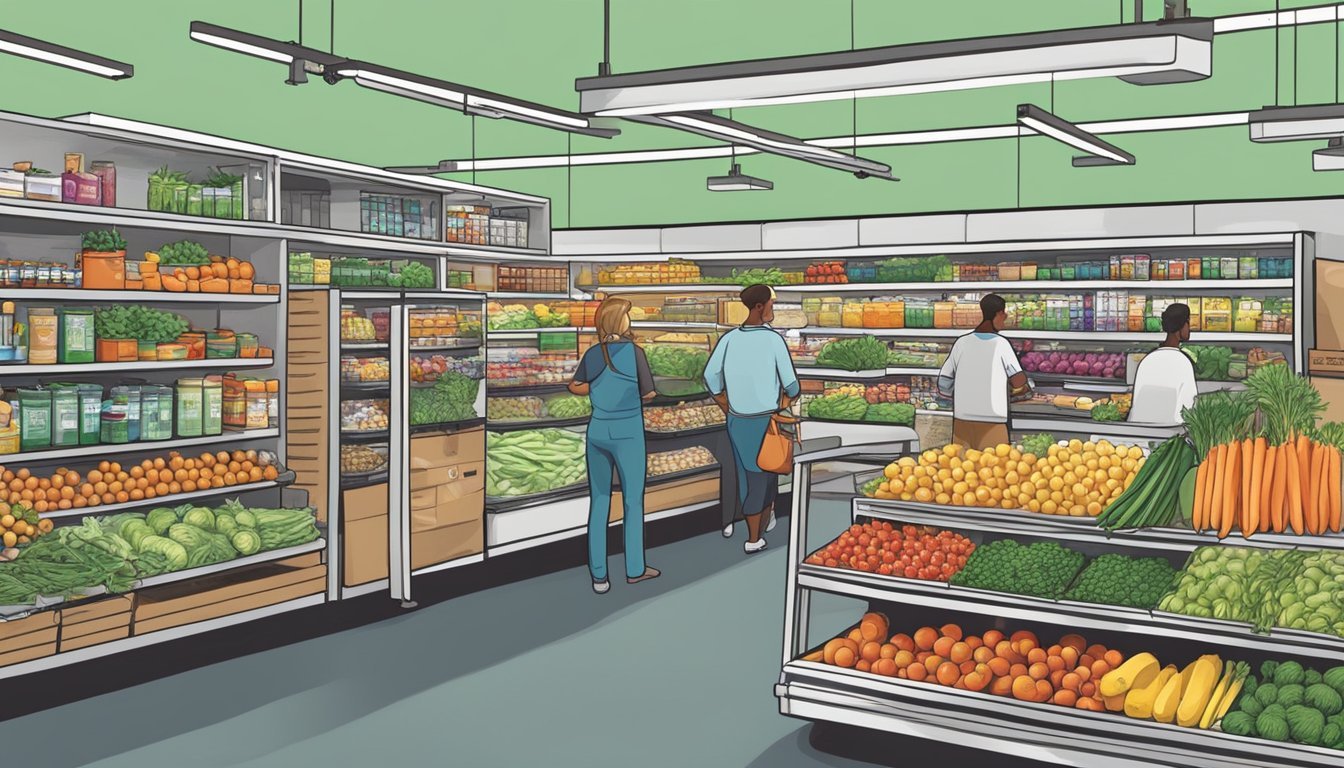
Des Moines offers a tapestry of food cooperatives that exemplify the strength of community and commitment to local produce. Consumers interested in supporting local farmers and acquiring fresh, organic products have ample options. Iowa Food Cooperative stands out with its commitment to fostering direct consumer-producer relationships through an online marketplace and physical storefront.
The key advantages of food co-ops for Des Moines residents include:
Support for Local Agriculture: Directly contributes to the local economy and sustenance of Iowa farms.
Access to Fresh, Organic Produce: Ensures a supply chain of fresh, seasonal ingredients for a healthier diet.
Eco-Friendly Shopping: Reduces the carbon footprint associated with long-distance transportation of goods.
Food Co-ops in the region have evolved over time, adapting to technological advancements and consumer preferences. Initiatives like the Iowa Valley Food Co-op illustrate successful models that other communities can replicate.
Residents keen on integrating healthy eating habits and community support into their lifestyle are encouraged to participate in these cooperative ventures. By doing so, they reinforce a sustainable food system within Des Moines, while also benefiting from the rich variety of products that Iowa farms have to offer.