
How Altitude Affects Packaged Food Stability
Key Factors and Practical Implications
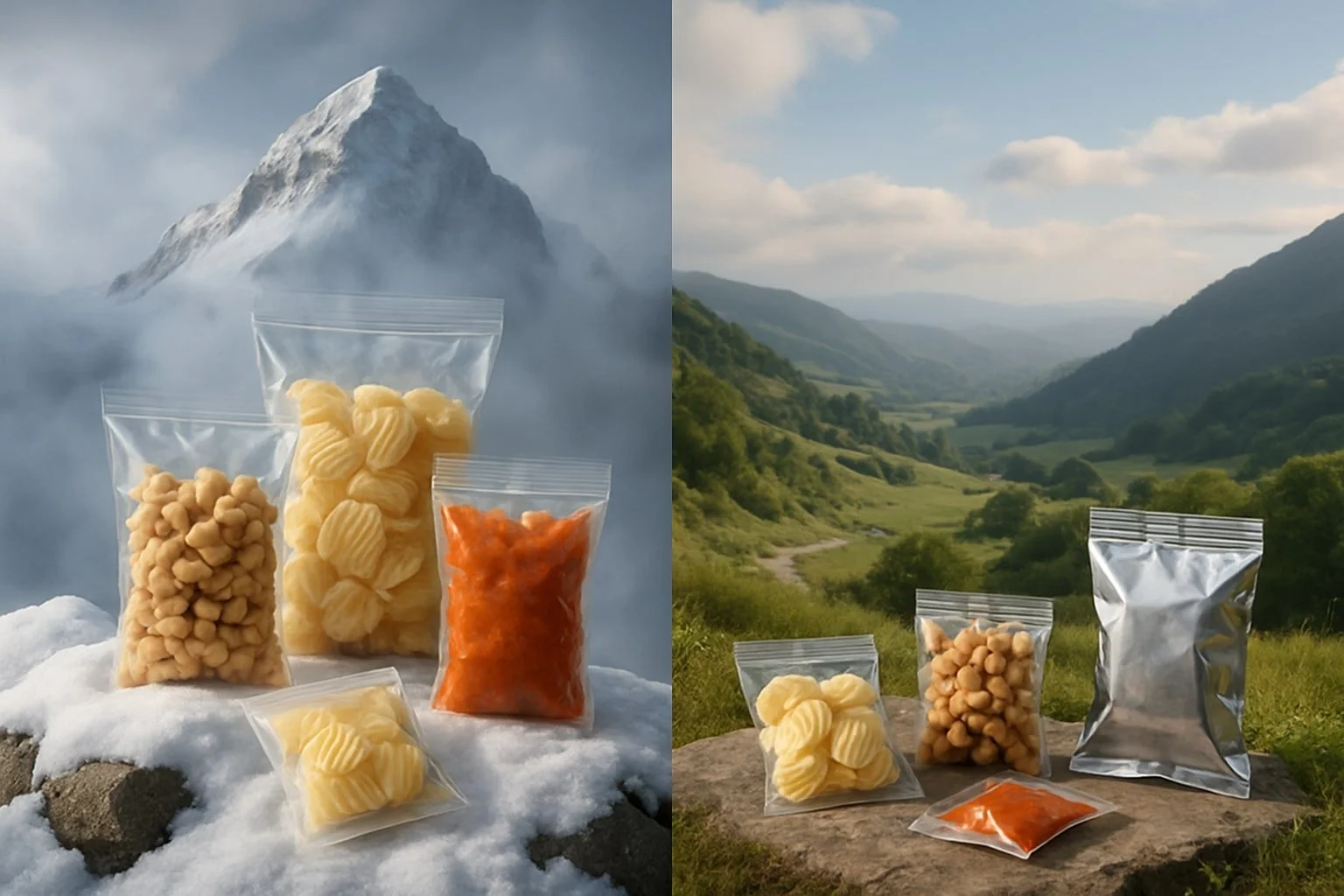
Altitude can have a significant impact on packaged food stability by changing air pressure, which affects both packaging integrity and the shelf life of products. At higher elevations, the lower atmospheric pressure can cause packages to expand or even burst, making it crucial for manufacturers to test and optimize packaging for these conditions. Filling packages with inert gases not only cushions the product but also helps maintain freshness by reducing oxidation.
Food packaged for transport or sale in high-altitude regions often faces increased risks of spoilage and damage, which may lead to both financial losses and food waste. Understanding how pressure changes alter the way packaging materials behave helps ensure that food remains intact and fresh from the factory to the consumer. Readers interested in the science behind these changes and practical solutions will find valuable insights throughout this article.
Fundamental Effects of Altitude on Packaged Food Stability
High altitude conditions can disrupt the stability of packaged foods because lower atmospheric pressure affects both the internal and external environment of the packaging. These changes influence package integrity, boiling temperatures, moisture retention, and the risk of spoilage.
Relationship Between Altitude and Atmospheric Pressure
As altitude increases, atmospheric pressure decreases. This reduction means there is less force pressing on the exterior of packaged foods.
A lower external pressure can cause packaging to bulge as the pressure inside the package becomes higher relative to the outside. This change can sometimes break seals or lead to leaks, particularly for vacuum-sealed or airtight products.
Pressurized packaging is especially vulnerable during rapid altitude changes, such as transport through mountainous areas or air travel. Such pressure fluctuations may compromise the integrity of the seal and increase the possibility of contamination or spoilage.
Altitude Atmospheric Pressure Sea Level ~101.3 kPa 1,500 meters ~84.1 kPa 3,000 meters ~70.1 kPa
Impact of Boiling Point on Food Safety
At higher altitudes, the boiling point of water drops. For every 300 meters (about 1,000 feet) above sea level, water’s boiling point falls by roughly 1°C (1.8°F).
This lower boiling temperature affects how effectively heat penetrates and sterilizes food, which is critical in processes like canning or cooking packaged meals. If food doesn't reach a high enough temperature, harmful bacteria may not be destroyed.
For example, in high-altitude areas, canned foods require both longer processing times and higher pressures to compensate for the lower boiling point. Failure to adjust cooking or processing times for altitude can lead to unsafe or underprocessed products.
Altitude Boiling Point of Water (°C) Sea Level 100.0 1,500 meters ~95.0 3,000 meters ~90.0
Moisture Loss and Spoilage in Packaged Foods
Lower atmospheric pressure at high altitude accelerates the evaporation of water from foods and packaging. As water evaporates more quickly, foods can become dry or lose textural quality.
Faster moisture loss can also cause shrinkage or hardening, negatively impacting both appearance and taste. For products with moisture-sensitive packaging, these changes can lead to the formation of air pockets, which increases the potential for spoilage, oxidation, and mold growth.
Food safety risks are heightened if moisture escapes and condenses inside packaging, or if package seals are compromised. Maintaining food quality at high altitudes often requires packaging with superior barrier properties and careful checking for compromised seals after exposure to altitude changes.
Food Preservation Techniques at High Elevations
Cooking and food preservation at high altitude present specific challenges, especially for low-acid foods. Atmospheric pressure affects boiling points and processing times, making reliable equipment and proper adjustments essential for safe home food preservation.
Pressure Canning for Low-Acid Foods
Pressure canning is critical for preserving low-acid foods such as meats, vegetables, and some legumes at high altitudes. At higher elevations, water boils at a lower temperature, which means traditional boiling methods do not reach the heat required to kill harmful bacteria like Clostridium botulinum.
A pressure canner creates an elevated-pressure environment, allowing temperatures to reach above 240°F (116°C). Home canners must increase the pressure setting as altitude increases. For example:
Altitude (ft) Pressure (psi, Dial Gauge) 0-2,000 11 2,001-4,000 12 4,001-6,000 13 6,001-8,000 14
Following tested recipes and proper canner maintenance is necessary to ensure safe preservation of low-acid foods. Neglecting altitude adjustments can result in under-processed jars and increased food safety risks.
Home Food Preservation Considerations
Home food preservation techniques must be adjusted for altitude. Water bath canning is not safe for low-acid foods at any elevation, but for high-acid foods, extra time is needed at higher altitudes to compensate for the lower boiling temperature.
Other factors like low humidity can cause faster evaporation from foods during cooking and processing, potentially impacting texture and safety. Covering foods tightly during heating or canning helps prevent excessive moisture loss.
It’s important to consult up-to-date guides that specify time and pressure adjustments for altitude. Inadequate processing can lead to microbial growth or spoilage, especially in low-acid foods. Accurate measurement of altitude and careful record-keeping are recommended for all home preservers.
Role of Pressure Cookers and Pressure Canners
A pressure cooker and a pressure canner may look similar, but their functions are distinct. Pressure canners are designed for preserving food in jars and can monitor specific pressures needed for safe processing of low-acid foods. Most pressure cookers are not approved for home canning due to inability to maintain precise temperatures and pressures uniformly throughout the chamber.
At high altitudes, only true pressure canners, equipped with reliable gauges or weighted regulators, should be used for canning. Regular testing and calibration of gauges are recommended to ensure accurate operation.
Proper maintenance of gaskets, valves, and safety locks ensures equipment performance and safety during food preservation. This is especially important when dealing with the increased risks associated with processing food at elevations above 1,000 feet.
Baking Stability and Recipe Adjustments

Lower air pressure at higher altitudes affects the performance of leavening agents, often causing baked goods to rise more rapidly and then collapse. Baking times and ingredient ratios typically need modification to ensure proper texture and structure.
Leavening Agents and Over-Rising Risks
High altitude reduces atmospheric pressure, causing leavening agents like baking powder, baking soda, and yeast to act more quickly. This accelerates gas expansion and can make baked goods rise too fast.
Such rapid rising increases the risk of over-rising, leading to collapsed cakes, tunnels in loaves, or irregular crumb structures. Bakers often reduce the amount of baking powder or baking soda by 1/8 to 1/4 teaspoon per teaspoon used at sea level.
For yeast, dough may ferment faster. It is recommended to monitor rise times closely, punch down doughs earlier, or reduce overall yeast to avoid overproofing.
Adjusting Baking Temperature and Times
The boiling point of water decreases at higher elevations, so baked goods lose moisture more quickly. Increasing oven temperature by 15–25°F (about 10–15°C) helps set the structure of cakes, quick breads, and yeast breads before gas escapes.
Shortening the baking time may also prevent over-drying. Always check for doneness early and consider using toothpick or internal temperature tests for accuracy.
Table: Common Adjustments
Factor Adjustment at High Altitude Baking Temp Increase by 15–25°F Bake Time Decrease by 5–8 minutes (for cakes) Liquid Increase by 2–4 tbsp per cup
Effects on Quick Breads and Yeast Breads
Quick breads (e.g., muffins, banana bread) are especially vulnerable to over-rising and dryness. The batter can lose moisture quickly, so a minor increase in liquids is often recommended.
Yeast breads may rise too quickly, risking coarse texture or weak structure. Doughs should be punched down sooner, and second proofs monitored closely to avoid collapse.
Reducing sugar helps both quick and yeast breads, as sugar speeds fermentation and increases dryness. A consistent structure is more achievable with careful control of leavening and hydration.
Recipe Adaptations for High Altitude Baking
For more reliable results, several recipe adjustments are common:
Reduce leavening agents (baking powder, baking soda) by up to 25%
Increase liquids by 1–2 tablespoons per cup of flour, as needed
Add an extra egg for cake recipes to improve moisture and structure
Decrease sugar by 1–2 tablespoons per cup to minimize over-browning and instability
Weight measurements are more accurate than volume. Always test recipes in small batches before scaling up changes. These modifications help maintain texture, flavor, and appearance when baking at elevation.
Cooking Methods and Their Adaptation to Elevation
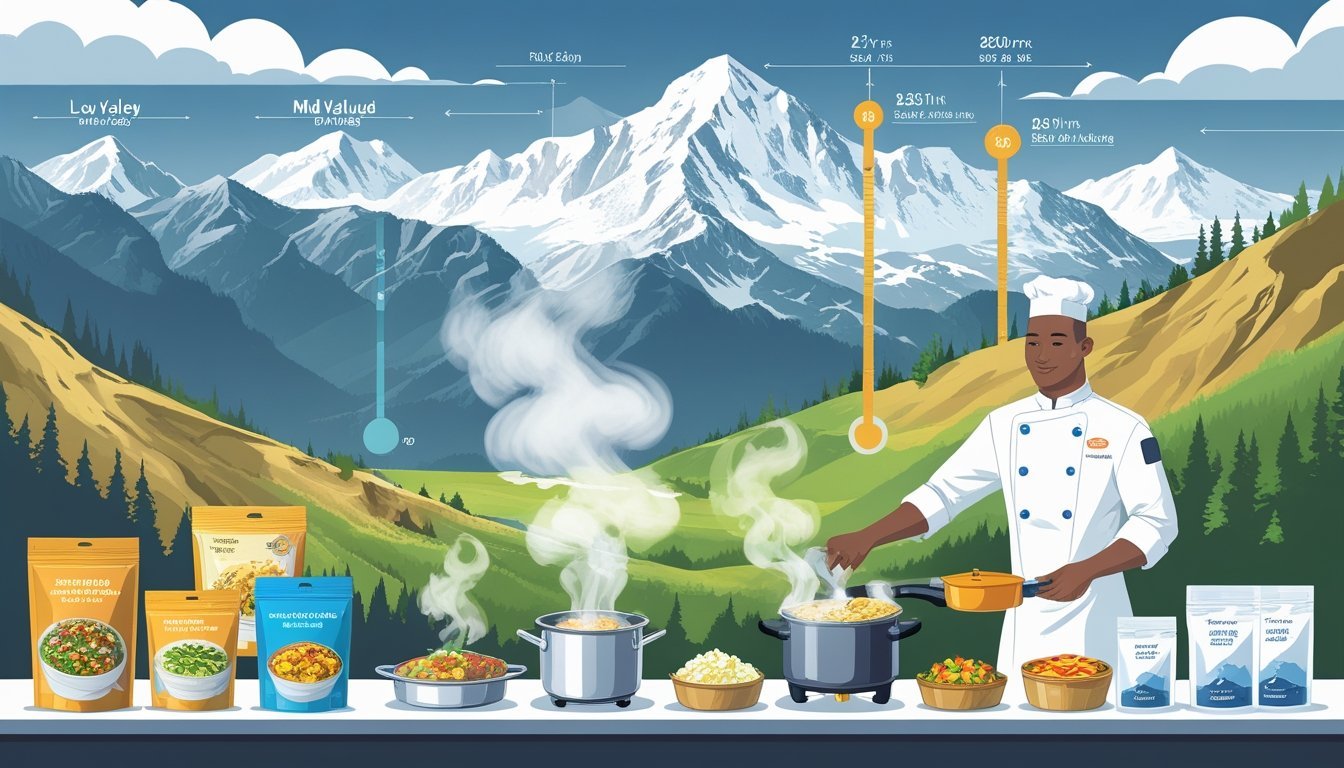
Cooking packaged foods at high altitude requires adjustments to method and timing. Reduced atmospheric pressure leads to faster evaporation of moisture and lowers the boiling point of water, impacting heat transfer and food safety.
Slow Cookers and Microwave Cooking
Slow cookers are frequently used for convenience but require longer cooking times at high altitude. The lower boiling point of water means foods may not reach or maintain safe internal temperatures as quickly. This can be addressed by increasing cooking times and avoiding unnecessary lid removal, as every lift can cause heat and steam loss that is harder to regain.
Microwave cooking is also affected because moisture evaporates faster, possibly leaving foods undercooked on the inside. It is recommended to use a food thermometer to confirm that packaged meals have reached the manufacturer’s suggested temperature. Foods with higher water content might dry out faster during microwave reheating, so covered containers or added liquid can help.
Challenges in Candy Making and Deep-Fat Frying
Candy making at high altitude presents significant challenges. Lower air pressure decreases the boiling point of sugar solutions, causing syrups to reach target stages at lower temperatures. This means recipes may need temperature adjustments: for every 1,000 feet above sea level, the boiling point drops by about 2°F (1°C). It is important to calibrate thermometers frequently and rely on temperature, not visual cues.
Deep-fat frying is also affected as water in foods evaporates more quickly. This can lead to drier products or uneven results. Oil in fryers may need to be heated slightly higher to compensate for the faster evaporative loss and to ensure that batter forms a stable, crisp exterior without absorbing excess oil. Careful temperature monitoring avoids undercooked or greasy packaged snacks.
Hard-Cooked Eggs: Stability and Safety
Hard-cooked eggs cooked at high altitude often have rubbery whites and undercooked centers. The boiling point of water decreases, so eggs need to be cooked for a longer period to ensure food safety and desired consistency. It is recommended to cover eggs with water, bring to a gentle boil, and extend the simmering time.
Peeling can be harder due to the rapid evaporation and potential changes in shell membrane stability. Placing cooked eggs in cold water immediately after cooking helps with peeling and reduces the risk of overcooking. These adaptations are essential for ensuring the safety and quality of eggs in packaged foods or meal kits at elevation.
Managing Cooking Times and Temperatures
Lower air pressure at high altitudes causes water and other liquids to boil at lower temperatures, which affects both the safety and texture of cooked foods. Adjustments to cooking times and temperatures, along with careful use of a food thermometer, help ensure packaged meals are prepared thoroughly and safely.
Cooking Times at High Elevation
Cooking at high altitudes can increase the time needed to fully prepare packaged foods, especially those requiring simmering or boiling. Water boils at lower temperatures—about 203°F (95°C) at 5,000 feet—so food may cook less efficiently compared to sea level.
Foods like rice, pasta, and dried beans may require up to 25% more time to become tender. For example, a packaged soup that takes 15 minutes to simmer at sea level could require almost 19 minutes at higher elevations. Some meats and poultry, particularly those prepared with moist heat methods, often need significant time adjustments.
Using package instructions as a baseline, the following adjustments are typical:
Elevation Cooking Time Increase 3,000-5,000 feet 15–20% longer 5,000+ feet 20–25% longer
Packaged foods that rely on boiling water—instant noodles, dehydrated meals—may also be less hot when "cooked," requiring careful monitoring to prevent undercooking.
Using a Food Thermometer Effectively
A food thermometer is essential for checking if packaged meals have reached safe internal temperatures when cooking at high altitudes. Since boiling water is less hot, the risk of undercooked food increases for both prepared and reheated products.
Insert the thermometer into the thickest part of the food, away from packaging or bone, to verify it has reached the recommended internal temperature. For most ready-to-eat items, a minimum of 165°F (74°C) is necessary for safety.
Because the environment may cause uneven heating, consider checking in several spots before serving. For reheatable packaged meals, stir the contents and recheck the temperature to ensure uniform heat throughout. Using a digital thermometer can improve accuracy, especially in camp or outdoor conditions.
Spoilage Risks and Preventive Measures
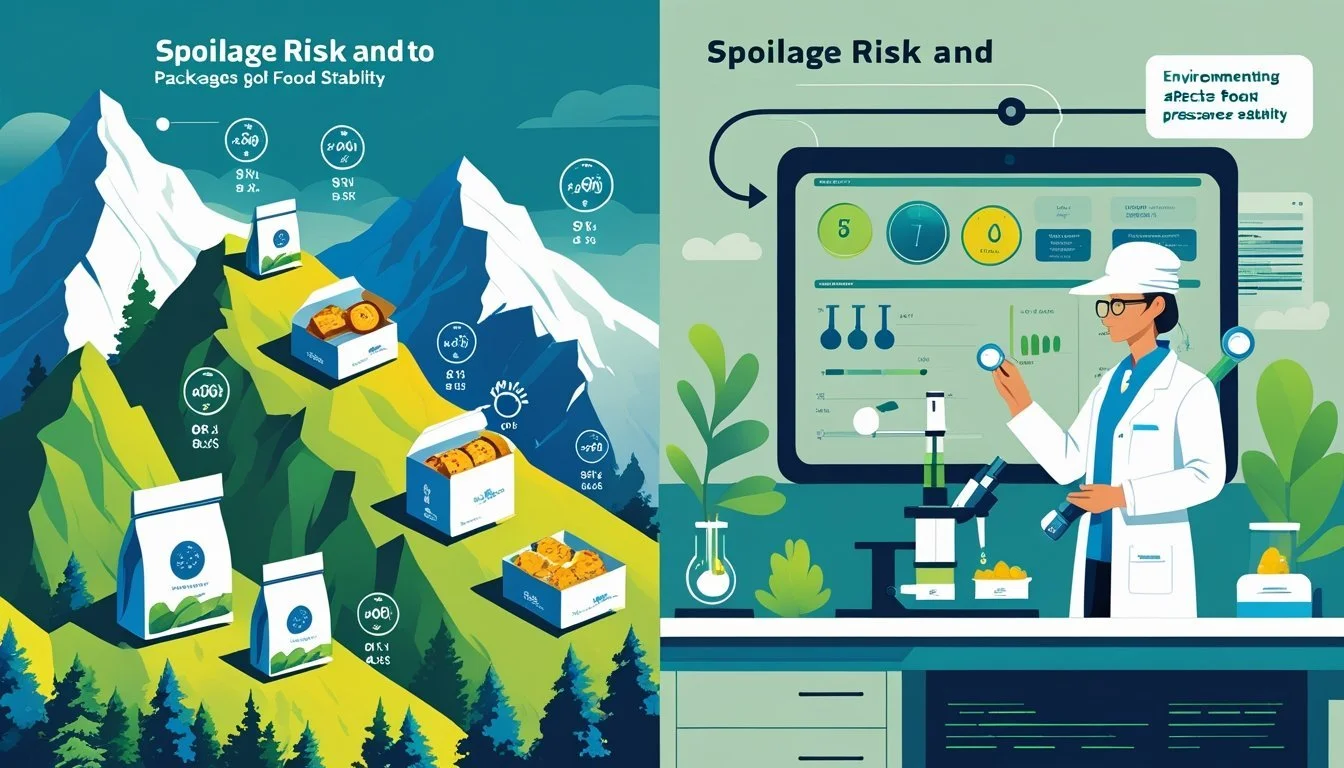
Packaged foods face unique challenges at higher altitudes due to changes in air pressure, potential for moisture loss, and accelerated spoilage processes. Managing these risks requires attention to packaging integrity, temperature control, and proper storage methods to help maintain food safety and quality.
Common Spoilage Patterns at Altitude
At higher elevations, lower air pressure can cause packages to expand. Bags containing inert gas, such as snack foods, may become bloated, increasing the risk of packaging rupture and exposure to contaminants.
The decreased pressure also accelerates moisture loss from foods like bread, cakes, and other baked goods, leading to staleness. Foods with high moisture content may lose water more quickly, increasing spoilage rates and impacting texture and freshness.
Microbial growth is affected by environmental changes. Temperature fluctuations at altitude can disrupt the stable conditions most packaged foods require, allowing spoilage organisms to grow faster if not refrigerated or stored correctly.
Storage Practices for Packaged Food
Effective storage at altitude starts with keeping foods in airtight, undamaged packaging to minimize air exchange and moisture loss. Checking for package integrity before storing is important to prevent accidental spoilage or contamination.
Temperature control is a key factor for food safety, especially for perishables. Refrigerated and frozen items should be stored promptly, as lower boiling points and thinner air can challenge refrigeration efficiency. Most shelf-stable goods should be kept in a cool, dry place, away from sunlight.
Organizing foods to encourage first-in, first-out (FIFO) use, along with regular inspection for spoilage signs, helps reduce waste. For foods sensitive to air and moisture, secondary containment such as resealable plastic bags or rigid containers can provide extra protection.
Future Trends and Research Needs
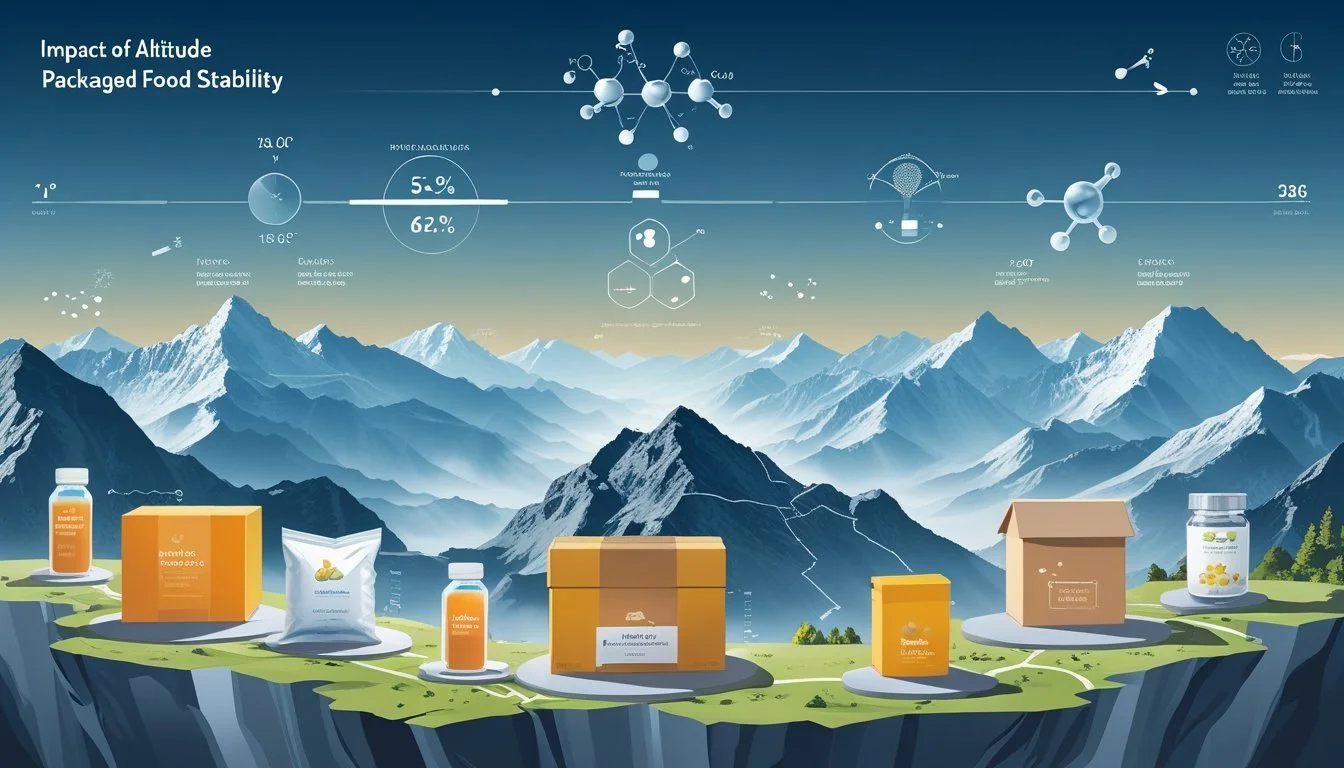
High altitude poses ongoing challenges for the integrity and safety of packaged foods. Innovations and targeted research are helping address altitude-related stability issues for food products, but considerable knowledge gaps remain.
Emerging Solutions for Food Stability
Recent advances are focusing on packaging materials and technologies engineered to withstand pressure changes at higher altitudes. Modified atmosphere packaging and reinforced sealing methods are being adopted to reduce the risk of package failure, as abrupt altitude changes can compromise package integrity and shelf life.
Sensor technology embedded in packaging is a growing trend. These sensors can monitor environmental factors such as internal pressure, temperature, and humidity, providing real-time data throughout the supply chain. This allows for early detection of compromised packaging and helps maintain food safety standards.
Adoption of bioplastics and flexible materials that adapt to pressure differentials is also gaining interest. These materials can help prevent leaks and deformation, which are common problems when packaged foods are transported through areas with significant altitude variation.
Research Gaps in Altitude and Packaged Food Science
There is limited research on how different packaging materials respond to repeated or extreme altitude exposure. While some products withstand pressure changes well, many common materials lack published performance data under these conditions.
Key areas that require further study include:
Long-term effects of altitude-induced pressure changes on food spoilage rates
Comparative performance of packaging types in simulated altitude environments
Optimization of packaging for a variety of food textures and densities
More collaboration between packaging engineers, food scientists, and logistics experts is needed. Validated protocols for high-altitude simulation and real-world testing environments would help identify best practices and standards for the food industry.

