
Industrial vs Home Storage: Shelf Life Differences Explained for Optimal Product Longevity

The shelf life of a product stored under industrial conditions is typically much longer than when the same product is kept at home, mainly due to controlled environments and specialized packaging. Industrial storage uses strict temperature control, humidity management, and protective packaging to maximize how long food or other items remain usable or safe. These methods are designed to slow spoilage and maintain quality for extended periods.
In comparison, home storage environments can be less consistent and may expose products to fluctuating temperatures, varying humidity, and frequent opening and closing, which can all reduce shelf life. Even after opening, many items experience what is called a secondary shelf life, meaning the usable time shortens further once packaging is broken. These differences highlight why people might notice food lasting much longer in professional facilities than in their own kitchens.
Defining Industrial and Home Storage
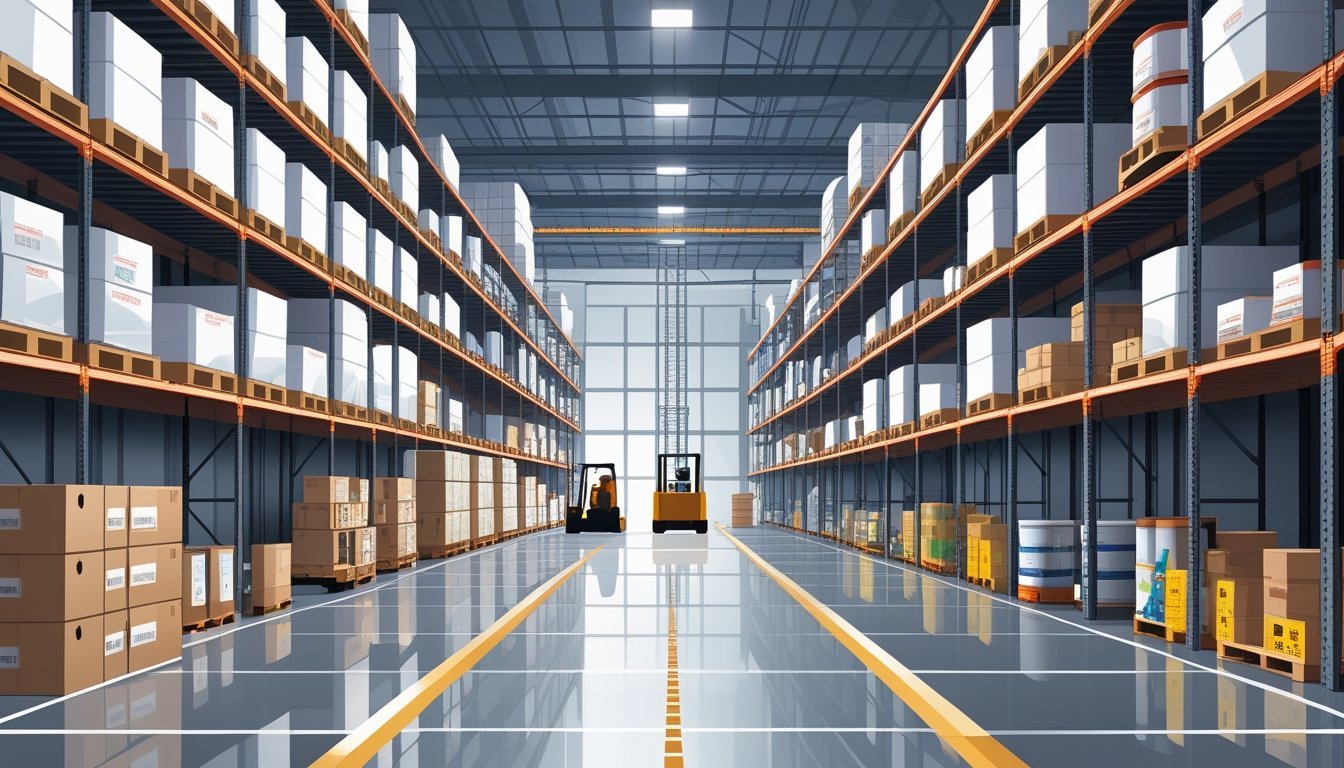
Industrial and home storage serve different purposes, environments, and requirements. Each uses specific storage systems to handle the types of items and quantities they are designed for.
What Is Industrial Storage?
Industrial storage refers to storage solutions used in commercial and manufacturing environments such as warehouses and distribution centers. It often involves large-scale storage systems like pallet racking, heavy-duty shelving, and specialized material handling equipment.
These systems are designed to support high load capacities, usually measured in thousands of pounds per unit. Industrial shelving is typically constructed from steel or other robust metals to maintain strength and durability under significant weight.
Organizational efficiency is important, so racks, shelves, and bins are often arranged to optimize space and workflow. They accommodate everything from bulk products to individual parts, relying on equipment like forklifts for access.
Industrial storage configurations are selected based on product storage needs, frequency of access, and safety standards. This type of storage aims to maximize density and accessibility while minimizing handling risks.
What Is Home Storage?
Home storage covers systems used within residential settings for managing personal items, clothing, and household goods. It includes traditional shelving, closets, cabinets, and smaller storage furniture.
Unlike industrial units, home storage prioritizes easy access, aesthetics, and flexibility over maximum load capacity. Materials range from wood and plastic to lighter metals. These storage systems are usually designed for lower weight limits, typically up to a few hundred pounds per shelf.
Home storage solutions often blend into the living space design and allow for regular rearrangement. They rarely require additional equipment for access, focusing instead on user-friendly design, customization, and space-saving efficiency for everyday living.
Key Shelf Life Differences Between Industrial and Home Storage
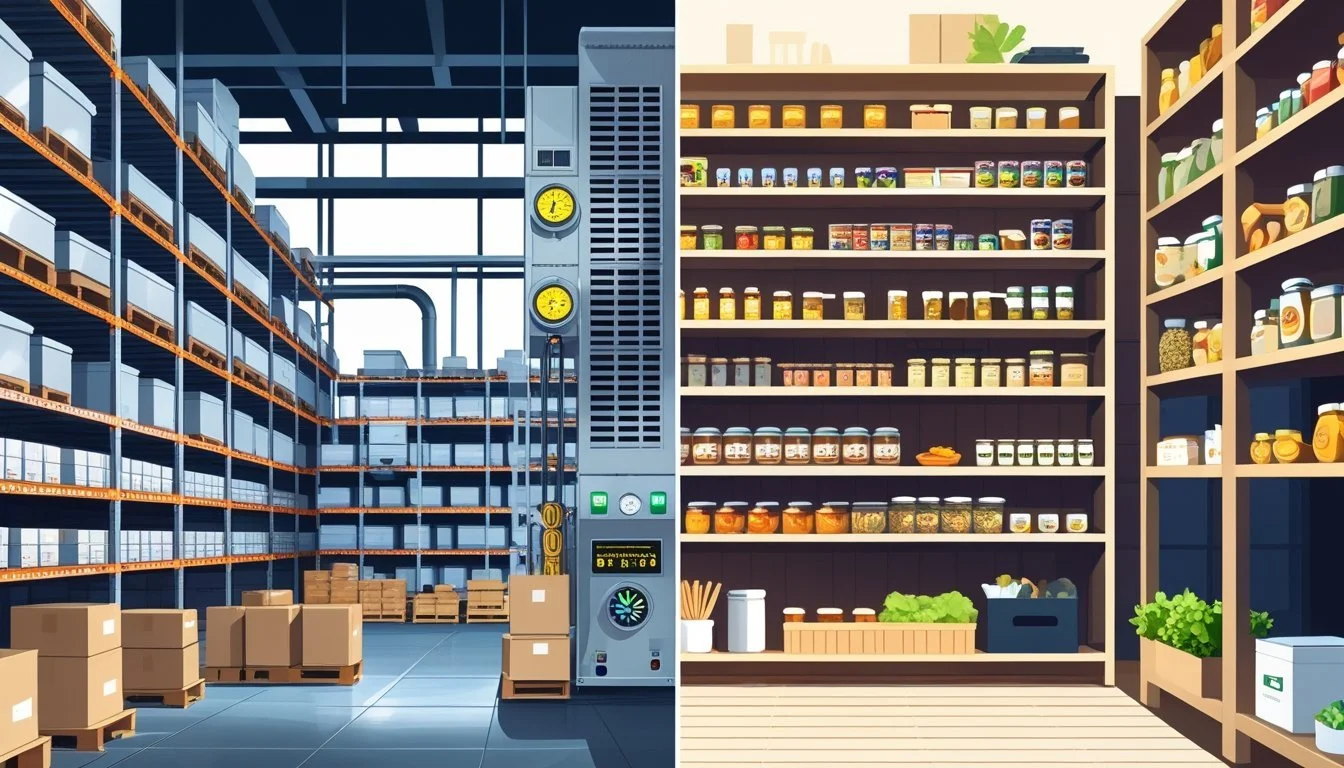
Industrial and home storage systems differ in how they protect items from spoilage and how they manage expiration dates. Industrial facilities prioritize long-term preservation requiring specialized methods, while home storage focuses on daily use and accessibility.
Factors Impacting Shelf Life
Shelf life depends on environmental control, product handling, and storage container types.
Industrial storage uses climate-controlled warehouses to regulate temperature and humidity. This minimizes spoilage of food products and prevents degradation of pharmaceutical products. Storage is often optimized with pallet racking systems designed for high turnover and protection from contaminants.
Home storage has far less environmental control. Typical household refrigerators or pantries can allow fluctuations in conditions, making foods and medicines more susceptible to early spoilage. Items stored at home are often removed and replaced, increasing the risk of contamination or improper sealing.
Materials used also play a role. Industrial storage favors heavy-duty containers, often made of metal or high-grade plastic, which provide extra protection and extend shelf stability. Home storage relies more on lightweight containers and packaging that can be less effective over time.
Expiration Dates and Labeling
Labeling practices for expiration and expiry dates vary greatly.
Industrial products must follow strict regulations about date labeling, especially for food products and pharmaceuticals. These labels are clear, often including both manufacturing and expiration dates for traceability. Often, inventory is rotated using a first-expired, first-out (FEFO) system to reduce spoilage.
In home settings, expiration dates are still present, but labels may be less prominent or interpreted loosely. Consumers may ignore best-by dates or be unaware of the difference between shelf-stable and perishable goods.
Industrial environments often use barcode or RFID systems for detailed tracking of shelf life and automatic alerts for upcoming expirations. Home storage rarely has such tracking, relying instead on visual checks and memory. This increases the risk of overlooked spoiled products.
Storage Conditions: Temperature, Humidity, and Moisture Control
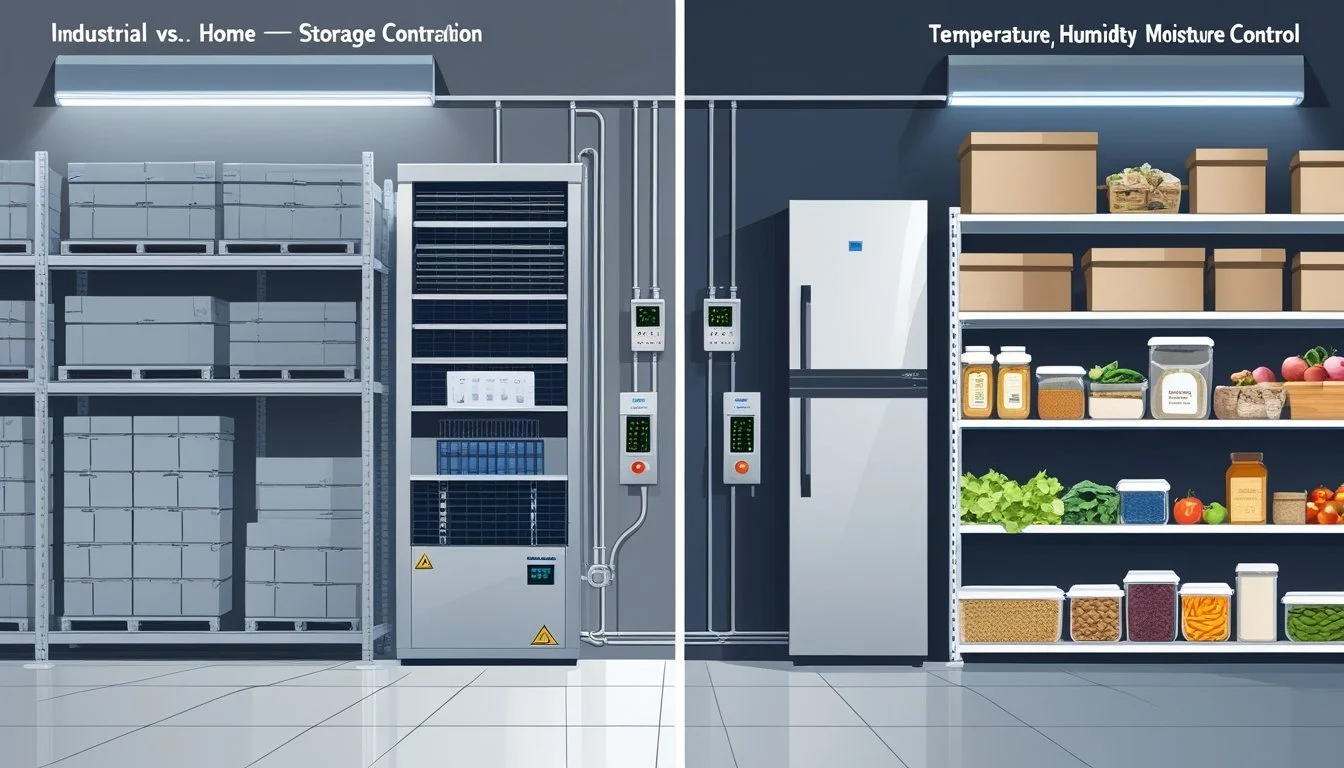
Proper storage conditions are essential for preserving shelf life, food safety, and product quality. The control of temperature, humidity, and moisture levels can make a substantial difference in how long items remain usable in both industrial and home environments.
Temperature Regulation
Temperature control directly impacts how quickly foods and materials degrade. In industrial storage, advanced systems maintain steady temperatures tailored to each product type, often set between 33°F (0.5°C) and 41°F (5°C) for perishables. Home storage may fluctuate several degrees depending on appliance reliability or environmental factors. High temperatures accelerate spoilage, nutrient loss, and microbial growth, especially in items like dairy, meat, and produce.
Extreme heat, such as over 120°F (49°C), dramatically decreases the shelf life of many products, sometimes cutting it by more than half. Industrial warehouses often use sensors and backup systems to reduce this risk, while homes typically rely on standard refrigerators or pantries that may not compensate for sudden temperature changes.
Humidity and Moisture Management
Managing humidity and moisture prevents spoilage, mold, and bacterial growth. Industrial facilities use humidity-controlled environments with precise dehumidifiers or humidifiers, typically maintaining 60% relative humidity or lower for dry goods. For produce and fresh items, higher humidity—up to 95%—keeps items crisp and slows wilting.
In home storage, humidity is less controlled. Pantries may become too dry or damp seasonally, while refrigerators rarely regulate internal moisture beyond simple drawers. Excess moisture can cause caking in dry ingredients, off-odors, and visible spoilage. Dry environments may lead to shriveled produce or cracked packaging.
Storage Type Typical Humidity Control Common Issues Industrial Automated, specific settings Mold, dehydration Home Manual or none Mold, dryness, spoilage
Freezing and Specialized Storage
Freezing is widely used to extend shelf life, mainly in industrial settings where blast freezers can reach -20°F (-29°C) or lower. These systems freeze products rapidly, preserving texture and reducing ice crystal formation, which protects food safety and quality.
At home, standard freezers usually operate at around 0°F (-18°C), and items may freeze more slowly, leading to potential texture changes, especially in fruits or meats. Industrial facilities might also deploy controlled atmosphere storage or vacuum sealing to remove oxygen, further protecting items from spoilage and oxidation.
Specialized storage options in industry can also include climate-controlled rooms for pharmaceuticals, electronics, or fine chemicals, maintaining strict conditions that most homes cannot replicate. This level of control results in significant shelf-life extension and reduced product waste.
Packaging and Packaging Materials
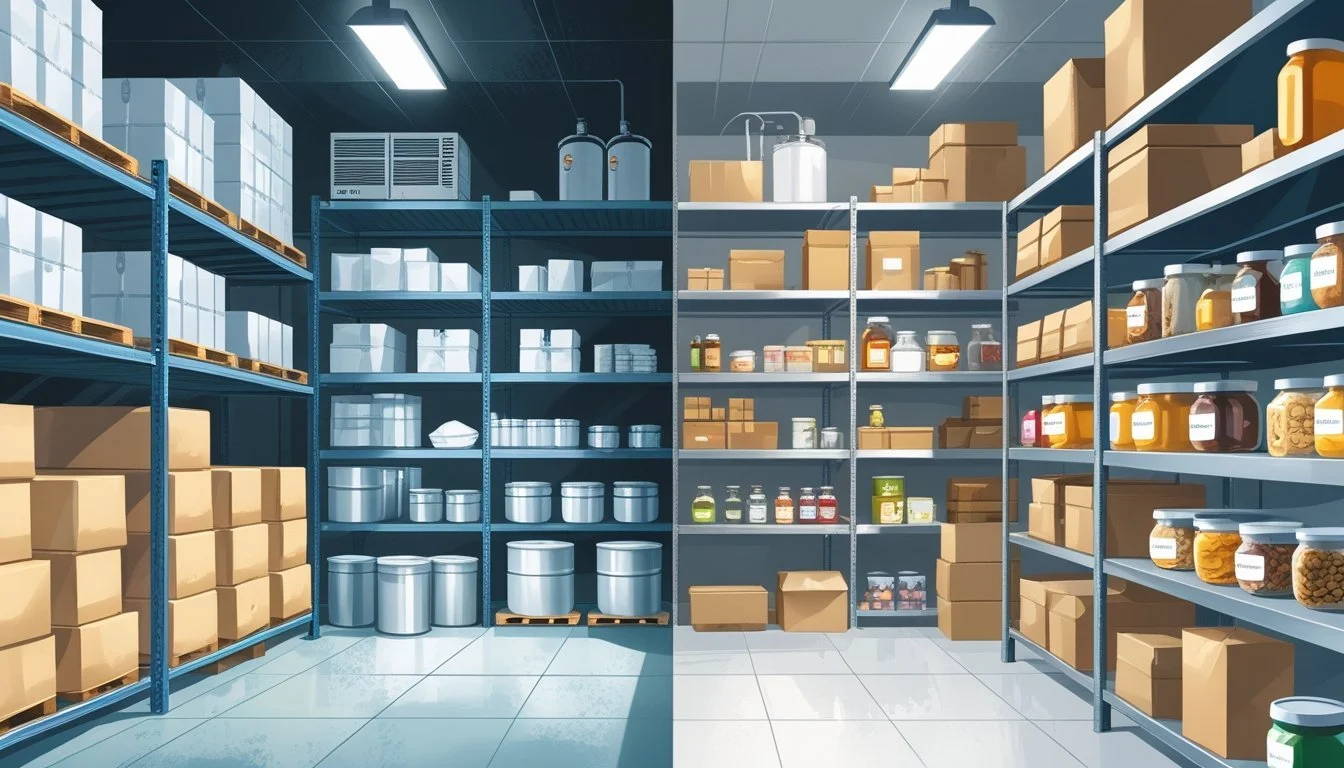
Packaging protects food and household products from contamination, environmental factors, and physical damage. The right materials and techniques determine how long a product stays safe and usable, whether it is stored at home or in an industrial setting.
Role of Packaging in Shelf Life
Packaging acts as a barrier against moisture, light, oxygen, and microorganisms. All of these factors can shorten a product’s shelf life or cause spoilage. Properly sealed packaging prevents leaks and reduces the risk of contamination during both transportation and storage.
Industrial packaging typically uses more robust materials to withstand handling and transit. In contrast, home storage options may prioritize convenience and appearance. Both approaches must balance protection with regulatory and safety requirements to preserve shelf life.
Vacuum sealing and modified atmosphere packaging are common industrial methods. These remove oxygen or replace air with inert gases, which slows down spoilage for perishable goods. At home, airtight containers work well for dry goods and leftovers, but may not offer the same level of protection as specialized industrial options.
Types of Packaging Materials
The choice of packaging materials can significantly impact shelf life and product safety. Common materials include:
Material Main Uses Shelf Life Impact Glass Liquids, canned foods, chemicals Excellent barrier, inert, reusable Plastic Snacks, meat, dairy Flexible, but permeability varies Metal Canned goods, beverages Strong barrier, prevents light Paper/Card Cereals, snacks, dry goods Lightweight, but limited protection
Industrial settings may use heavy-duty plastics or composite materials for extra durability. Home storage usually relies on containers and wrapping designed for ease of use, but long-term effectiveness depends on how well they can exclude air and moisture.
Sustainability is also a growing concern. Many businesses now use recyclable or biodegradable options to minimize environmental impact while still protecting shelf life.
Preservatives and Canning Methods
Both industrial and home packaging sometimes rely on preservatives and canning techniques to extend shelf life. Preservatives—such as salt, sugar, and certain food-grade chemicals—are added to inhibit the growth of bacteria, yeast, or mold. These are especially common in processed foods and canned goods.
Canning uses heat and airtight sealing to kill microorganisms and prevent recontamination. Commercial canning usually employs sterilization under pressure, which allows goods like vegetables, soups, or meats to last for years at room temperature.
At home, water bath and pressure canning are typical methods. These home canning processes require careful control of temperature and sealing to ensure safety and maximize shelf life. Proper labeling and storage conditions are crucial to avoid spoilage or foodborne illnesses.
Inventory Management and Organization
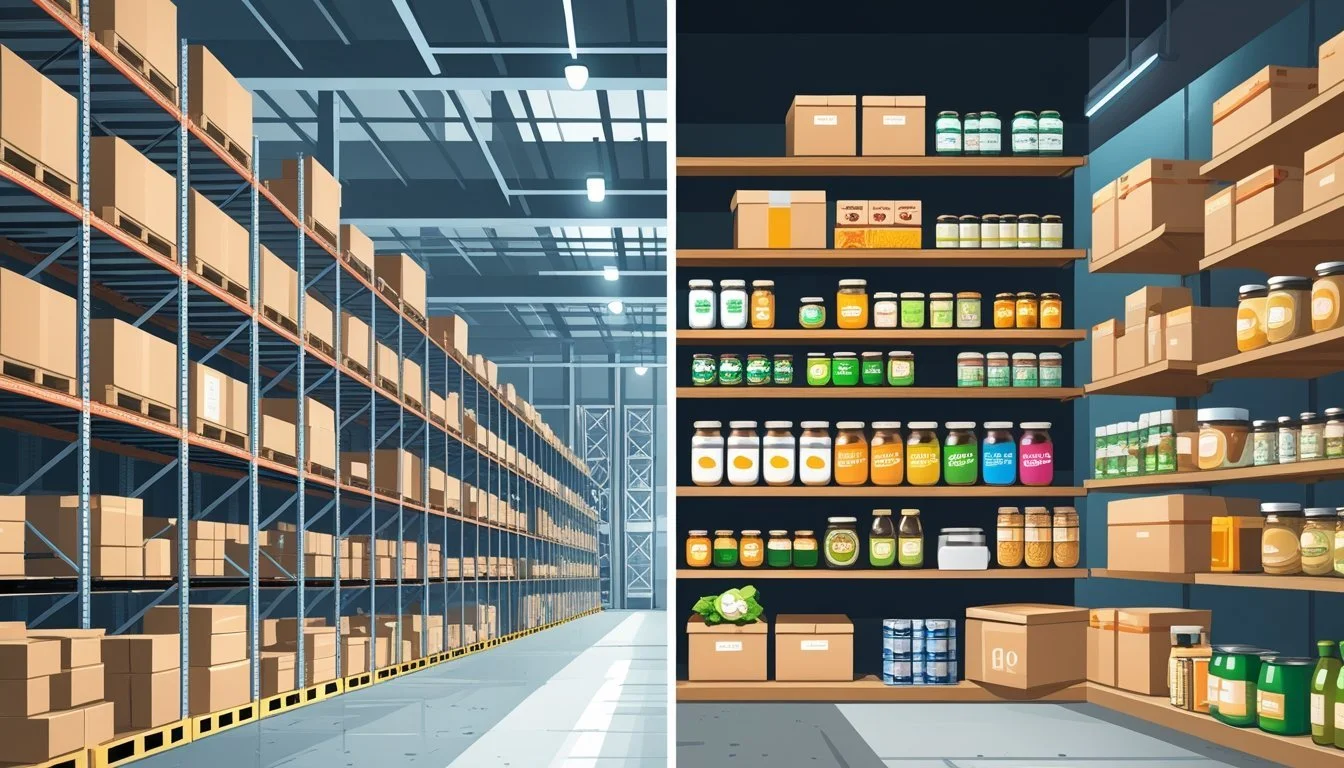
Effective inventory management is central to maximizing shelf life and maintaining product quality. The methods used to track expiry dates, rotate stock, and organize storage areas differ substantially between industrial and home environments.
Tracking Expiry and Rotation
In industrial storage, inventory management systems rely on barcodes, RFID tags, and specialized software to monitor expiry dates and manage rotation. These digital solutions provide real-time data, minimize human error, and help avoid spoilage by supporting First-In, First-Out (FIFO) or First-Expired, First-Out (FEFO) methods.
Home storage typically lacks this level of technology and depends on manual checks and labeling by date. This makes it challenging to maintain strict rotation. Overlooking items with short shelf lives is more common, increasing the risk of expired goods.
Key Comparison Table:
Feature Industrial Storage Home Storage Tracking Automated (barcodes/RFID) Manual Rotation FIFO, FEFO enforced Inconsistent Shelf Life Maximized Often limited
Racking Systems and Warehouse Layout
A racking system in an industrial setting is designed for high-density storage and easy accessibility. Pallet racks, cantilever racks, and automated storage/retrieval systems (AS/RS) are selected based on product type, shelf life, and handling frequency. Proper warehouse layout increases productivity by reducing travel time and streamlining order picking.
Home storage favors shelves, cabinets, or pantries with limited adjustability. Items are often stacked, which can restrict airflow and hinder visibility of expiration dates. The lack of automation and professional design reduces overall organization and efficiency.
Industrial warehouses may also use automation for product movement and stock tracking. This further reduces manual labor and helps maintain a controlled environment, both of which support longer shelf lives for inventory.
Accessibility, Flexibility, and Cost-Effectiveness
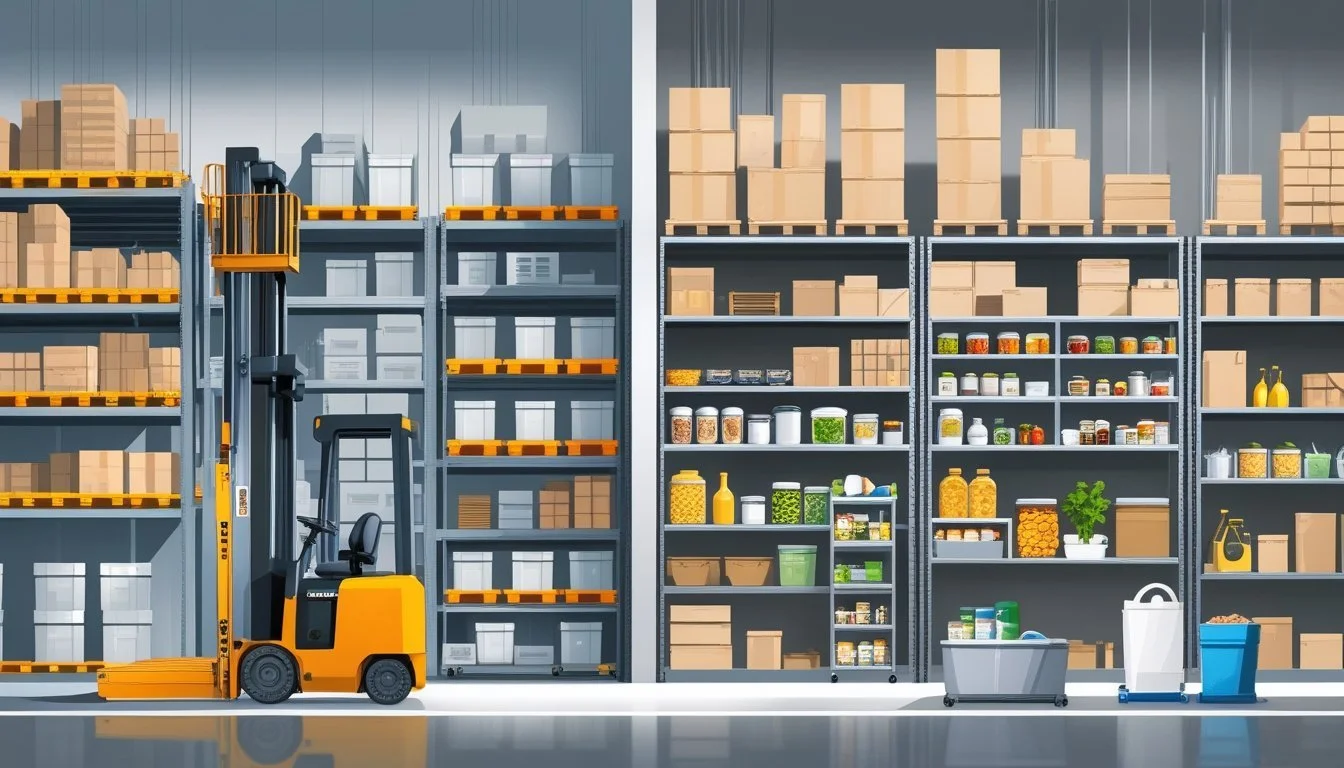
Industrial and home storage options differ in how they balance ease of use, adaptability, and expense. Understanding these distinctions helps select the best system for specific storage needs and expectations.
Ease of Access and Retrieval
Industrial storage systems like racking use vertical height and heavy-duty materials to store large or heavy items. These systems frequently require equipment such as forklifts for retrieval, which can delay access but allows high-density storage.
Home storage typically prioritizes convenience. Shelving is installed at arm’s reach, and most stored items remain easily accessible without special tools or vehicles. This makes retrieving stored goods at home much faster and simpler.
In industrial environments, accessibility often depends on whether the focus is bulk storage (racking) or quick access (shelving or bins). Industrial shelving can improve access to smaller, lighter items when speed is needed.
Storage type Typical Accessibility Equipment Needed Industrial Racking Lower Often – forklift Industrial Shelving Moderate Sometimes ladders Home Shelving High None
Adaptability of Storage Systems
Flexibility is crucial in both settings, but the degree and nature differ. Industrial systems are designed to be reconfigured—racking and shelving often feature modular components. Height, spacing, and orientation can often be adjusted as inventory changes, supporting various item sizes and weights.
At home, storage solutions are also adaptable, though usually at a smaller scale. Adjustable shelves, stackable bins, and modular units allow homeowners to modify storage as needs evolve. Changes in construction or layout are less frequent and simpler to implement in most homes, with tools often limited to basic hand tools.
Industrial environments benefit from custom configurations to match changing workflows. Home users gain flexibility with compact, easily relocatable units suited for closets, pantries, or garages. Some industrial setups can be complex, requiring more planning and specialized labor for major changes.
Cost Considerations
Cost-effectiveness in storage is influenced by both initial investment and maintenance over time. Industrial systems use robust materials like steel and reinforced supports, increasing upfront costs but extending lifespan and load capacity. These systems are often more economical for maximizing space in high-volume operations, despite higher starting expenses.
Home storage usually involves less expensive materials such as plastic, medium-density fiberboard, or lighter metals. These are satisfactory for smaller loads and help balance price with adequate durability. Home solutions generally require less complex installation, reducing labor costs.
Maintenance for industrial storage may include periodic safety checks, part replacements, or upgrades as needs change. Home storage rarely needs more than occasional cleaning or fastener tightening.
Factor Industrial Storage Home Storage Initial Cost High Low to moderate Material Heavy-duty (steel, etc.) Lightweight (plastic) Maintenance Regular, technical Minimal, simple

