
Adapting Substitutes for High Altitude Cooking
Effective Ingredient Swaps and Tips
Cooking and baking at high altitude presents unique challenges, often requiring specific adjustments to recipes for successful results. At higher altitudes, cooks need to make thoughtful substitutions and changes to ingredients, such as using more liquid, increasing baking time, and choosing flours with more protein to ensure structural integrity in baked goods. These tweaks help counteract the effects of lower air pressure, which can cause cakes to collapse or cookies to spread too much.
Substituting ingredients like buttermilk or sour cream instead of regular milk can improve texture and moisture in high-altitude recipes. Bakers also benefit from changing flour types, balancing leaveners, and adjusting boiling times to account for elevation. With a basic understanding of these substitutions, anyone can adapt their favorite recipes for high-altitude conditions and achieve reliable results.
Understanding High Altitude Cooking

High altitude cooking involves unique challenges related to changes in air pressure and ingredient behavior. Temperature and moisture differences can affect everything from cooking methods to leavening reactions.
The Science of Air Pressure and Boiling Points
At high altitudes, atmospheric pressure drops compared to sea level. This reduction in pressure lowers the boiling point of water.
For instance, at sea level, water boils at 212°F (100°C). But at 5,000 feet, it boils closer to 203°F (95°C). The lower boiling point means foods simmer at a lower temperature, so cooking times typically increase.
Boiling, simmering, and other moist-heat methods become less efficient as altitude rises. Baking at high altitudes can also be affected since water and other liquids evaporate more quickly, influencing the overall moisture content of doughs and batters. Bakers often need to increase baking time or temperature to achieve desired results.
Altitude’s Effect on Ingredients
Many ingredients behave differently at high altitudes due to changes in air pressure and moisture loss. Leavening agents like baking powder and baking soda can produce gas too quickly, causing baked goods to rise rapidly and then collapse.
Key adjustments often include:
Reducing leavening agents by about 1/8 to 1/4 teaspoon per teaspoon at elevations above 3,000 feet.
Increasing liquids to compensate for quicker evaporation, usually by adding 1-2 tablespoons per cup.
Sometimes adding extra flour to strengthen dough structure and prevent cakes and breads from falling.
Sugar may need to be slightly reduced since its concentration increases as water evaporates faster. These baking adjustments help produce consistent, stable results even when altitude affects baking conditions.
Common Challenges When Baking at High Altitudes
High altitude baking often leads to noticeable changes in baking times, the texture and rise of baked goods, and how much moisture is lost during baking. These factors create unique challenges that require careful adjustments to recipes and techniques.
Inconsistent Baking Times
At high altitudes, reduced air pressure leads to faster evaporation of liquids. Because of this, cakes, cookies, and breads may bake more quickly or sometimes unevenly.
Oven temperature settings may not yield the same results as at sea level. It is common for baked goods to brown on the outside before the inside is fully cooked.
Quick reference:
Challenge Effect Response Rapid moisture loss Shorter baking time Watch closely for doneness Fast crust formation Over-browned exteriors Lower oven temp slightly Underbaked interiors Dense or wet centers Use a toothpick to check
Accurate timing is key. Bakers may need to begin checking for doneness several minutes before the original recipe suggests.
Texture and Rise Issues
Lower atmospheric pressure at high altitude allows leaveners such as baking powder and baking soda to produce gases faster, which can lead to quick rising and then collapsing.
This often creates coarse, crumbly textures or sunken centers in cakes and quick breads.
Too much rise too quickly can stretch the structure before it sets, producing large holes or flat tops.
Key adjustments include:
Reducing leaveners (baking powder, baking soda) by 20–60%
Adding an extra egg for cakes to stabilize structure
Mixing less to avoid incorporating excess air
Maintaining stable structure is critical. Reducing sugar and fat slightly may also provide firmer results in sensitive recipes.
Moisture Loss
Baking at altitudes above 3,500 feet accelerates moisture evaporation. This can leave brownies, cakes, and even yeast breads dry or crumbly.
High altitude baking often requires increasing liquids in recipes, such as water, milk, or eggs, to offset loss. Adding 1–2 tablespoons of extra liquid per cup used in the original recipe is a common starting point.
Sealing baked goods promptly after cooling can help retain moisture. For long bakes, covering with foil partway through can prevent excessive dryness.
Careful measurement and adjustment of both baking time and added liquid are necessary to produce tender, moist results.
Key Ingredient Adjustments for High Altitude Baking
Accurate ingredient modifications are necessary when baking at higher elevations. Lower air pressure, increased evaporation, and faster rising times all mean that proportions must be shifted for consistent and successful results.
Adapting Leavening Agents
At high altitude, baked goods rise more quickly. This can cause cakes and breads to collapse before the structure sets.
To prevent this, reduce the amount of leavening agents like baking powder and baking soda by 1/8 to 1/4 teaspoon per teaspoon called for in the recipe. For yeast breads, a similar reduction helps slow down the rise, giving flavors time to develop.
The following table shows typical reductions:
Leavening Agent Sea Level 5,000 ft 7,000 ft Baking Powder 1 tsp 3/4 tsp 1/2 tsp Baking Soda 1 tsp 7/8 tsp 3/4 tsp Yeast 1 pkg 3/4 pkg 2/3 pkg
These adjustments ensure that muffins, cakes, and loaves are stable and have good texture.
Increasing Liquid Ingredients
Evaporation happens faster in high-altitude environments. Extra liquid keeps batters and doughs from becoming dry and helps the structure set during baking.
Increase the total liquids in a recipe by 1 to 2 tablespoons per cup at 3,000 to 5,000 feet. For every 1,000 feet above that, add an additional 1 tablespoon. Milk, water, eggs, buttermilk, or yogurt can be used.
Using higher-protein liquids such as buttermilk or yogurt can improve texture. It’s important not to overdo this addition as too much liquid can lead to dense baked goods.
Modifying Sugar and Flour
Sugar’s ability to trap moisture and add structure is affected at higher altitudes. It is best to decrease sugar by 1 to 2 tablespoons per cup to keep cakes from collapsing.
For flour, increase slightly—about 1 to 2 tablespoons per cup. This helps strengthen the structure and counteracts the effects of rapid rising. Bakers may also benefit from using high-protein flour, such as bread flour, in certain recipes.
Choosing the right type of flour, like all-purpose for cookies or cake flour for tender cakes, ensures the end product is neither too tough nor too crumbly.
Changing Fats and Shortening
Fats contribute richness and moisture. However, at altitude, they may melt and incorporate more quickly.
To maintain stability, it is often recommended to reduce fats, such as butter or shortening, by 1 to 2 tablespoons per cup, especially for cakes and muffins. This can prevent greasy textures and collapse.
If substituting oils for solid fats, monitor the batter’s consistency closely and be prepared to add an extra tablespoon of flour if it seems too loose. Using solid fats and creaming thoroughly can also help hold volume during baking.
Substitute Ingredients Specific to High Altitude
Selecting ingredient substitutes for high altitude can improve baking results, reduce failed batches, and help achieve the right texture. Key considerations include choosing flours with appropriate protein content, selecting resilient yeast types, and adjusting leavening agents for consistent rise and flavor.
Choosing the Right Flour Types
At high altitude, baked goods often dry out or collapse due to lower air pressure and moisture content. This can be mitigated by using flours with higher protein content, such as high-protein bread flour, which provides more gluten structure. All-purpose flour works for many recipes but may benefit from a slight increase in quantity or protein percentage.
Cake flour is softer and lower in protein, which can cause cakes to fall or become overly crumbly at altitude. If a recipe calls for cake flour, try blending it with a small amount of bread flour to reinforce structure without making the crumb tough. For bread and rolls, bread flour is generally preferred over all-purpose due to its reliable gluten development in low-pressure environments.
Consider the following when choosing flour:
Flour Type High Altitude Impact Suggested Adjustment High-protein Improves structure, limits collapse Use in breads, denser cakes All-purpose Works for most recipes, may need boost Substitute part with bread flour Cake flour May cause crumbly or fallen texture Blend with bread or all-purpose flour
Selecting Appropriate Yeast Varieties
Reduced air pressure and lower humidity at altitude can cause yeast doughs to rise faster and potentially overproof. It is recommended to use active dry yeast rather than rapid-rise yeast, as the slower fermentation allows more control over proofing times. Adjusting yeast amounts downward (by about 1/4 teaspoon per packet for most breads) helps prevent excessive rise.
When substituting yeasts, avoid instant yeasts unless the recipe is thoroughly tested for altitude. Some bakers combine sourdough with traditional yeast to balance flavors and extend fermentation time, which can improve dough structure. Refrigerating rising dough is another practical method, as it slows yeast activity and allows for even development.
Key yeast substitution tips:
Lower yeast quantities slightly
Prefer active dry or traditional yeast over instant varieties
Watch proofing closely to avoid overexpansion
Alternatives for Baking Powder and Soda
Leavening agents like baking powder and baking soda act more aggressively at high altitude, where lower atmospheric pressure leads to faster gas expansion. This can cause cakes or quick breads to rise too quickly and then collapse. Reducing the amount used is crucial. As a guide, decrease baking powder or soda by 1/8 to 1/4 teaspoon per teaspoon called for in the recipe.
Double-acting baking powder is more reliable at altitude because it creates gas both at mixing and during baking, giving extra lift time. If necessary, substitute part or all of the baking powder with a high altitude-specific blend, which usually contains less soda and more acid to moderate reactions.
Best practices for baking powder and soda:
Reduce quantity according to elevation
Use double-acting powder
Consider high altitude-specific blends for controlled leavening
Adjusting Oven Temperature and Baking Time
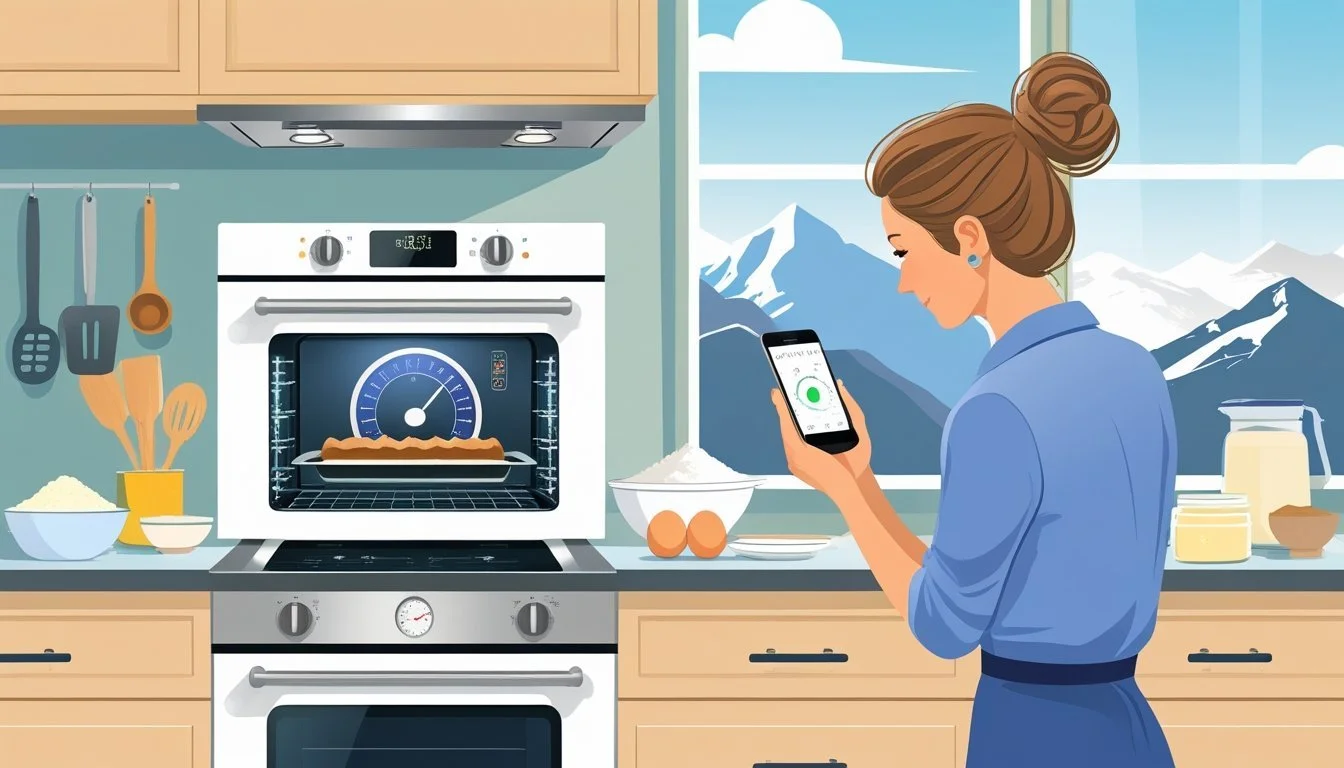
Adapting oven temperature and baking times is critical for successful high altitude baking. Reduced air pressure affects how recipes rise and set, making precise adjustments necessary.
Increasing Oven Temperatures
Oven temperatures generally need to be increased when baking at higher elevations. Raising the temperature, typically by 15–25°F (about 10–15°C), helps baked goods set before they over-expand or dry out. This adjustment ensures proper structure formation and prevents collapse due to weakened protein bonds in the batter or dough.
Quick Reference Table:
Elevation Increase Oven Temp 3,000–5,000 ft +15°F (8°C) 5,000–7,000 ft +20°F (12°C) 7,000+ ft +25°F (14°C)
Adjusting the oven temperature also helps compensate for faster evaporation of liquids. This is especially important for cakes and quick breads, which can become dry or dense at altitude if baked at standard temperatures. Always use an oven thermometer to confirm that the actual temperature matches your settings.
Timing Modifications for Doneness
Baking times usually become shorter at higher altitudes. Since higher oven temperatures speed up how quickly items cook, monitoring for doneness early is essential. Start checking baked goods 5–8 minutes sooner per 30 minutes of original baking time to prevent overbaking.
For cookies and small pastries, reduce the baking time by 1–3 minutes. For cakes and breads, begin assessing doneness well before the recipe's minimum recommended time, especially if you made a significant oven temperature adjustment.
Watch for key signs such as golden edges, firm tops, or a clean toothpick. If an item appears done but isn’t fully set inside, use foil to shield the top and extend baking by short intervals. Keeping track of both temperature and timing helps ensure finished products with a proper texture and flavor.
Techniques for Balancing Dry and Liquid Ingredients

High altitude baking changes how dry and liquid ingredients interact. Properly adjusting these elements helps prevent overly dense textures and dryness in baking recipes.
Managing Moisture in Batters and Doughs
Bakers at high altitude often notice that doughs and batters become dry and crumbly. This is mainly due to lower atmospheric pressure, which causes liquids to evaporate faster and flours to absorb less moisture.
To address this, it is important to monitor the consistency as recipes may need more liquid. If a dough feels stiff or a batter looks too thick, adding a small amount of extra liquid can improve texture. Usually, 1-2 tablespoons of water, milk, or other specified liquid at a time is recommended.
Using ingredients like buttermilk or yogurt instead of water or milk can help retain more moisture due to their higher fat content. Careful mixing ensures even hydration and avoids overworking the dough, which can create a tough or chewy final product.
The Role of Liquid Increase
Increasing liquid is a key adjustment for high-altitude baking recipes. Since evaporation happens more quickly, raising the amount of liquid prevents baked goods from drying out. This adjustment is simple but critical for cakes, breads, and cookies.
A general guideline is to add 1–2 tablespoons of extra liquid for every cup used in the original recipe. The type of liquid matters—using milk for bread, or fruit juice for cakes, helps maintain proper structure and flavor.
This step helps balance the quick loss of moisture and keeps the texture of cakes, muffins, and breads tender. It also ensures the blend of dry and liquid ingredients results in a dough or batter that rises correctly without becoming gummy or underbaked.
Adapting Classic Recipes to High Altitude
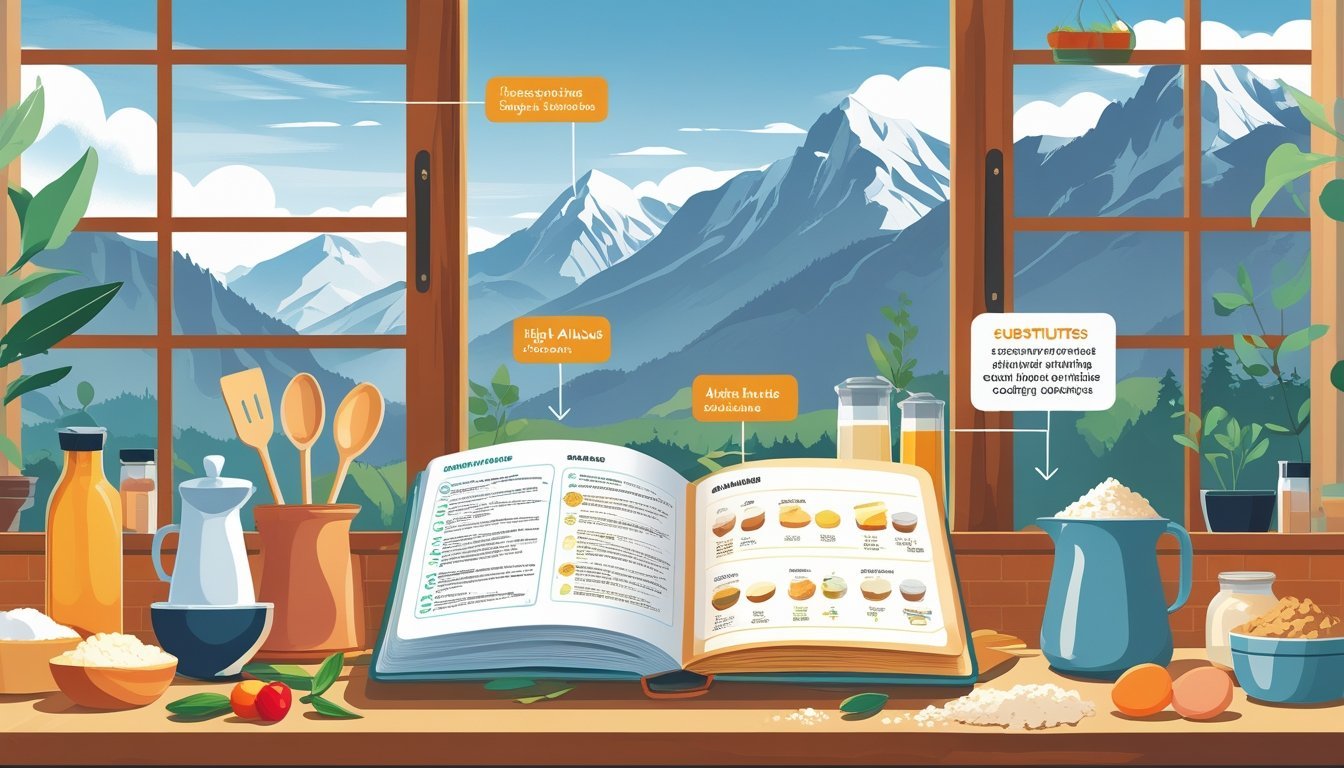
Baking at high altitudes requires specific adjustments because reduced air pressure alters moisture evaporation and how baked goods rise. Small changes in ingredient amounts, oven temperature, and baking time can make a significant difference in the final outcome.
Converting Baking Cookies for High Altitude
Cookies often spread more and turn out flatter at higher elevations due to faster evaporation and lower air pressure. To counteract this, increase the flour by 1 to 2 tablespoons per cup to give better structure. Reducing sugar slightly by 1 to 2 tablespoons per cup helps limit over-spreading and excessive browning.
Since liquids evaporate quickly, adding a small amount of water—typically around 1 to 2 teaspoons per recipe—helps cookies stay moist. Raise the oven temperature by 15–25°F to help cookies set faster and minimize spreading. Eggs can be increased slightly if cookies are still too dry.
Key Adjustments for High-Altitude Cookies:
Increase flour
Reduce sugar
Add extra water
Raise oven temperature
Upgrading Quick Breads for Altitude
Quick breads like banana bread and muffins can rise too quickly and then collapse when baked at high altitudes. Reduce baking powder or baking soda by 1/8 to 1/4 teaspoon per teaspoon used in the recipe. This slows the rise so the structure can set before the bread domes or falls.
For more moisture, increase the liquid by 2 to 4 tablespoons per recipe. Flour may also need to be increased by 1 to 2 tablespoons per cup. Mixing less vigorously and using room temperature ingredients can produce a finer crumb and combat over-expansion.
Adjustment Table for Quick Breads
Ingredient Adjust at High Altitude Baking powder/soda Reduce by 1/8–1/4 tsp per tsp Liquid Add 2–4 tbsp per recipe Flour Add 1–2 tbsp per cup
Successful Pie Crusts and Pastries
Pie crusts and pastries may dry out quickly and become tough when baking at high elevations. Due to faster evaporation, it’s important to use slightly more liquid—about 1 tablespoon extra per cup of flour helps achieve desired texture. Work dough quickly and avoid over-handling to keep crusts tender.
Chill fats and handle dough with cold hands or utensils, as kitchen temperatures can also affect pastry success. Baking temperatures can be raised by 15°F to help set the structure and prevent underbaking, but monitor closely to avoid over-browning.
For flaky, tender results, balance liquid adjustments with proper mixing and temperature control. Patience and minor tweaks lead to reliable, consistent pie crusts and pastries.
Special Considerations for Cakes and Cupcakes
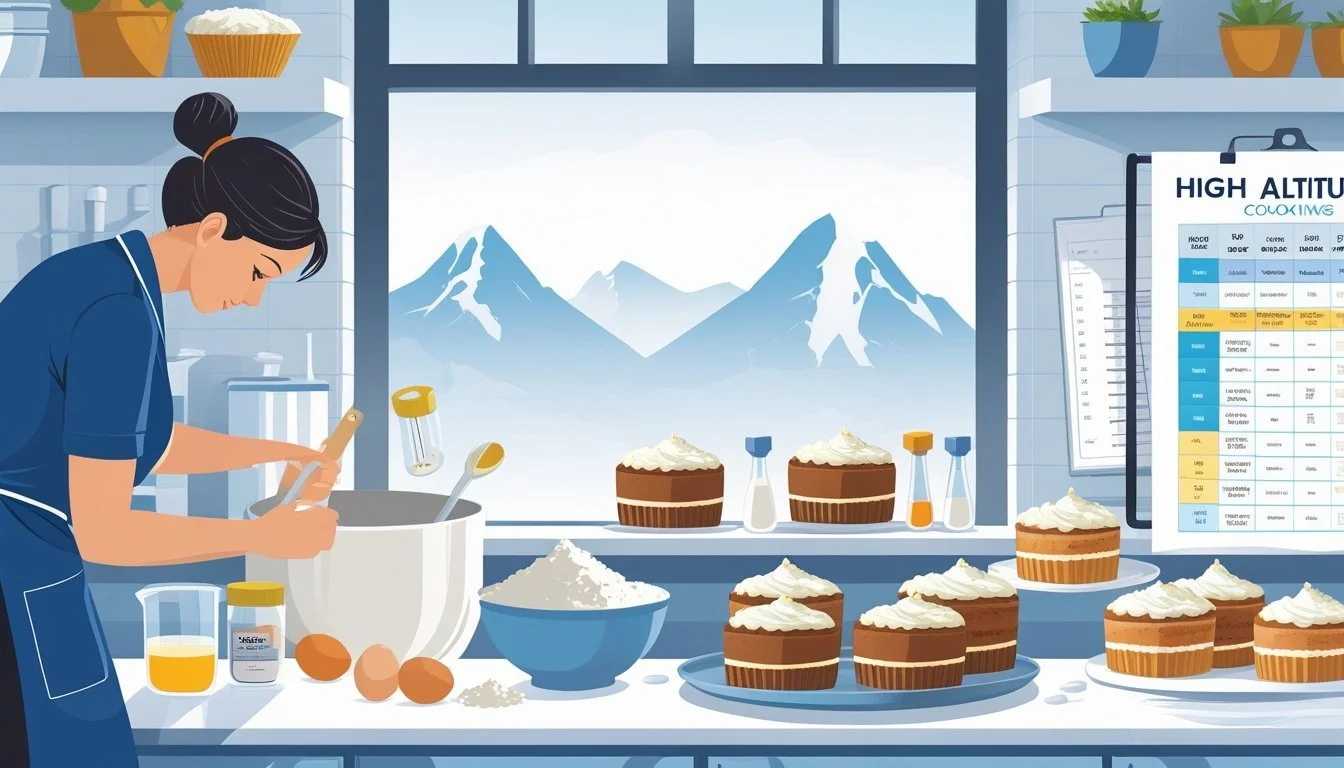
High altitude affects cake structure, moisture, and leavening. Precise ingredient adjustments and careful monitoring of baking conditions are vital for reliable results when making cakes, cupcakes, and their frostings at elevation.
Sponge and Angel Food Cakes
Sponge cakes and angel food cakes depend on stable meringue structures and precise rise. At high altitude, lower air pressure can cause over-expansion and collapse. To prevent this:
Reduce sugar by 1-2 tablespoons per cup to help stabilize the egg foam.
Add an extra egg white for improved structure.
Increase oven temperature by 15–25°F for quicker set.
Slightly decrease baking powder (if used) to avoid over-rising.
Use metal pans, and only fill them half full to prevent spillover. Always line the bottom with parchment and avoid greasing the sides, as these cakes need to cling to the pan while rising. Cool cakes upside down to maintain height and texture.
Making Chocolate and Lemon Cupcakes
Chocolate and lemon cupcakes can overflow or sink in the middle during high altitude baking. To adapt recipes for these varieties:
Decrease baking powder or baking soda by 1/8 to 1/4 teaspoon per cup of flour.
Increase liquid (such as milk or lemon juice) by 2–3 tablespoons to prevent dryness.
Add an extra egg or egg yolk for moisture and improved crumb.
Chocolate cupcakes may require a slight reduction in sugar, as cocoa powder can make them drier at elevation. Lemon cupcakes can benefit from a touch more zest or juice to maintain flavor intensity after adjustment. Watch closely for overbaking, as high altitude can shorten bake times.
Adapting Frosting Consistency
Frosting consistency can change at higher elevations due to drier air and faster evaporation. Buttercream, cream cheese, and whipped frostings may become too thick or set too quickly.
Add 1–2 teaspoons of cream, milk, or lemon juice at a time until desired smoothness is achieved.
Use a stand mixer or beat by hand just until combined to avoid incorporating too much air, which can break down more quickly at altitude.
If making a cooked frosting (like seven-minute icing), closely monitor temperature and test for stiff peaks earlier than at sea level. Store finished cupcakes covered, as frosting can dry out faster in low humidity.
Best Practices and Tips for Consistent Results
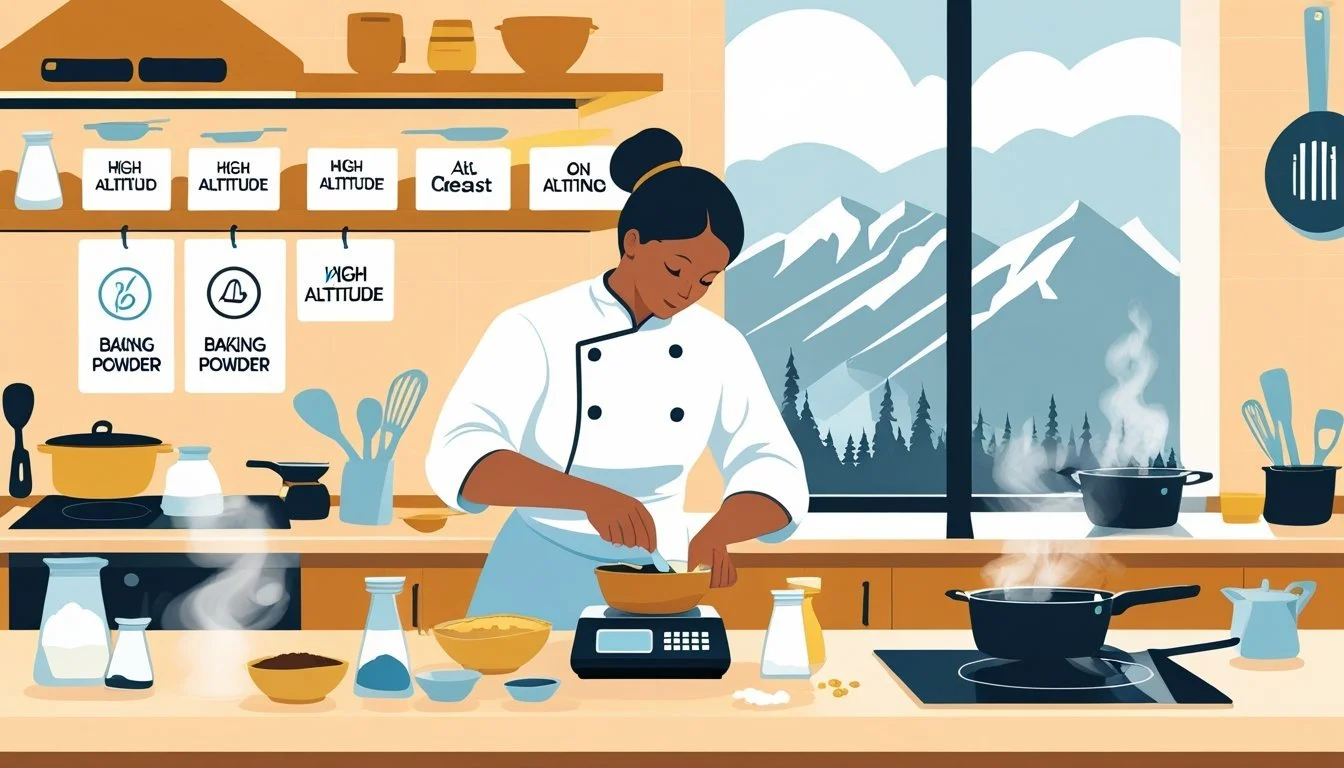
Managing substitutions at high altitudes requires documenting changes, using effective tools, and troubleshooting recurring issues. Careful adjustment and observation can lead to reliable and repeatable outcomes, even in challenging conditions.
Recipe Testing and Notetaking
Accurate recipe testing helps track how specific adjustments, such as changing flour types or adding extra liquid, affect results. Keeping a detailed notebook or digital record is essential. Identify which substitutions worked and which led to problems, making future efforts more efficient and avoiding repeated mistakes.
Variables to note include baking temperature, pan types, altitude, and ingredient brands. Use a table like this for organized notetaking:
Test # Altitude Adjustment Made Result Notes 1 7,000 ft +2 Tbsp flour Cookies less flat Thicker 2 7,000 ft +1 egg Cake more stable Denser crumb
Consistent record-keeping helps identify what results in better structure, flavor, or texture when altering recipes at higher elevations.
Using Parchment Paper and Other Tools
Parchment paper provides a nonstick surface and can help distribute heat more evenly when baking at high altitudes. This is especially important with dough or batter that may spread or stick due to recipe modifications. Use parchment for cookies, loaves, and even savory baked goods to maintain clean release and prevent burning.
Other helpful tools include oven thermometers to verify actual oven temperature, since temperature variations can impact results more acutely at higher elevations. Measuring ingredients with a scale rather than by volume ensures accuracy when adjusting recipes, decreasing inconsistency. Silicone mats and lighter-colored pans are also recommended, as they reduce the risk of over-browning and support even heat transfer.
Troubleshooting Common Mistakes
Frequent high-altitude baking issues include collapsed cakes, dry crumbs, and undercooked centers paired with over-browned exteriors. These problems are often caused by insufficient adjustments or improper substitute ratios. Lower baking temperatures and increased liquids are typical corrections.
A checklist for common troubleshooting:
Collapsed cakes: Increase flour or decrease sugar slightly.
Dry texture: Add an extra egg or slight liquid boost.
Over-browning: Use lighter pans, reduce oven temperature by 15-25°F.
Undercooked interiors: Bake longer at a lower temperature, ensuring thorough cooking without excess browning.
React early to signs like excessive spreading, cracks, or uneven coloring to refine substitute choices and finish with better, more consistent results.
Exploring Regional Factors and Ingredient Sourcing
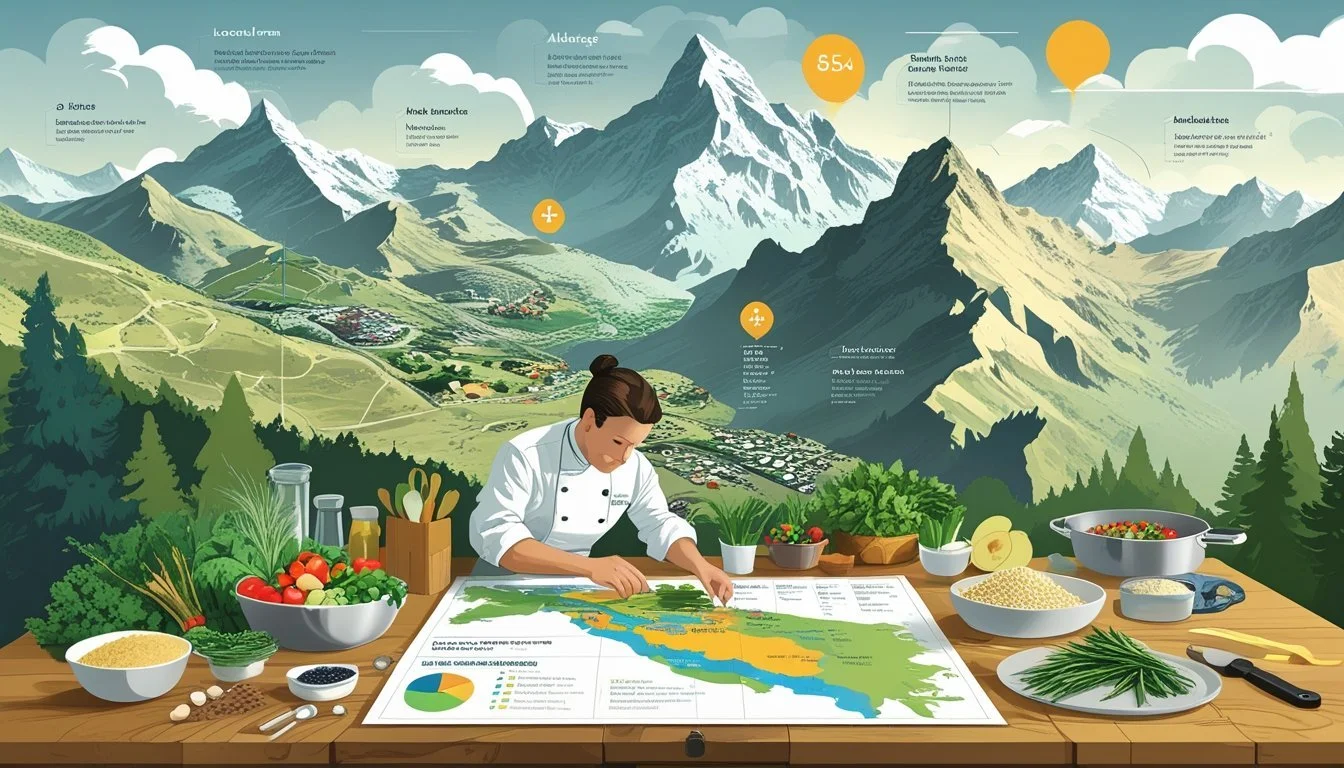
Access to certain ingredients and altitude-specific adjustments play a significant role in successful high-altitude cooking. Regional factors, especially in New Mexico, can affect both the choice of substitutes and overall cooking results.
Obtaining Specialty Ingredients in New Mexico
New Mexico’s markets often carry unique staples, such as blue cornmeal, piñon nuts, and various dried chiles, which are used in local adaptations of traditional recipes. These specialty items can be found in farmers’ markets, co-ops, or regional aisles of major grocery stores. For those seeking substitutes, a table of common ingredient swaps may be useful:
Traditional Item Possible Substitute Blue cornmeal Yellow or white cornmeal Piñon nuts Pine nuts or walnuts Local chile Anaheim, poblano, or jalapeño
Ingredient sourcing is influenced by both tradition and availability. For instance, if a recipe calls for specific New Mexican red chile, cooks outside the region may need to use milder dried chiles and adjust for spice and flavor.
Understanding Local Altitude Ranges
New Mexico’s elevations range from around 3,000 feet in the south to over 7,000 feet in cities like Santa Fe and Taos. This wide variation means cooking times and ingredient proportions must be adjusted even within the state.
At elevations above 3,000 feet, boiling temperatures decrease, causing longer cooking and baking times (sometimes by 25% or more). For bakers, modest reductions in leavening agents or increases in liquid may become necessary. It's important to know the local altitude before making substitutions, as a higher location demands different adjustments compared to lower regions within New Mexico.

